
Last updated September 20, 2026
Level 1 sweep and inspection to the NFPA 211 annual standard - flue, crown, cap, and flashing checked and photographed
Chimney sweep logs do not sweep chimneys. They loosen some creosote - which then falls where a brush and vacuum still have to collect it.
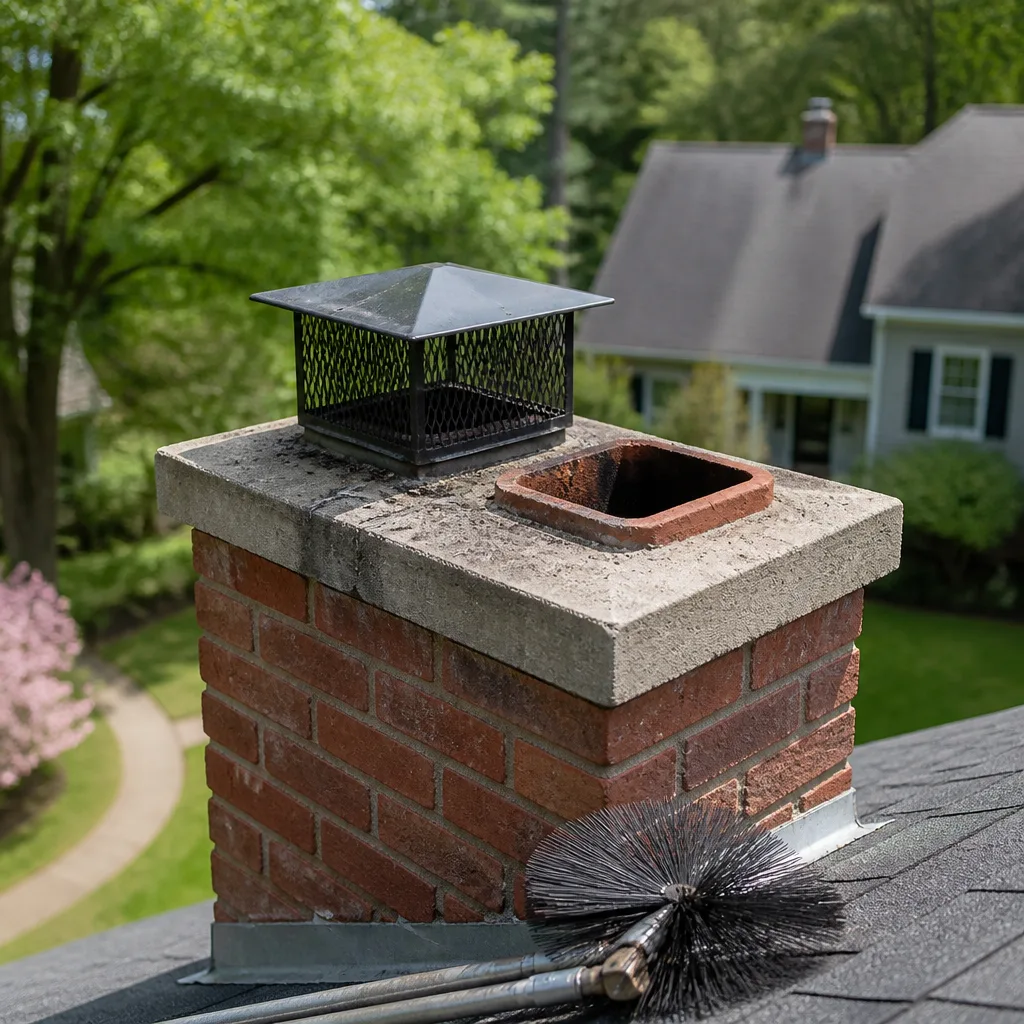
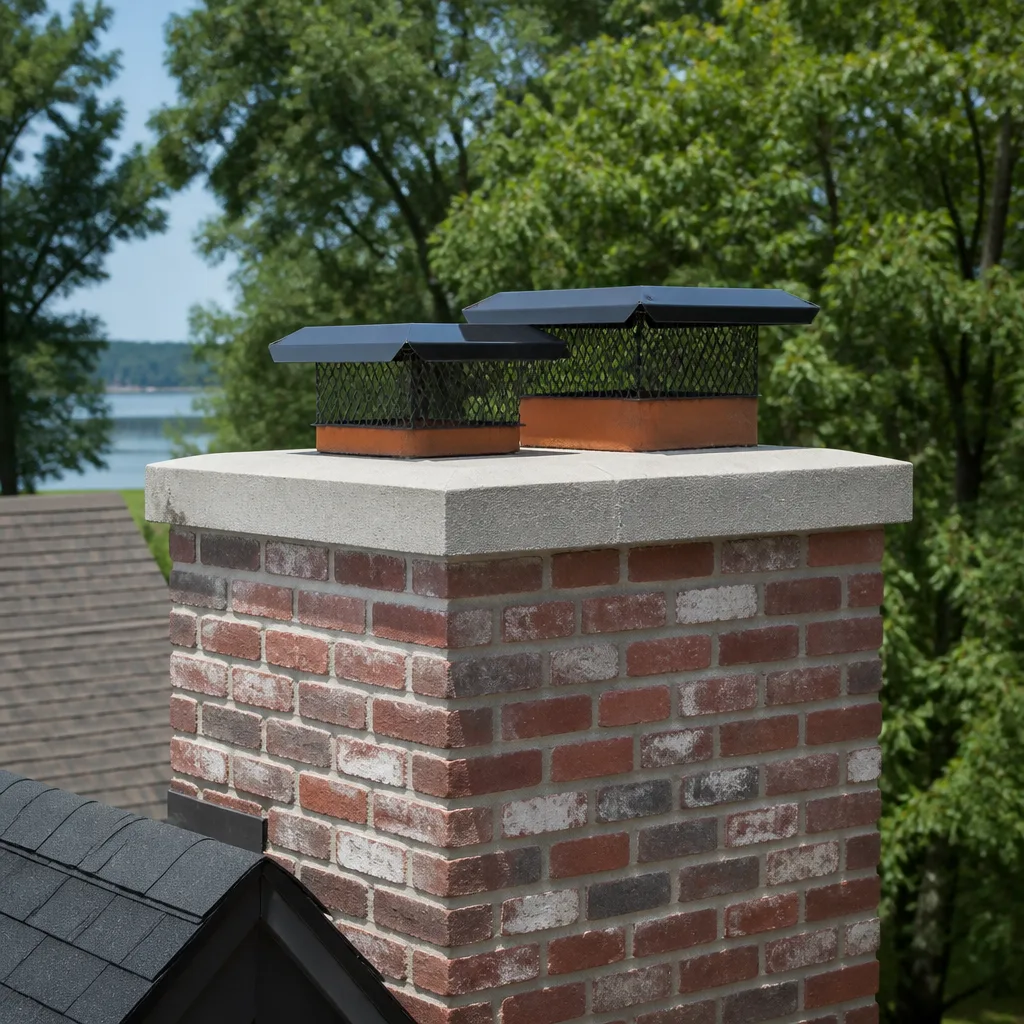
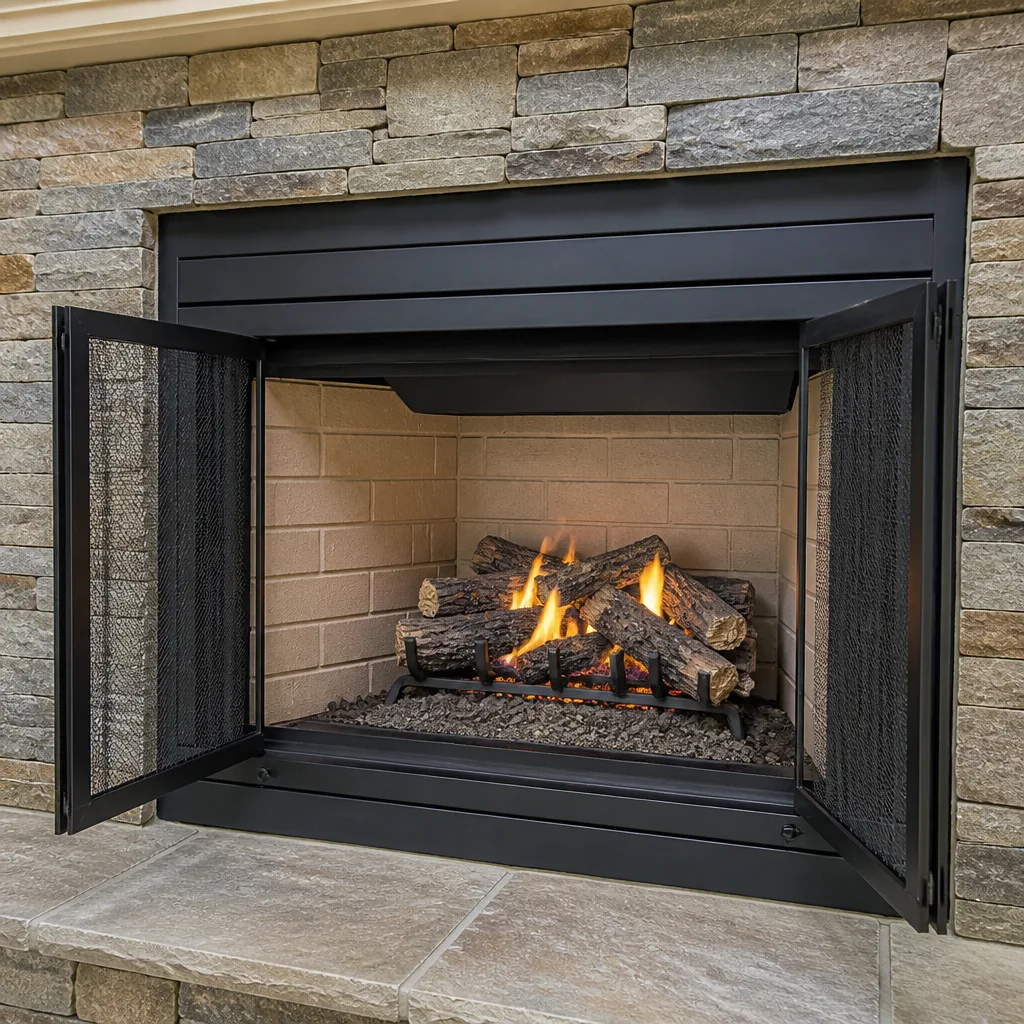
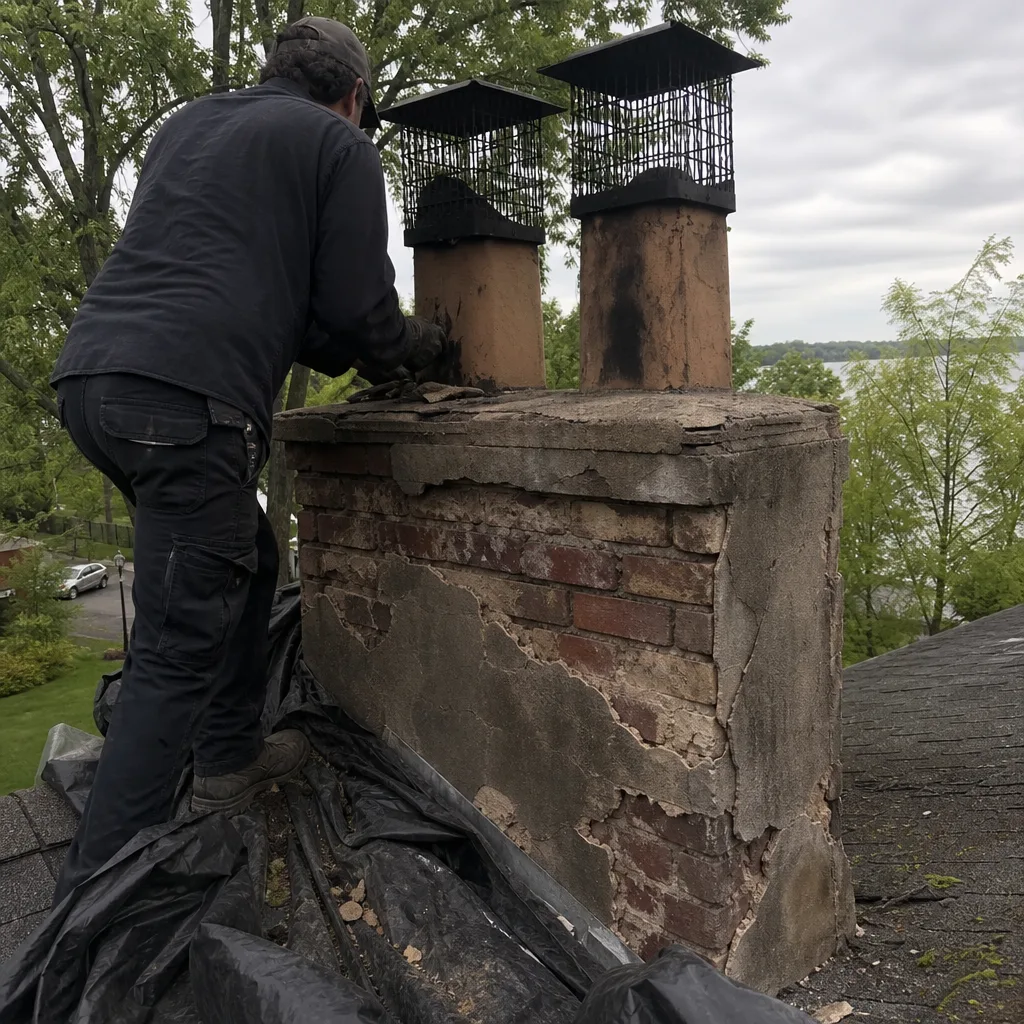 Before
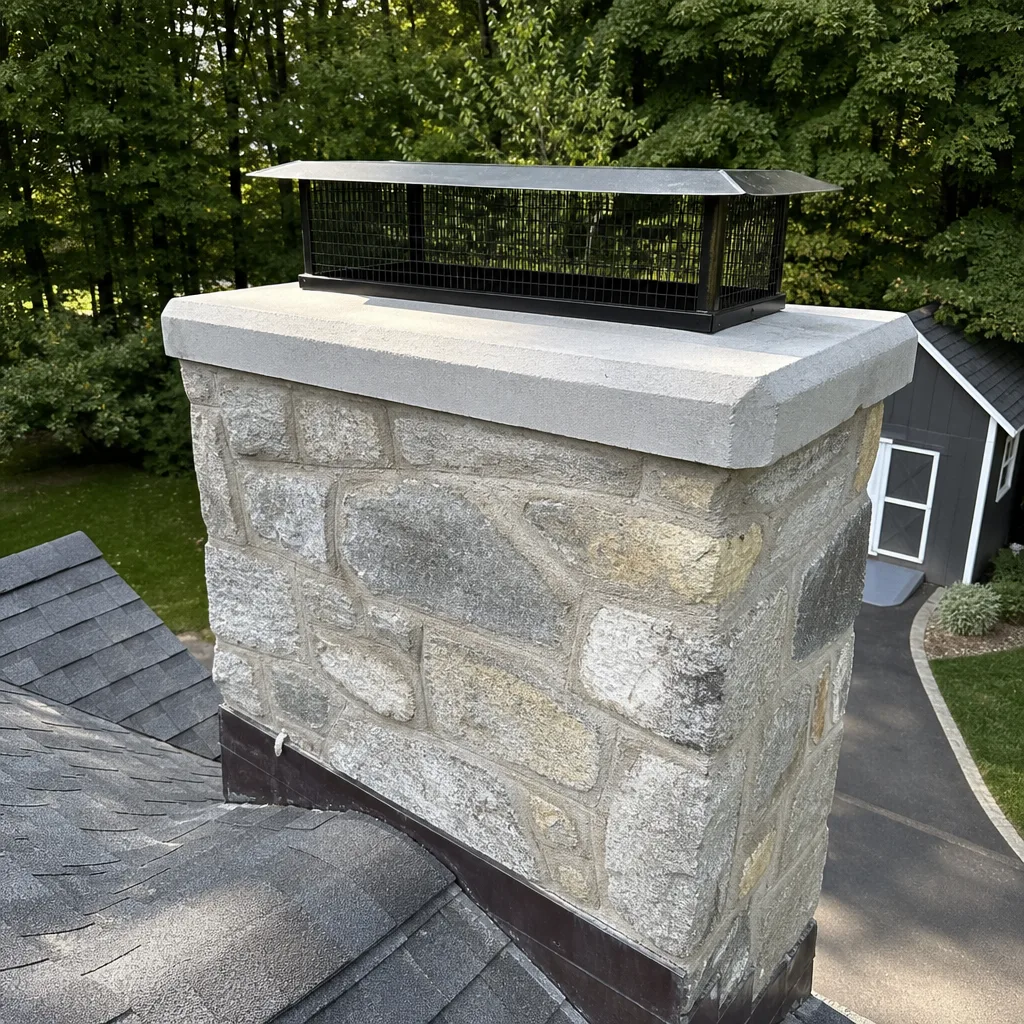 After
After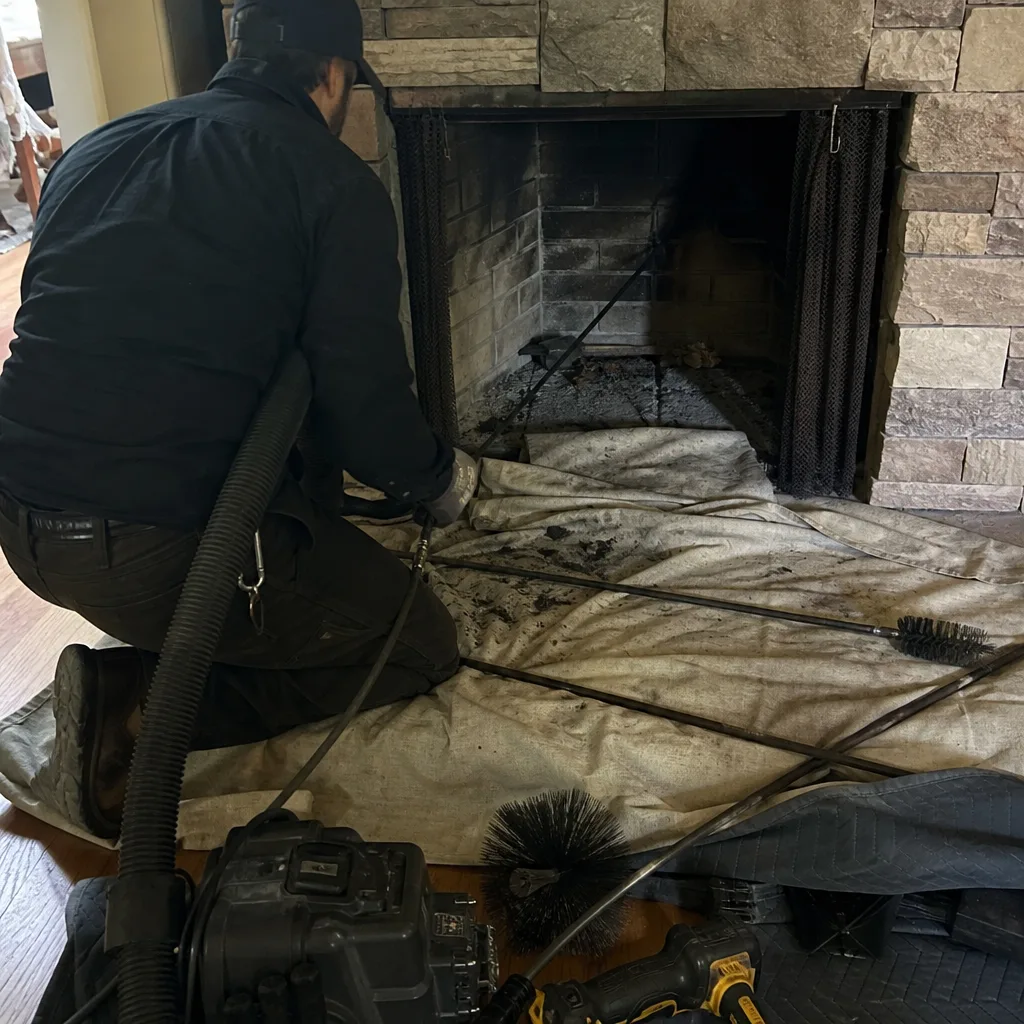 Before
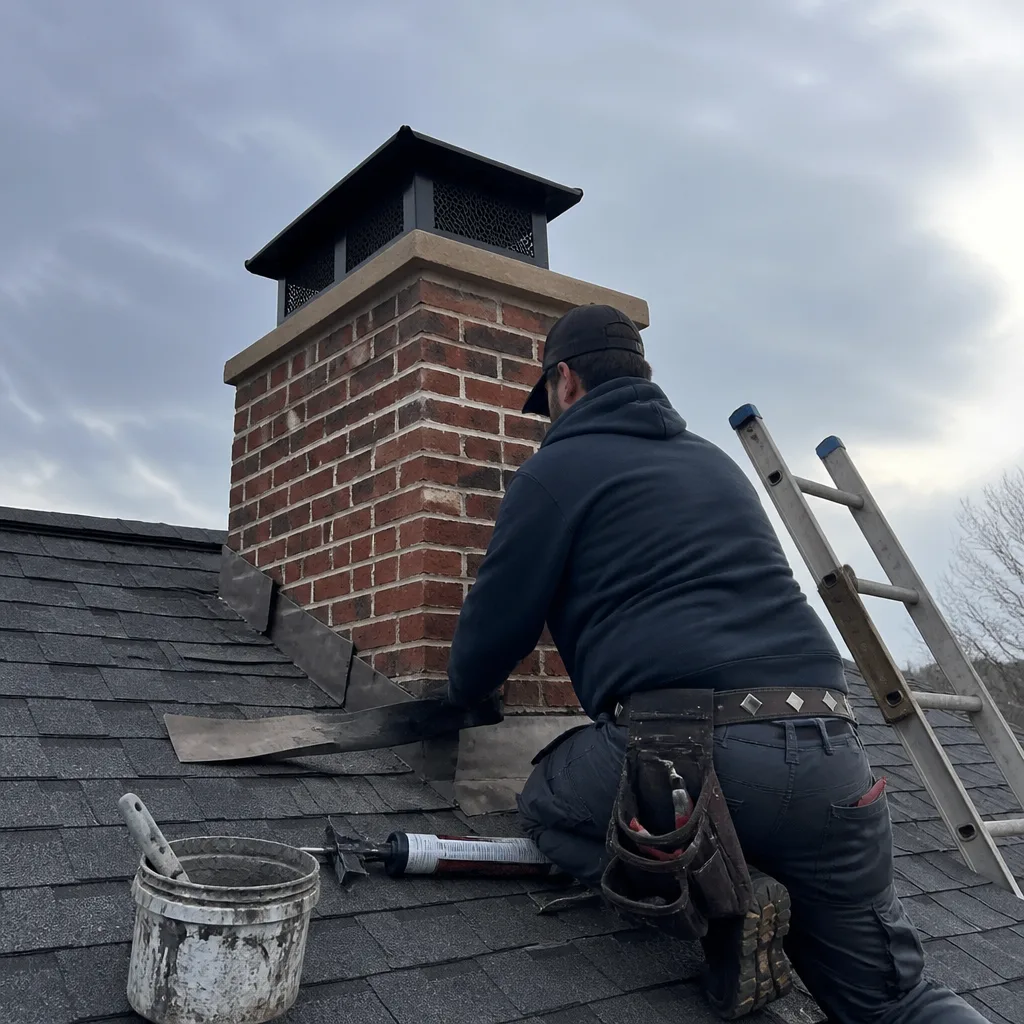 After
After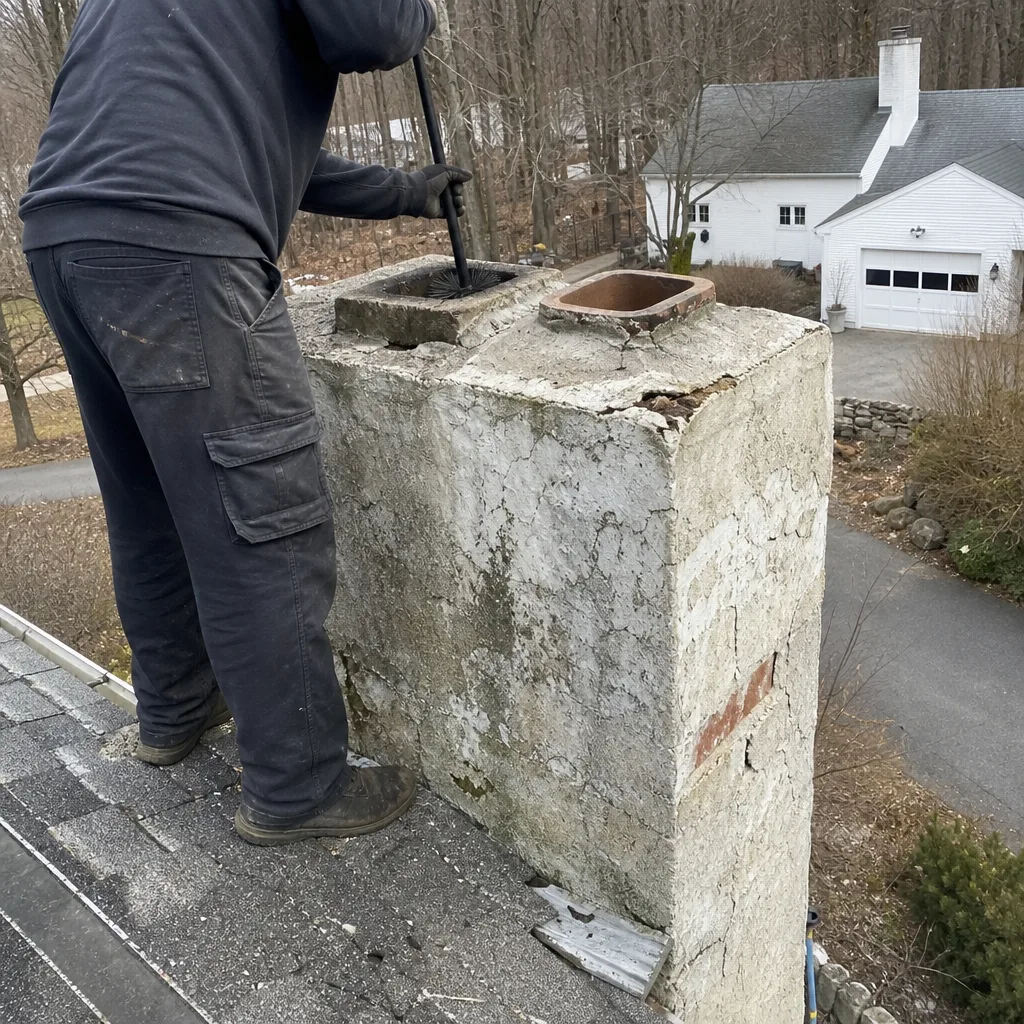 Before
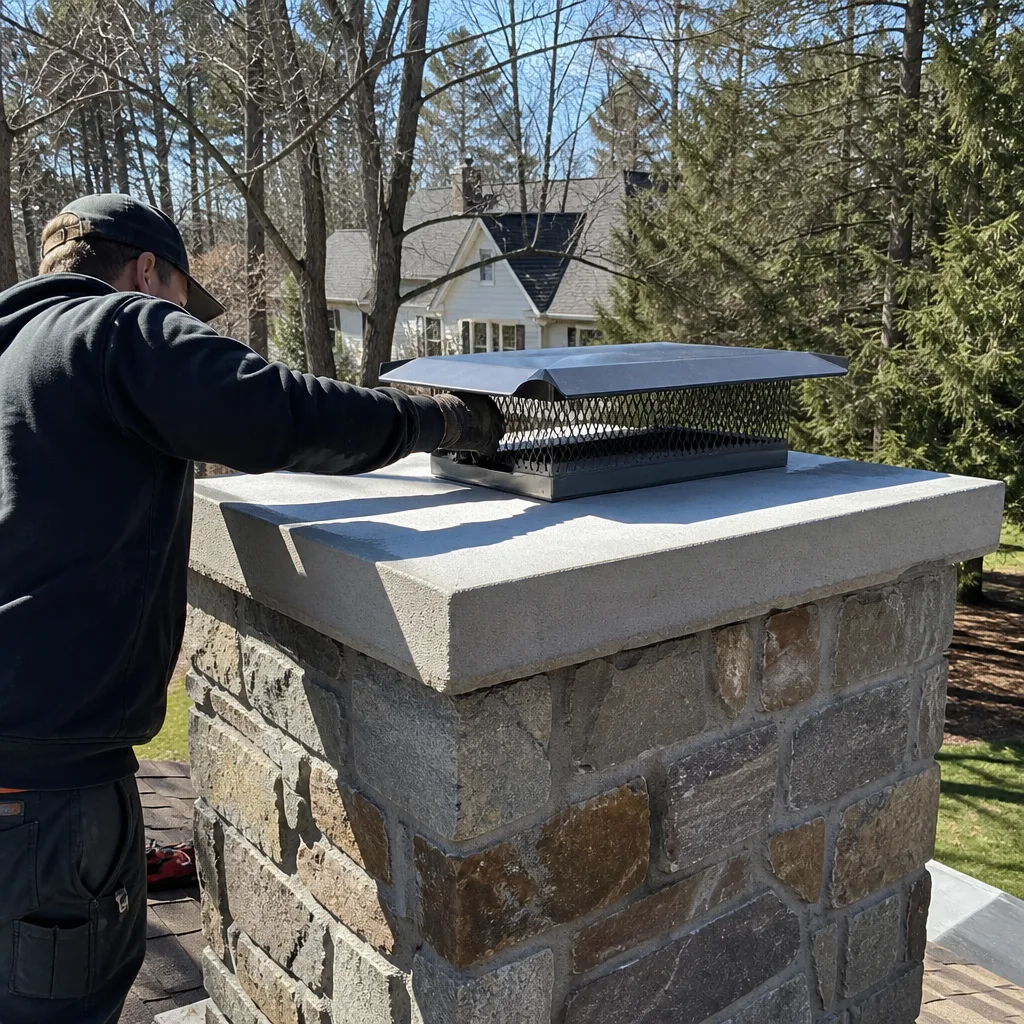 After
AfterThe Complete Guide to Chimney Cleaning in Greenwich
The CSIA estimates that roughly 25% of structure fires attributed to heating systems involve chimneys that were recently cleaned. Recently cleaned, but never actually inspected. A cleaning removes deposits. An inspection determines whether the chimney is structurally safe to use. Conflating the two is how houses burn. This guide separates every step of the process so Greenwich homeowners know exactly what was done, what was skipped, and what each service costs before anyone shows up at the door. For DIY vs Professional Chimney Cleaning: The Greenwich Homeowner’s Decision Guide, see our companion post.
Quick Answer
A standard chimney cleaning in Greenwich CT costs between $225 and $375, takes 45 to 90 minutes, and removes soot and creosote from the flue. But a cleaning alone tells you nothing about whether the liner is cracked, the mortar joints have failed, or the crown is leaking. For that, you need a Level 2 camera inspection, which costs between $150 and $300 and should accompany every cleaning, not replace it or be skipped because the flue looks clean from the top.
Table of Contents
- The Difference Between a Cleaning and an Inspection
- Understanding Creosote Stages 1, 2, and 3
- Why Greenwich Chimneys Deteriorate Faster
- What Chimney Cleaning Costs in Greenwich
- The Camera Scan Most Sweeps Skip
- What Your Written Record Must Include
- How Often Should You Clean Your Chimney?
- Common Mistakes to Avoid
- When to Call a Professional
- Frequently Asked Questions
BeforeAfterThe Difference Between a Cleaning and an Inspection
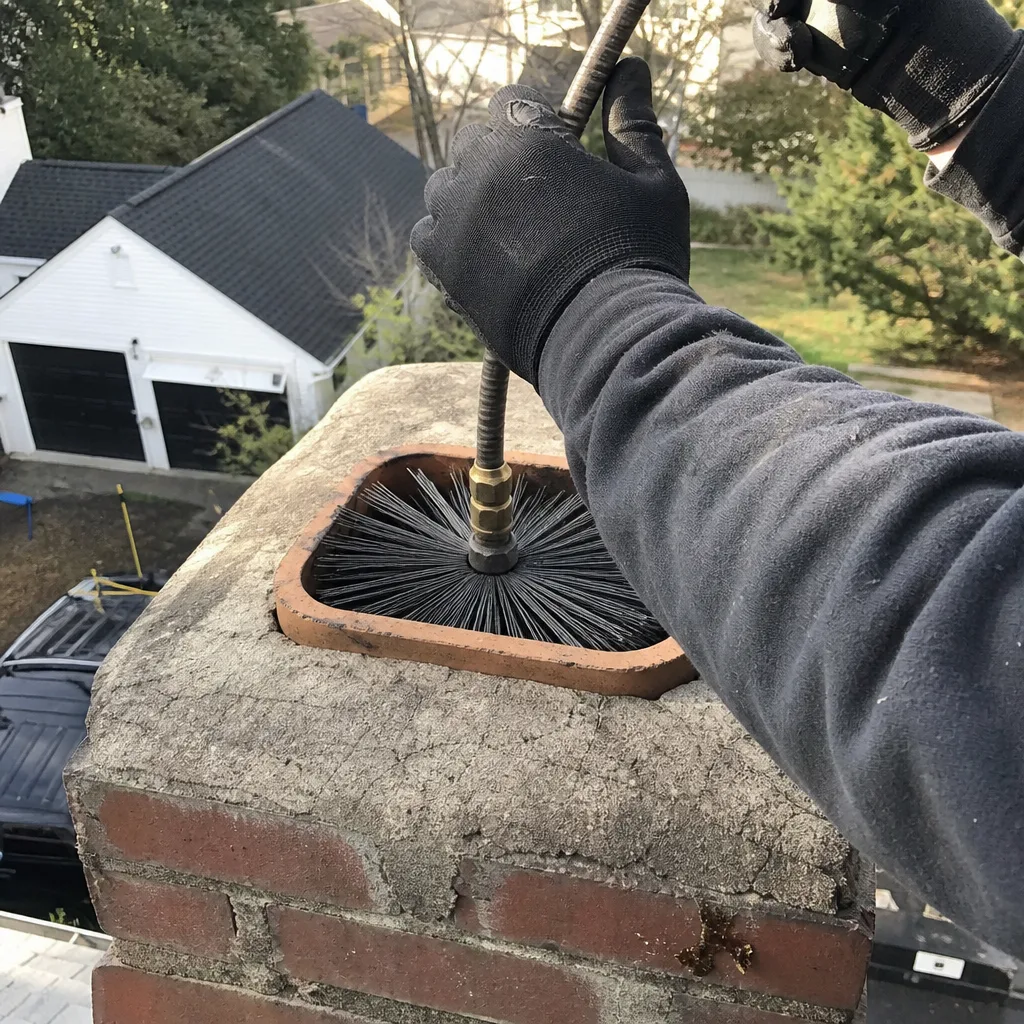
A chimney cleaning removes what has built up inside the flue: soot, creosote, and in some Greenwich homes that burn wood, a hardened glaze that takes mechanical removal to dislodge. A cleaning done properly uses brushes sized to the flue diameter, a vacuum system that keeps dust out of the living space, and a final visual check from both ends. It is a maintenance task.
An inspection is a structural assessment. Under NFPA 211, the national standard for chimneys and fireplaces, there are three levels. A Level 1 inspection is the minimum when the chimney is in continued service with no changes to the system or fuel type. It involves a visual check of accessible areas and confirming basic soundness. A Level 2 inspection includes everything in Level 1 plus a camera scan of the flue interior, and it is required when any change occurs: a new appliance, a change in fuel, a real estate transfer, or after any event that might have caused damage like a chimney fire, a lightning strike, or an earthquake. A Level 3 inspection involves removing portions of the structure to access concealed areas and is only needed when a Level 2 scan finds something that requires it.
Here is what matters for Greenwich homeowners: most companies advertise a chimney cleaning and call it an inspection. They run a brush up and down, shine a flashlight, and hand you a receipt. That receipt gives you zero information about the condition of your flue liner, the integrity of your crown, or whether smoke and gases have a clear path to the outside. We started camera-scanning every single chimney in 2009 and made it the default, not an add-on. That practice became Clause 4 of the Haven Standard: a documented photo record on every job, no exceptions.
The distinction is not academic. A clean chimney with a cracked liner is more dangerous than a dirty chimney with an intact liner. The crack is what lets heat and flame reach combustible framing. The cleaning is what makes the chimney safe to use day to day. You need both, and you need them recorded.
Understanding Creosote Stages 1, 2, and 3
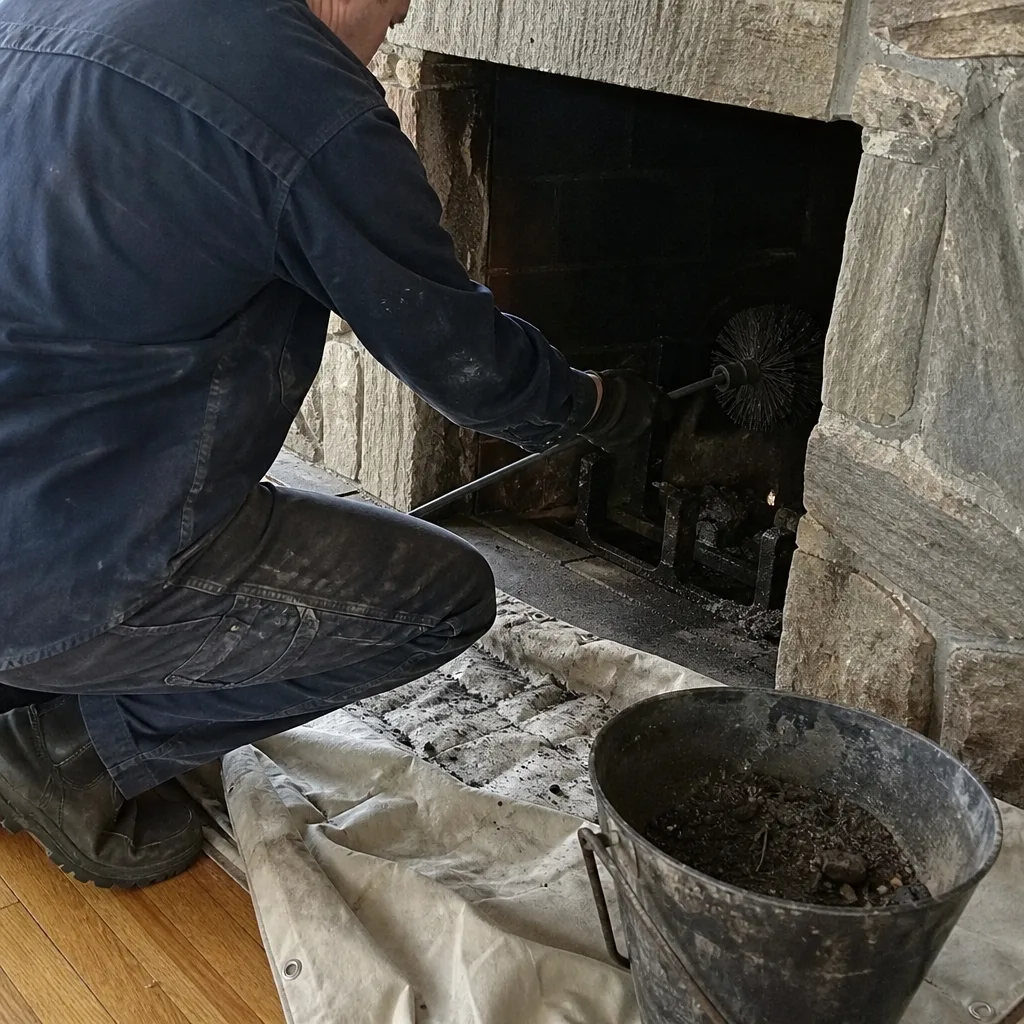
Creosote is a byproduct of wood combustion. It condenses on the flue wall as smoke cools. What form it takes depends on how hot the fire burns, how dry the wood is, and how long the flue is. Greenwich chimneys in older homes often have longer flue runs and exterior masonry walls, which cool smoke faster and produce heavier creosote deposits.
Stage 1: Soot and Loose Powder
Stage 1 creosote looks like dust. It is flaky, brown or black, and brushes off easily with a standard chimney brush. This is what accumulates during a season of normal burning with reasonably dry wood. A routine cleaning handles Stage 1 without drama. Cost-wise, this is your basic sweep.
Stage 2: Baked-On Flakes
Stage 2 creosote is dark, hard, and looks like burnt cornflakes stuck to the flue wall. It forms when fires burn a little cooler or wood has higher moisture content. It will not come off with a standard brush pass. It takes rotary cleaning heads or manual scraping to dislodge. A chimney with Stage 2 buildup often adds 30 to 45 minutes to a cleaning and, depending on the company, a modest surcharge.
Stage 3: Glazed Tar
Stage 3 creosote is the dangerous one. It looks like black glass, runs in shiny rivulets down the flue wall, and is essentially a hardened fuel layer. It forms in cool-burning fires, often in exterior chimneys or after years of burning unseasoned wood. Stage 3 cannot be brushed off. It requires chemical treatments, rotary chains, or professional removal methods, and sometimes multiple visits. If a chimney has Stage 3 creosote, it is a chimney fire waiting for a hot enough burn. We treat it like the structural hazard it is, not a plumbing clog.
Stage matters more than calendar frequency. A chimney that burns properly seasoned oak in a modern insert might go two years between cleanings and still be Stage 1. A Greenwich colonial that burns whatever wood was left by the previous owner, in an exterior chimney built in 1928, might hit Stage 2 in a single season. That is why the cleaning conversation should start with what is actually in the flue, not with a calendar.
Why Greenwich Chimneys Deteriorate Faster
Greenwich is not a generic suburban market. The housing stock, the climate, and the air itself put specific stress on chimneys. Understanding these variables is the difference between maintaining a chimney and replacing one.
Salt Air From Long Island Sound
Homes south of the Post Road sit close enough to Long Island Sound that salt-laden air works on masonry year round. Salt is hygroscopic, meaning it attracts and holds moisture. That moisture penetrates mortar joints, freezes in winter, and slowly spalls the face off bricks. A crown that would last 15 years in inland Fairfield County might show visible cracking in eight years on Shore Road or in Old Greenwich. We see it in the photo record on nearly every coastal home we service.
Colonial-Era Masonry and Liner Transitions
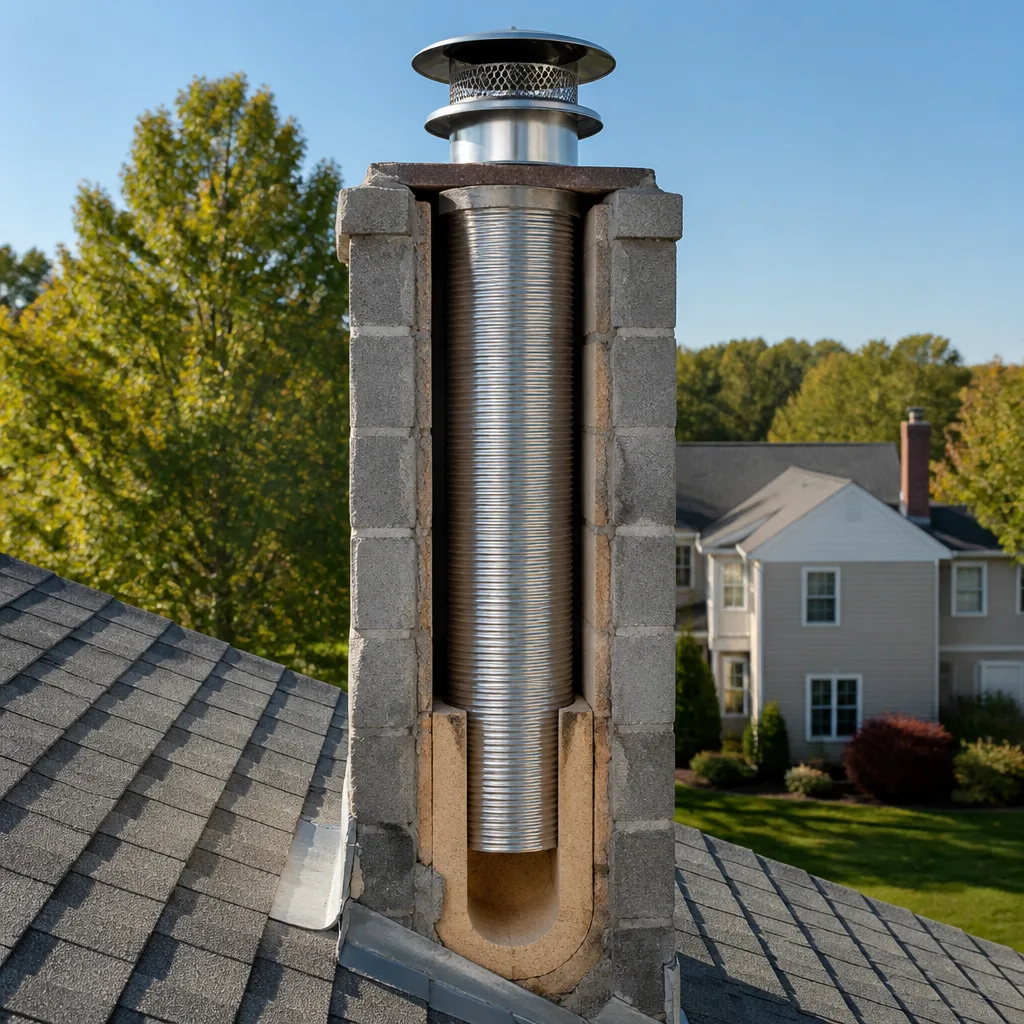
Greenwich has one of the oldest housing stocks in Connecticut. Homes built before 1940 often have original masonry that was never designed for modern appliance efficiency. The flues are larger than they need to be for today’s inserts and stoves, which means slower draft and cooler smoke, which means more creosote. Worse, many of these chimneys have had liners retrofitted over the decades, and the transition points, where a new stainless liner meets old clay tiles, are where failures concentrate. We regularly find gaps at those transitions that a visual inspection from the top alone would never reveal.
Heating-Oil Crossover Homes
A significant share of Greenwich homes still run on heating oil. When an oil furnace vents into a chimney that was originally sized for a coal or wood fire, the flue sees lower exhaust temperatures and higher moisture output. That moisture combines with sulfur in the oil exhaust to form a mild acid that eats clay tile liners from the inside. The damage is invisible without a camera. Homeowners in neighborhoods like Cos Cob, Riverside, and Byram, where oil heat is common, should pay particular attention to liner condition even if they never burn a fire in the fireplace itself.
What Chimney Cleaning Costs in Greenwich
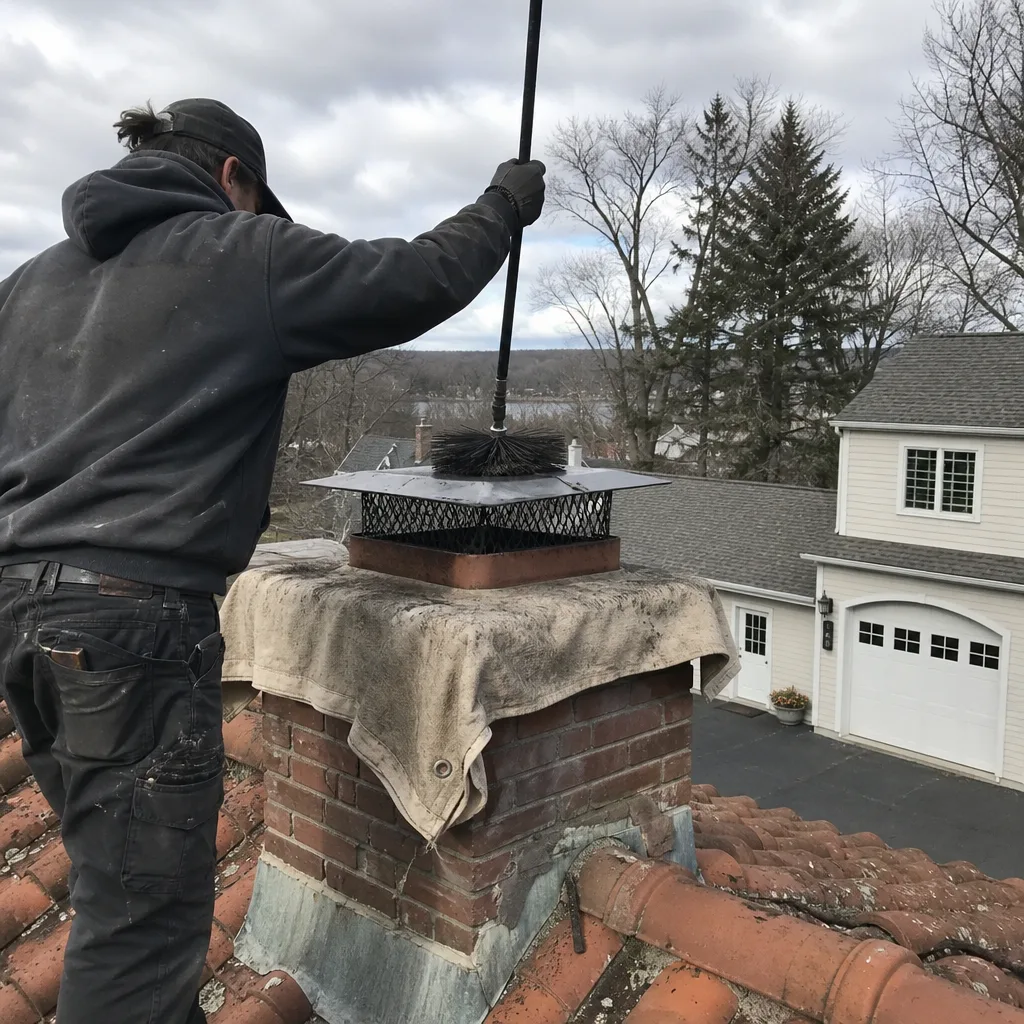
Here is what you should expect to pay for chimney cleaning in Greenwich CT based on current market rates and the specific condition of your flue.
| Service | Typical Greenwich Price | What It Includes |
|---|---|---|
| Standard chimney cleaning (Stage 1) | $225 - $375 | Brush sweep, vacuum, visual check from roof and firebox |
| Cleaning with Stage 2 creosote removal | $325 - $475 | Rotary cleaning, longer service time, often a partial day |
| Cleaning with Stage 3 creosote treatment | $500 - $800+ | Chemical application, mechanical removal, sometimes multiple visits |
| Level 2 camera inspection (standalone) | $150 - $300 | Video scan of flue interior, photo documentation, written report |
| Combined cleaning + Level 2 inspection | $350 - $600 | Complete sweep plus camera documentation and photo record |
| Chimney cap replacement | $175 - $350 installed | Cap and screen, includes minor crown patching where accessible |
These are honest ranges. If a Greenwich company quotes you $89 for a sweep, ask what they are actually doing. At that price they are not camera-scanning anything, they are not documenting the flue condition, and they are probably not doing more than running a brush once and handing you a receipt. Our pricing is delivered as a written quote before any work starts, and it never changes once it is written. That is Clause 1 of the Haven Standard.
For an exact price on your chimney, call (516) 399-5497. You will get a live person, not a voicemail, and a written estimate before anyone books the truck.
The Camera Scan Most Sweeps Skip
Here is a sentence we hear weekly from Greenwich homeowners: “The last guy said my chimney was clean.” Then we put the camera down and find a hairline crack running the full length of a clay tile liner, or an offset joint that was never sealed, or a crown that has been leaking water into the smoke chamber for three winters.
A visual inspection from the top tells you what the top of the chimney looks like. A flashlight from the firebox tells you what the bottom looks like. Neither tells you anything about the middle 20 or 30 feet of flue, which is where liner cracks, failed mortar joints, and hidden blockages live. Only a camera scan documents that.
The camera scan itself is straightforward. A high-resolution camera head is run the full length of the flue from top to bottom, recording video and capturing stills. The operator looks for cracks, gaps, spalling (brick face popping off), offset joints, water intrusion, and any foreign material. You get the photos afterward, not just a verbal summary.
This practice became standard at Level Two Chimney Greenwich in 2009, which is why it is Clause 4 of the Haven Standard: a documented photo record on every single job, running continuously ever since. More than 38,000 chimneys inspected and cleaned, every one with a camera record before work started and a photo file when it was done.
Why does this matter financially? Because a cleaning receipt without camera documentation offers no structural guarantee, and no insurance adjuster in Fairfield County will accept it as proof of maintenance if a fire claim comes up. They will ask for evidence. A camera record is evidence. A bill from a sweep is not.
What Your Written Record Must Include
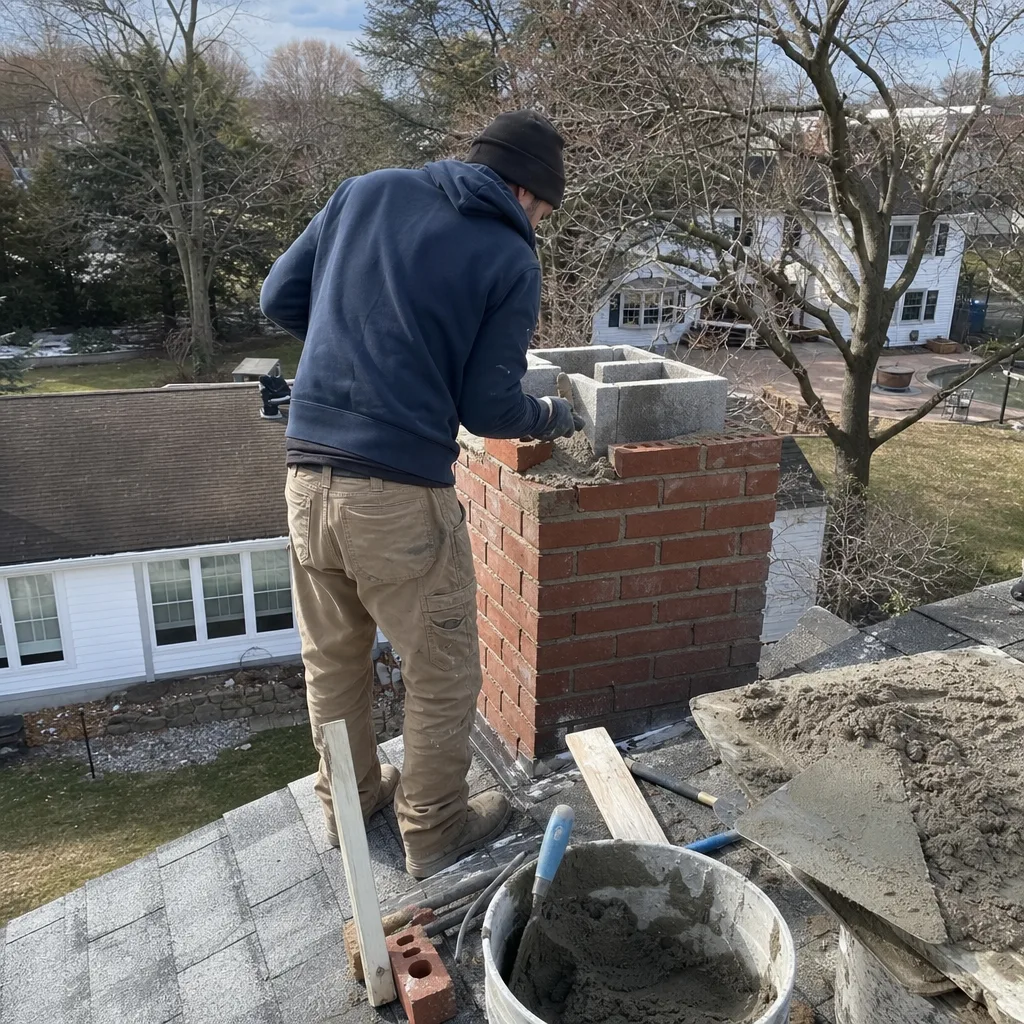
After any legitimate chimney cleaning in Greenwich, you should walk away with documentation. If a sweep hands you a credit card receipt and nothing else, you have not had a professional service. Here is what the record must contain to satisfy an insurance claim or a real estate disclosure in Fairfield County.
- Written scope of work. What was done, when it was done, and by whom. The technician’s name should be on the document.
- Written price. The amount agreed before work began, not a number that appeared after the fact.
- Photo documentation. At minimum before and after images of the flue interior, crown, and firebox. If the company does not provide photos, they did not do a Level 2 inspection.
- Findings summary. A plain-language description of what the camera showed: liner condition, creosote classification, crown integrity, any obstructions or water evidence.
- Written warranty. A statement of what is covered and for how long. Not a verbal promise. Paper.
In a real estate transaction, a buyer’s inspector will often request chimney documentation. A homeowner who had the chimney swept annually but has no records is in the same position as a homeowner who never had it swept at all. One of the quiet problems we help Greenwich sellers solve is assembling the documentation history the buyer’s attorney wants, which is why the practice of handing clients a written record from day one matters so much.
This is also why we offer a Free Second Opinion on any written estimate. Bring us a competitor’s quote, and we will review it line by line and tell you what is actually being done for the price, and what is not. If our price is higher, we will show you in writing what the difference buys.
How Often Should You Clean Your Chimney?
The standard answer is after every cord of wood burned, or once per year, whichever comes first. That is a reasonable starting point. But in Greenwich, the real answer depends on three things: what you burn, how you burn it, and what your camera scan showed the last time. For a month-by-month breakdown, see our Seasonal Chimney Cleaning Care for Greenwich: Year-Round Homeowner’s Guide.
If you burn seasoned hardwood in an open fireplace, one to two cords a season: an annual cleaning and inspection is appropriate. Expect Stage 1 creosote, occasionally Stage 2 at the firebox shelf.
If you burn unseasoned wood or manufactured logs in an exterior chimney: twice a season may be necessary. Exterior chimneys run cold, creosote condenses faster, and the deposits are more stubborn. We have pulled Stage 2 glaze from exterior chimneys in mid-January that were cleaned the previous October.
If you have an insert or stove with a stainless liner: follow the manufacturer’s recommendation, but know that inserts burn hotter and often produce less creosote in the liner itself. What they do produce is finer and drier, which is easier to clean but just as important to document.
If you have an oil furnace venting through the chimney: the maintenance concern is not creosote, it is corrosion. Acidic condensate attacks the liner whether you burn wood or not. An annual camera check is not optional; it is the only way to catch liner thinning before it becomes a repair or a rebuild.
The cleanest path for Greenwich homeowners is this: have a full Chimney Cleaning & Sweep in Greenwich done once annually, with a camera scan included, and let the photographic record tell you whether you can skip a year or need to step up the frequency. The chimney tells you its schedule. You just need someone who will look.
Common Mistakes to Avoid
- Paying for a cleaning and calling it an inspection. A brush does not find a cracked liner. If your sweep did not put a camera down the flue, you did not get an inspection.
- Burning unseasoned wood because it was cheaper. Wet wood burns cooler, produces more creosote, and in Greenwich’s exterior chimneys, that creosote hardens to Stage 2 or 3 within weeks. The money saved on wood is spent on cleaning, or worse.
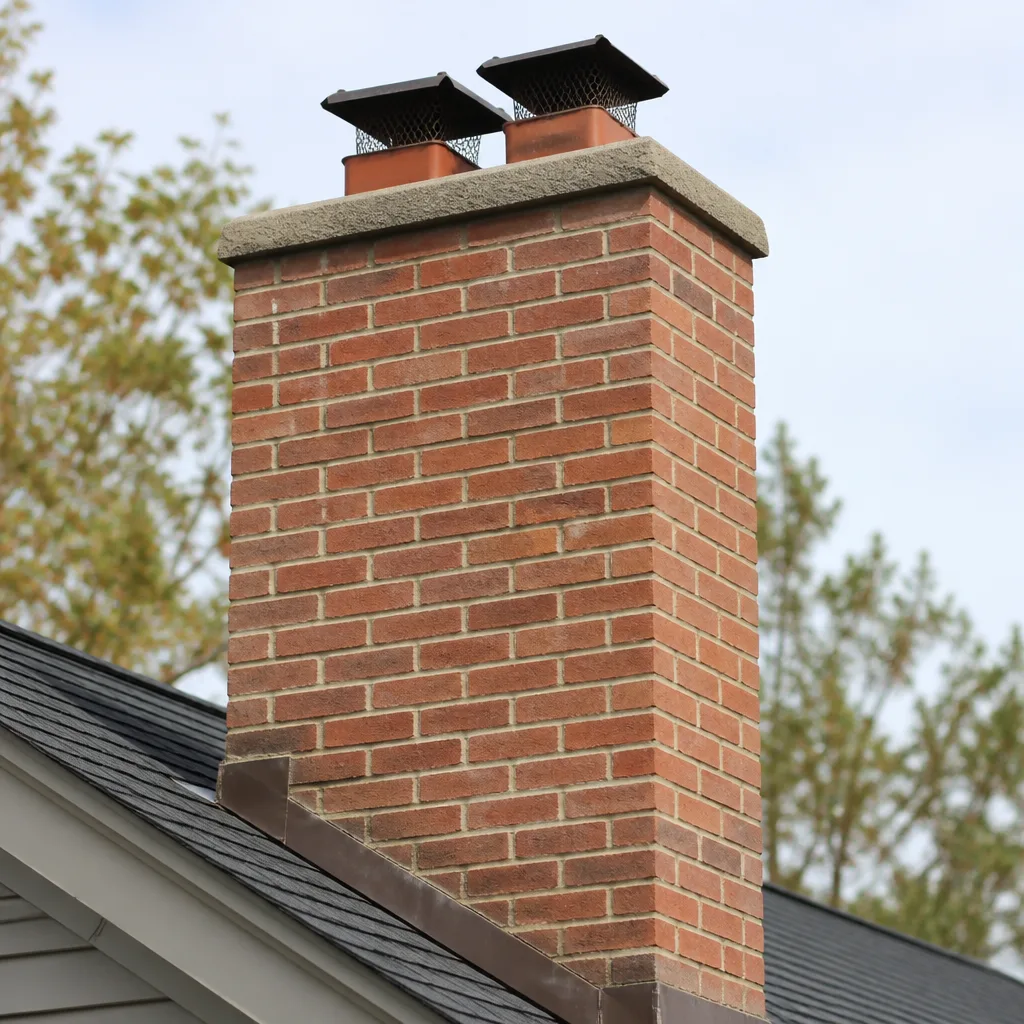
- Ignoring a missing or damaged chimney cap. A cap is not decorative. It keeps rain out of the flue, keeps animals out of the smoke chamber, and prevents sparks from landing on the roof. In Greenwich, we pull birds and squirrel nests out of uncapped chimneys every spring.
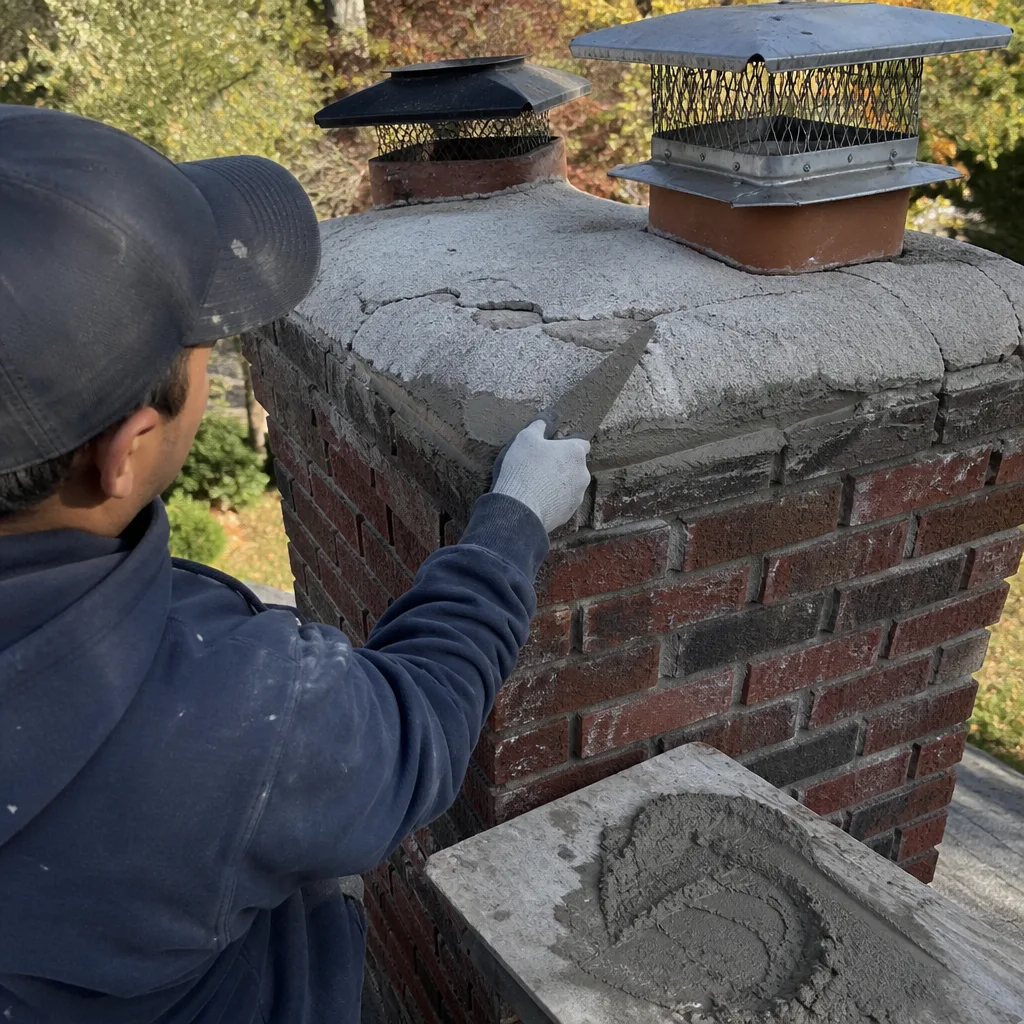
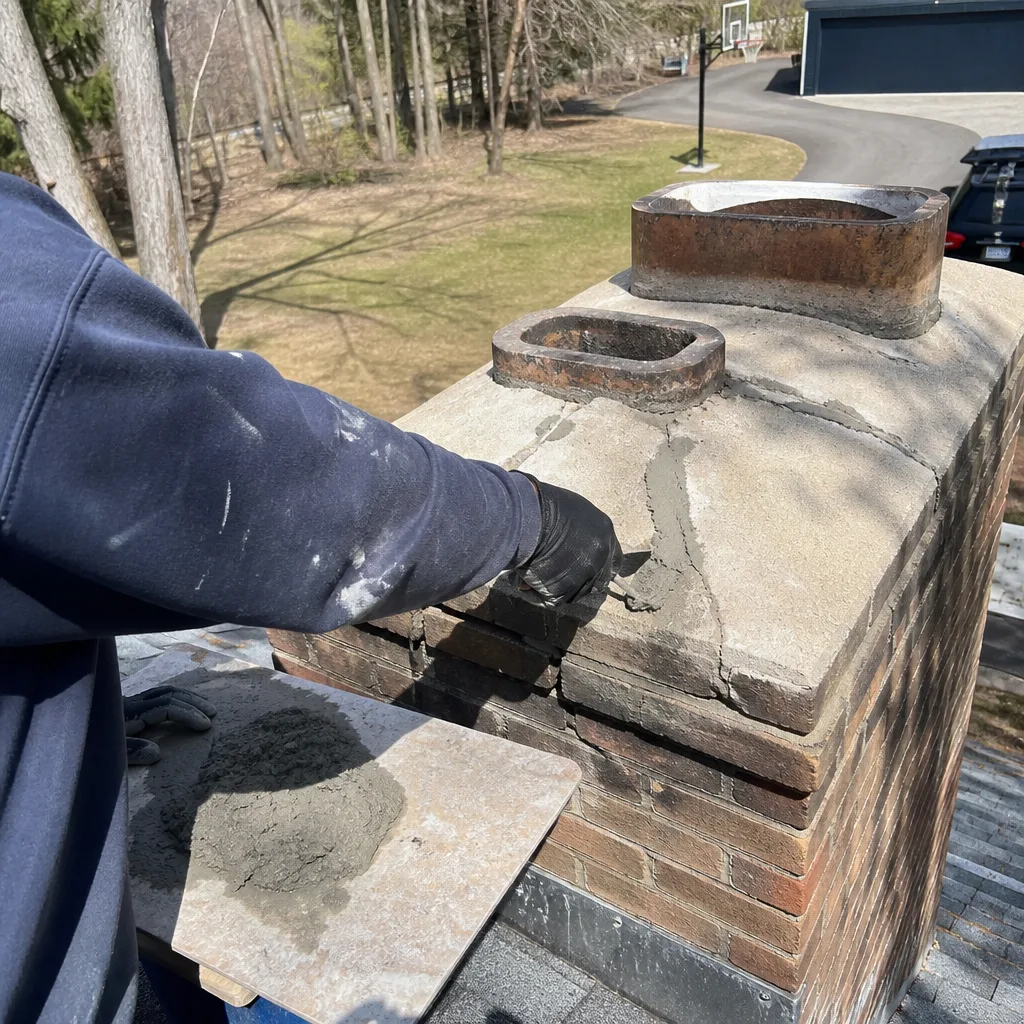
- Skipping the crown. The crown is the concrete slab at the top of the chimney. When it cracks, water gets into the masonry and the freeze-thaw cycle does the rest. A $200 crown patch now prevents a $4,000 masonry rebuild in five years.
- Letting a fireplace go years without use and then lighting a fire on the first cold night. The chimney has been collecting debris, possibly water, and the damper may be seized. Call for a Chimney Repair in Greenwich check before you strike the match.
- Hiring a sweep who cannot show you a camera record. In 2026, there is no excuse for a chimney company that does not own a flue camera. If they cannot show you the inside of your chimney, they are guessing about its condition.
- Assuming a newer home means a safe chimney. We have found cracked tiles and missing mortar in homes built in 2015. Builders install to code minimums, and code minimums do not guarantee longevity.
When to Call a Professional
Call a Greenwich chimney professional when you see any of these: white staining on exterior masonry (efflorescence, a sign of water intrusion), a rusted damper, smoke backing into the room, a strong smell of soot on humid days, or creosote drips visible in the firebox. If you have not used the fireplace in a year or more, schedule a camera-scan inspection before you light it. If you just bought the house, get a Level 2 inspection regardless of what the seller’s disclosure said. And if you are selling, a documented chimney record will remove a contingency headache before the buyer’s attorney makes it one.
Level Two Chimney Greenwich offers free estimates in Greenwich and every surrounding town. Call (516) 399-5497 and a live person will answer. That is not a phrase we use loosely, someone picks up the phone 24 hours a day, 7 days a week.
Frequently Asked Questions
A standard chimney sweep in Greenwich CT costs between $225 and $375 for a single flue with Stage 1 creosote. A combined cleaning with a Level 2 camera inspection runs $350 to $600. Heavier creosote stages, multi-flue chimneys, and homes with difficult roof access push the price higher. Call (516) 399-5497 for a written estimate, delivered before work starts and honored at the door.
Not always. A hairline crack in one tile section can sometimes be addressed with a targeted repair or a HeatShield resurfacing system, which restores the flue without a full teardown. But if the camera scan shows multiple cracked tiles, missing mortar joints, or a liner that has separated, a replacement liner is the safe call. We show you the photos and explain exactly what we saw before we recommend anything. No one replaces a liner in Greenwich without seeing the camera evidence first, and you should not accept a recommendation without it either.
Once per year for a wood-burning fireplace used regularly, and after every cord of wood burned. Homes on the Long Island Sound coast or with exterior chimneys may need twice per season due to faster creosote accumulation. Oil furnace chimneys in Greenwich need an annual camera inspection to check for liner corrosion even when no wood is burned.
Stage 1 creosote becomes Stage 2, then Stage 3. That Stage 3 glaze is a fuel layer that can ignite during a hot fire, and chimney fires burn hot enough to crack tile liners and spread to framing before you realize what is happening. The houses most at risk in Greenwich are not the ones with obvious problems. They are the ones where everything looked fine last year and no one looked this year.
It should. A proper Fireplace Services in Greenwich visit includes cleaning the firebox, removing ash and debris, checking the damper for function and rust, and inspecting the hearth and surround. If a company charges extra for firebox cleanup, that is a red flag. It is part of the job, not an upgrade.
Yes, with the right brush type. Stainless liners require a poly or soft-bristle brush, never a metal brush, which can scratch the liner surface and create points where creosote adheres more readily. The cleaning procedure is the same, but the tools matter. We match the brush to the liner material on every Greenwich job, and the camera scan confirms the result.
The Bottom Line
Chimney cleaning in Greenwich is not a commodity service any more than a home inspection is. The brush removes deposits. The camera reveals what those deposits were hiding. The difference between a $250 sweep and a $450 sweep is not the brushwork, it is the documentation: a written price, a written scope, a written warranty, and a photo record you can show an insurance adjuster or a buyer’s attorney. In Greenwich’s salt-air climate, with colonial-era masonry and oil heat still common, that documentation is not a luxury. It is the only proof you have that your chimney was actually made safe. Call (516) 399-5497 for a free estimate and a written price before anyone schedules the truck.
Written by Corrine Halstead, Owner at Level Two Chimney Greenwich, serving Greenwich since 2009. Browse more guides & resources.