
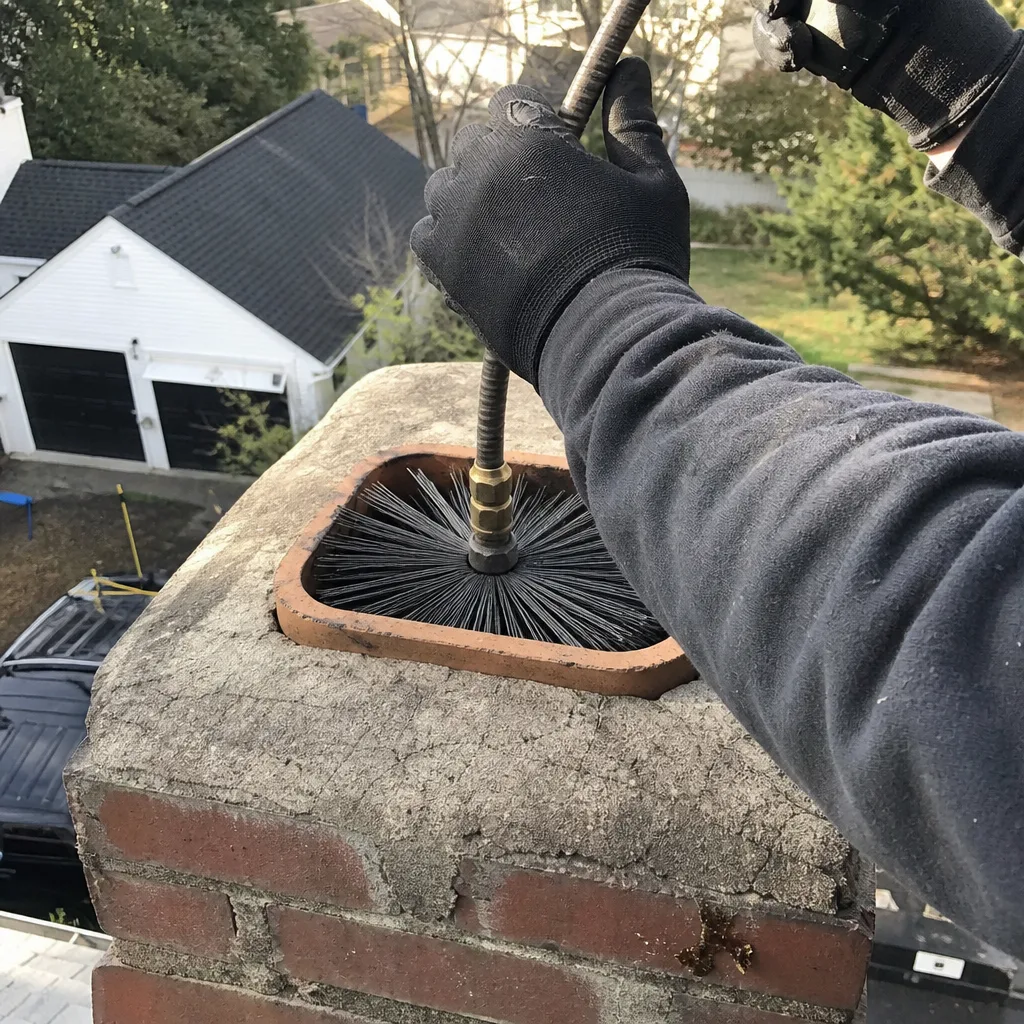
Level 1 sweep and inspection to the NFPA 211 annual standard - flue, crown, cap, and flashing checked and photographed
Chimney sweep logs do not sweep chimneys. They loosen some creosote - which then falls where a brush and vacuum still have to collect it.
 Before
 After
After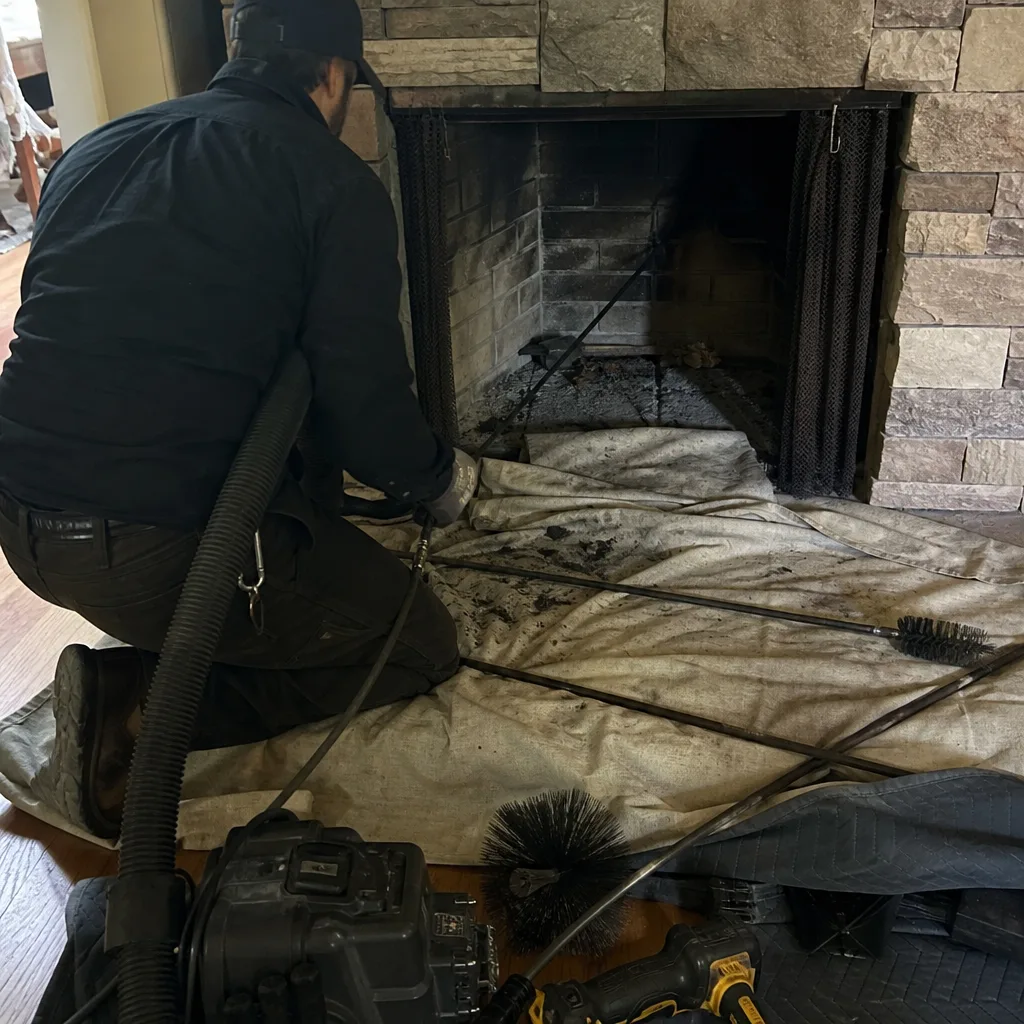 Before
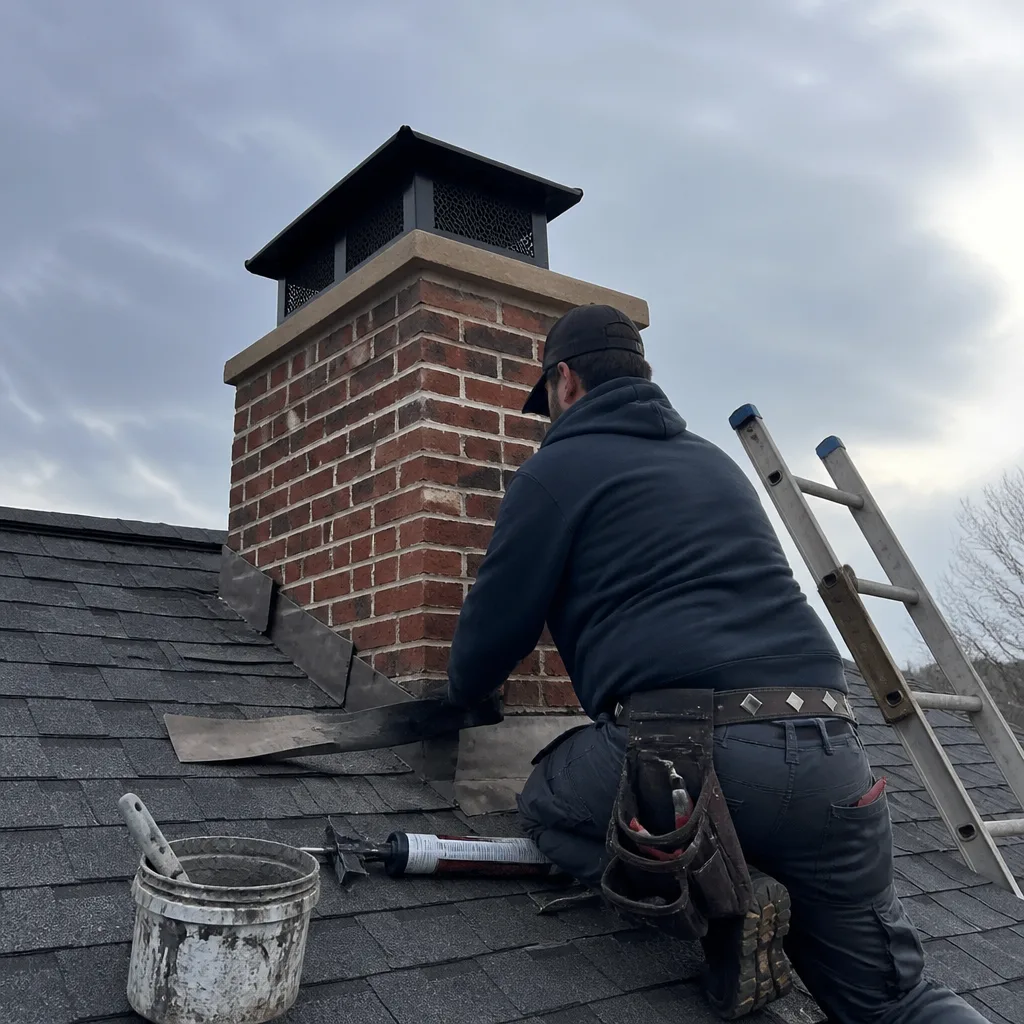 After
After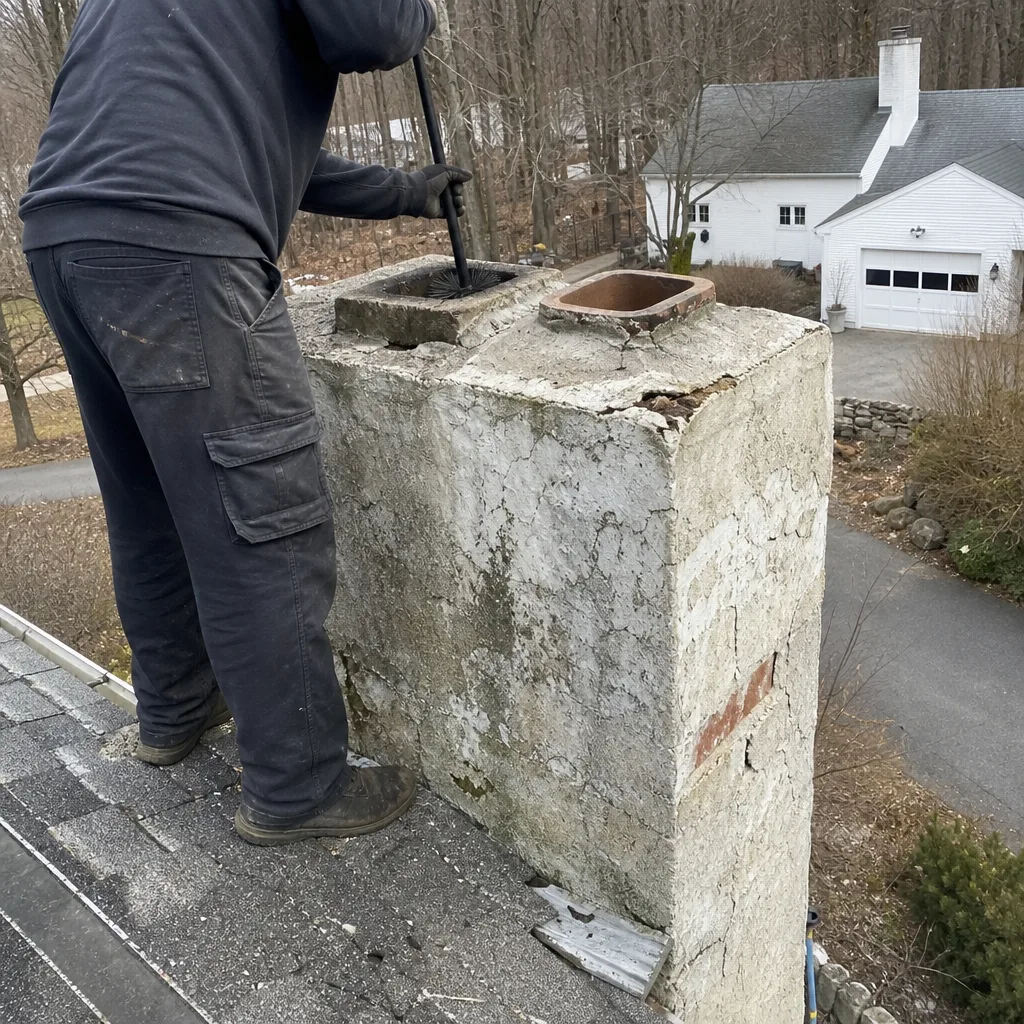 Before
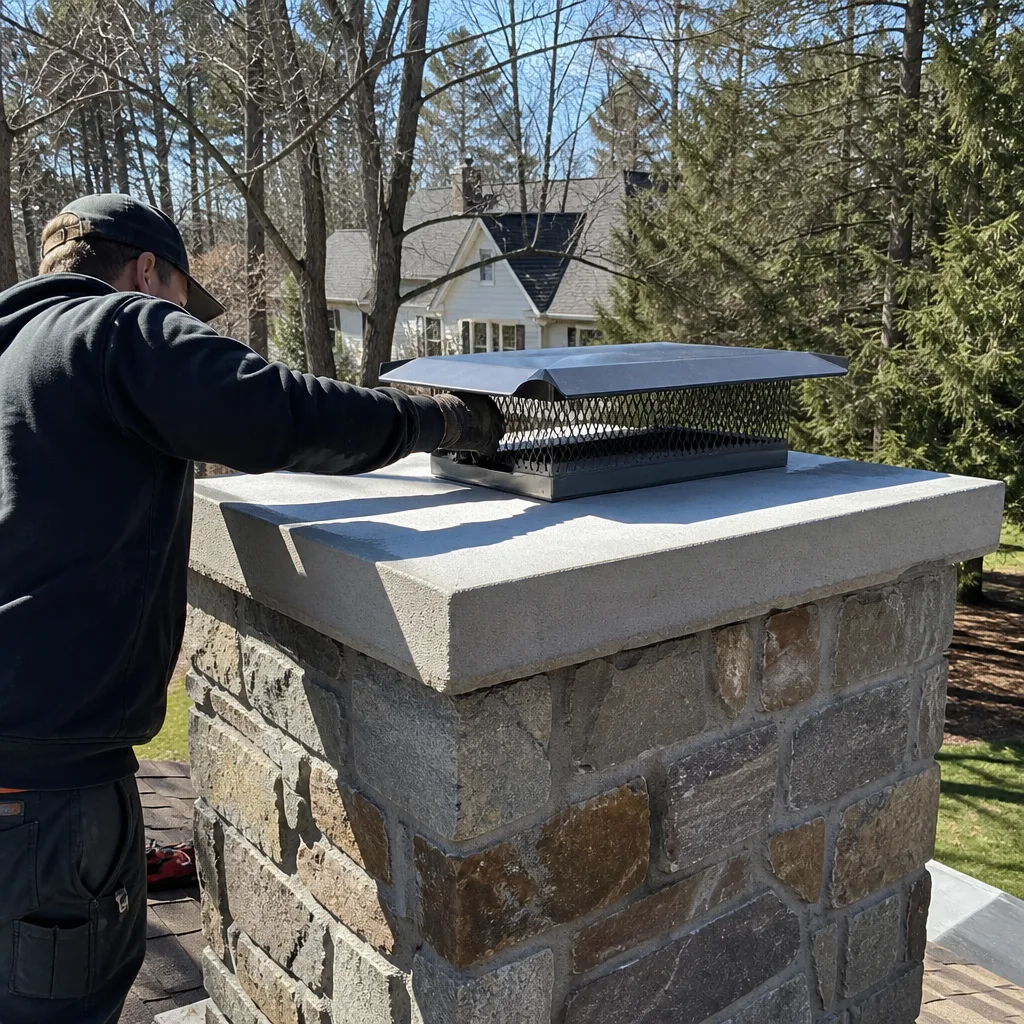 After
AfterDuraFlex Crown Repair: The Greenwich Owner’s Guide
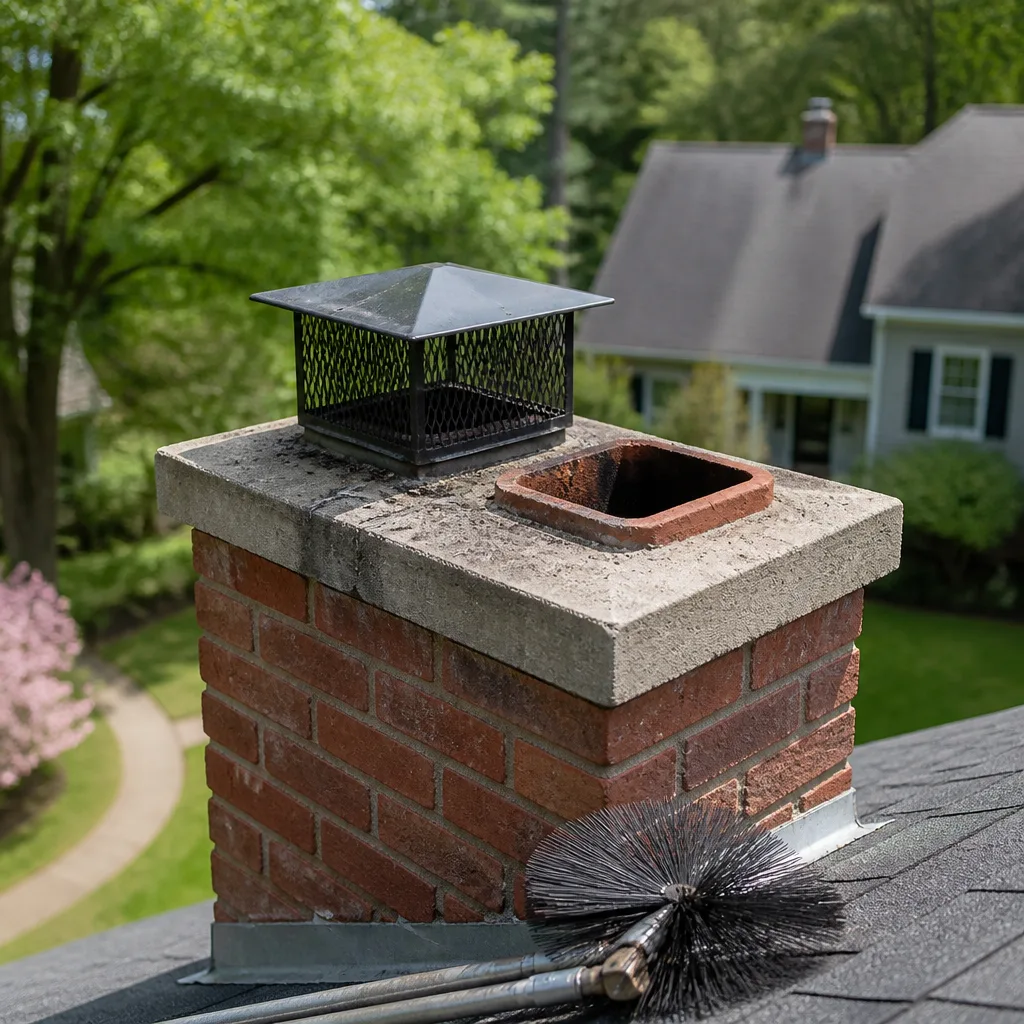
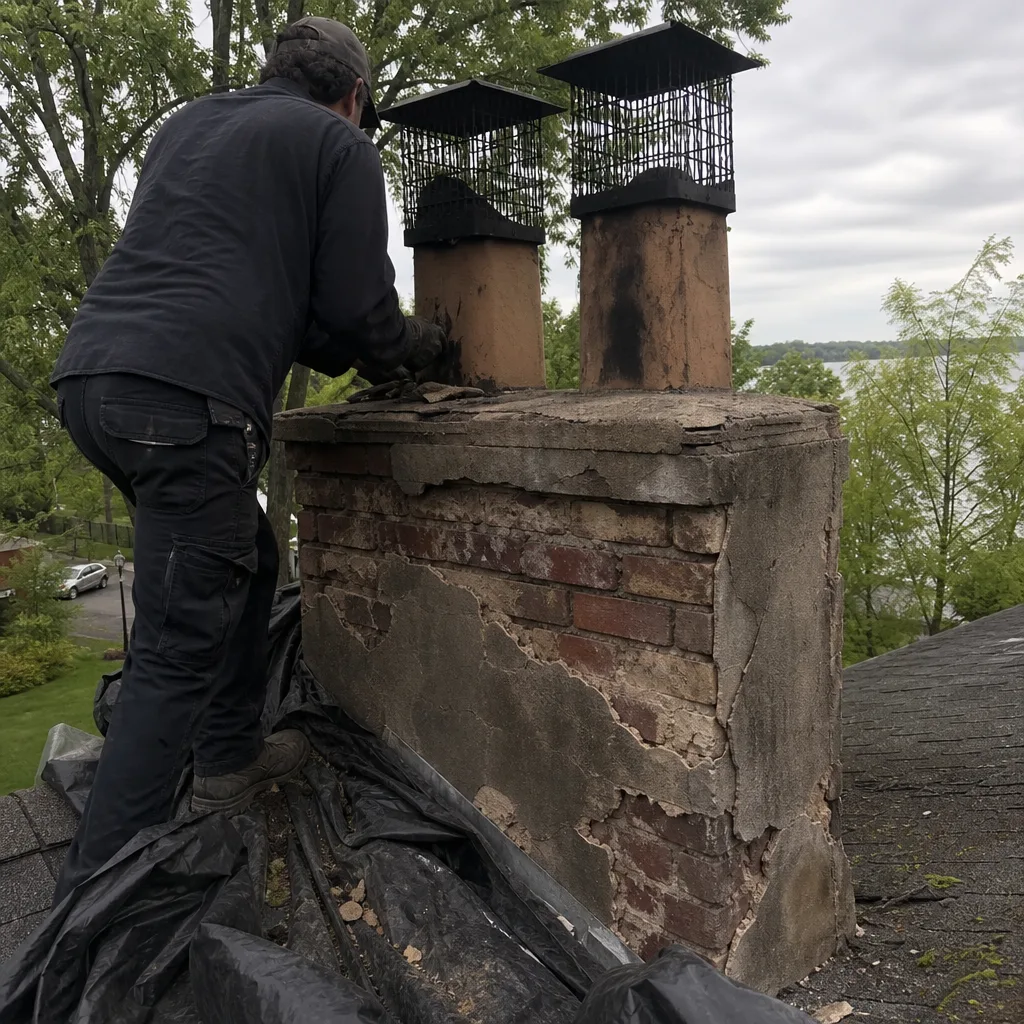
We stock DuraFlex-compatible crown repair parts and complete most Greenwich repairs in a single visit, with installed pricing typically running $450 to $1,100 depending on crown size and how much of the existing mortar bed needs rebuilding. The camera tells us which end of that range you’re in before we touch anything. Most Greenwich homeowners find the problem the same way: a brown stain running down the chimney face after a hard rain, or small chunks of crown material in the gutter during fall cleanout. What they’re seeing is a crown that stopped shedding water years before they noticed. The crown is the concrete or mortar cap that seals the top of the chimney around the flue. When it cracks, water gets into the chase and the mortar joints, and every freeze-thaw cycle through a Connecticut winter widens the damage. Corrine Halstead’s crews have worked on chimneys across Greenwich, from backcountry estates to the older colonials near Cos Cob, and the failure pattern is consistent: crowns fail at the flue collar first, then the outer edges spall, then the water finds the firebox. The camera doesn’t guess. Neither do we.
Which DuraFlex Models This Applies To
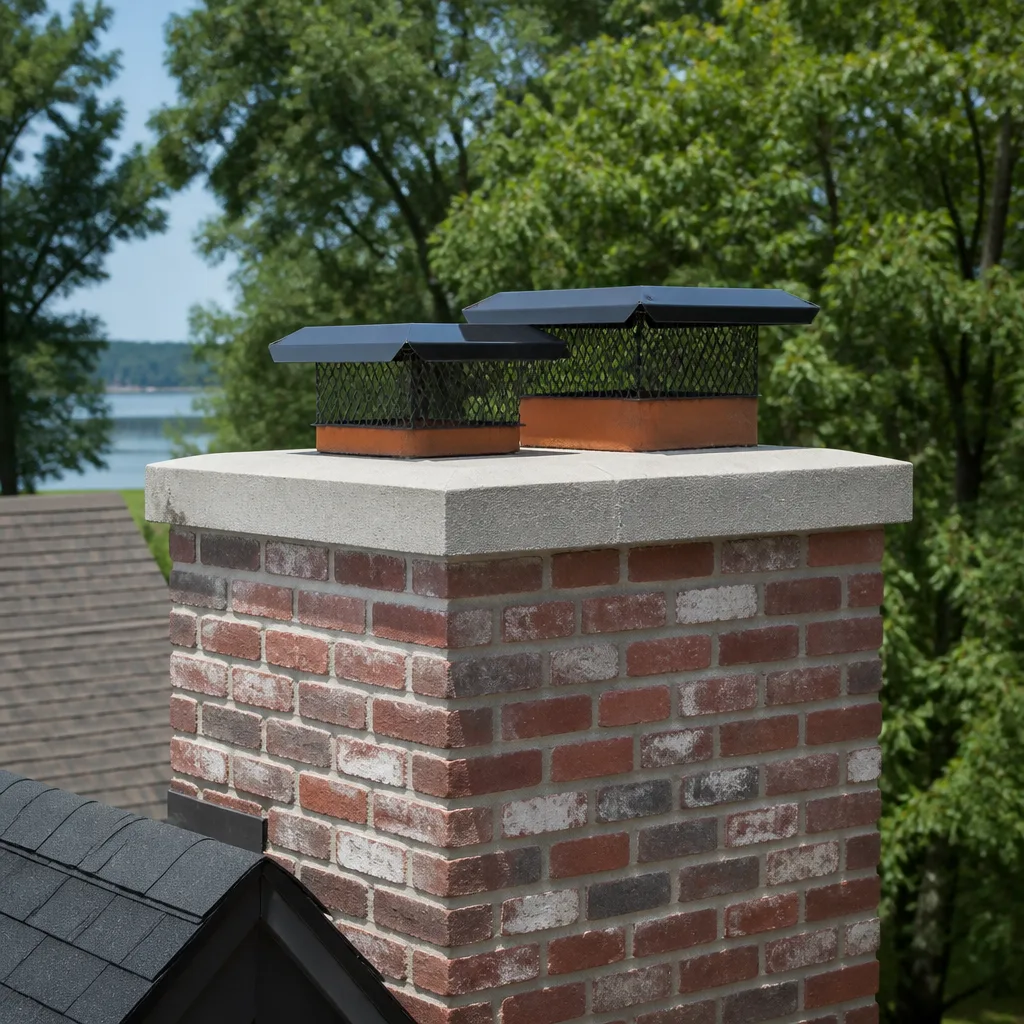
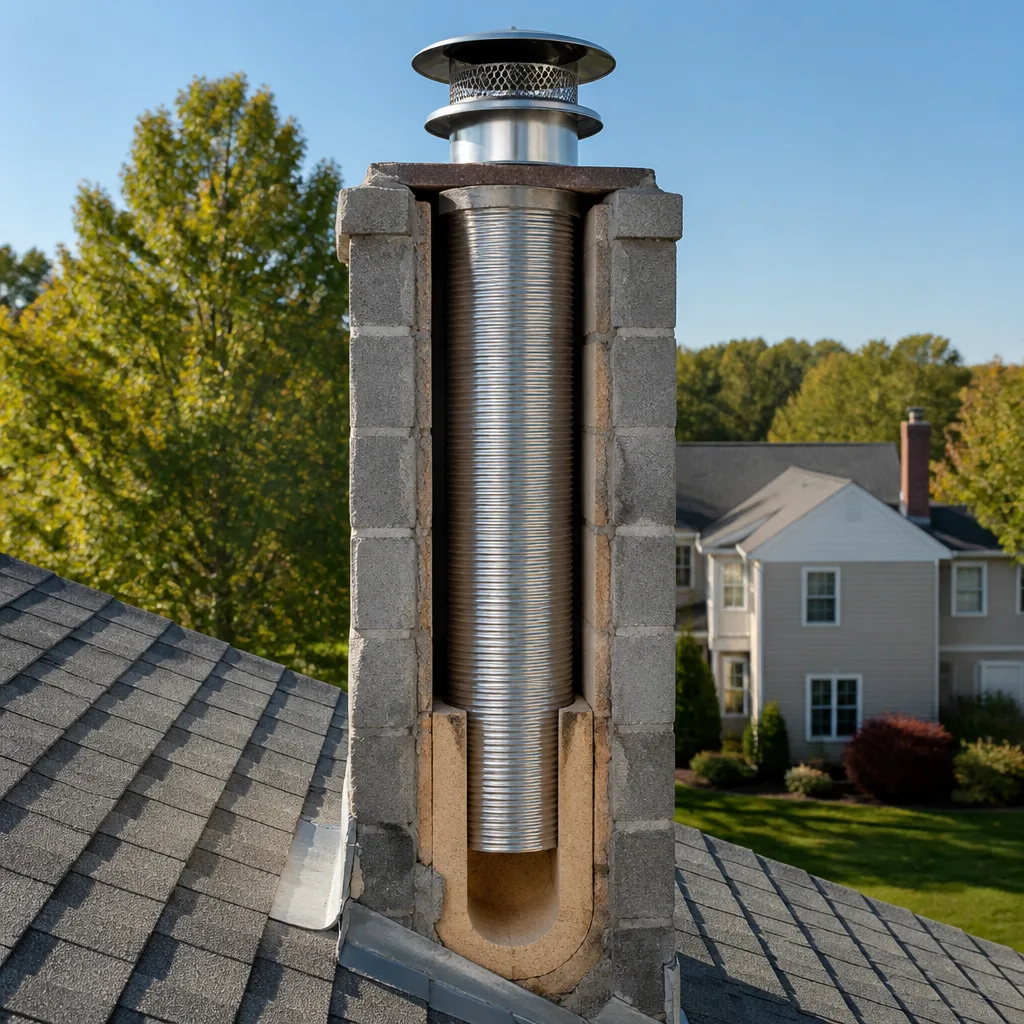
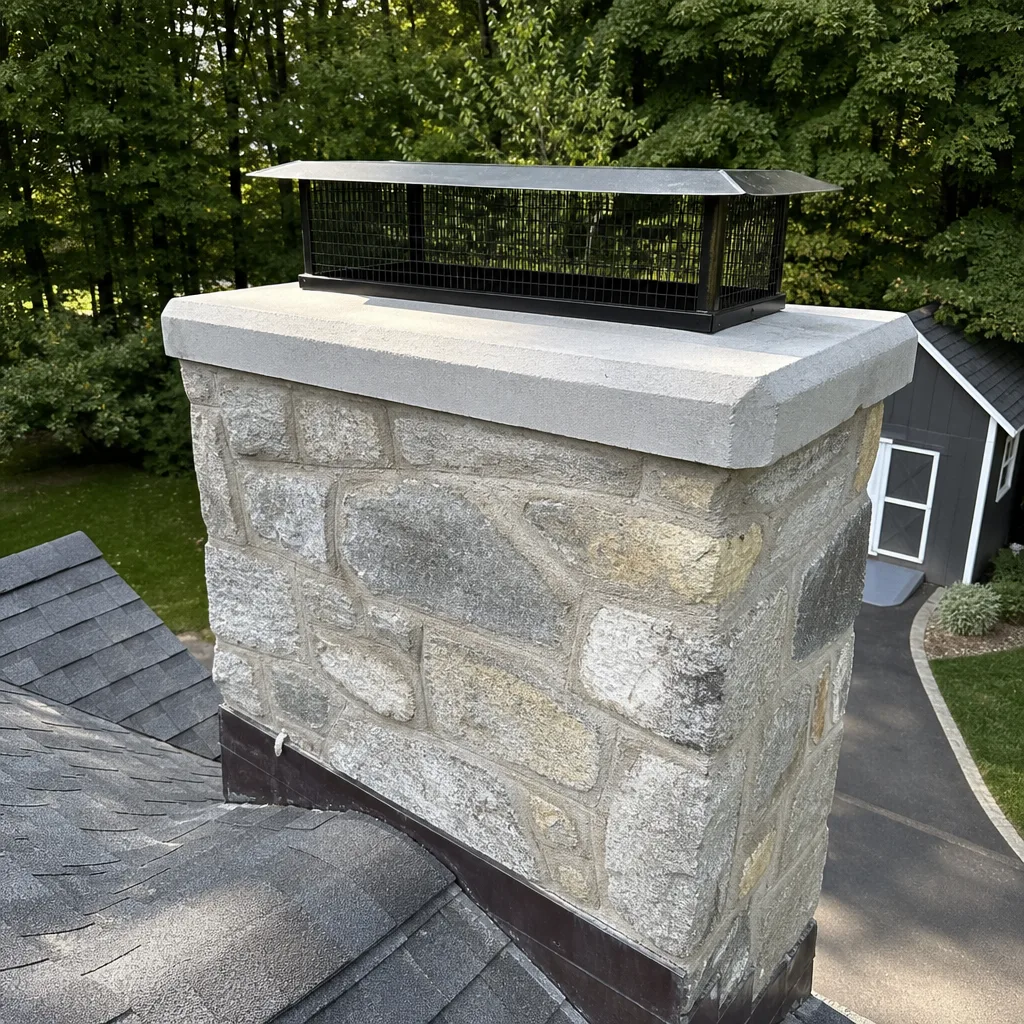
If your chimney has a DuraFlex liner, the crown repair we do works with any DuraFlex sizing: 4-inch through 8-inch round, oval, and rectangle configurations. DuraFlex uses a corrugated 316L stainless liner in most residential installs, and the crown needs to seal around whatever size flue exits the top. The crown itself isn’t a DuraFlex part: it’s the masonry or poured concrete cap that surrounds the flue, and DuraFlex’s installation instructions leave crown detailing to the sweep. That’s where Greenwich homeowners get into trouble. We see crowns that were poured directly against the flue with no expansion joint, so when the liner heats and moves, the crown cracks at the collar. Or crowns with no drip edge, so water runs down the chimney face instead of shedding off. The right repair depends on the crown material: poured concrete crowns can sometimes be patched and sealed, while old mortar-wash crowns, the kind common on 1960s Greenwich colonials, usually need a full recast. If you can’t tell which you have, send us a photo or let the camera settle it.
We’re an independent service provider, not affiliated with DuraFlex. We source DuraFlex, HeatShield, and Gelco materials through Haven’s buying network, which keeps the parts pricing honest on our end.
Signs Your DuraFlex Crown Repair Is Failing
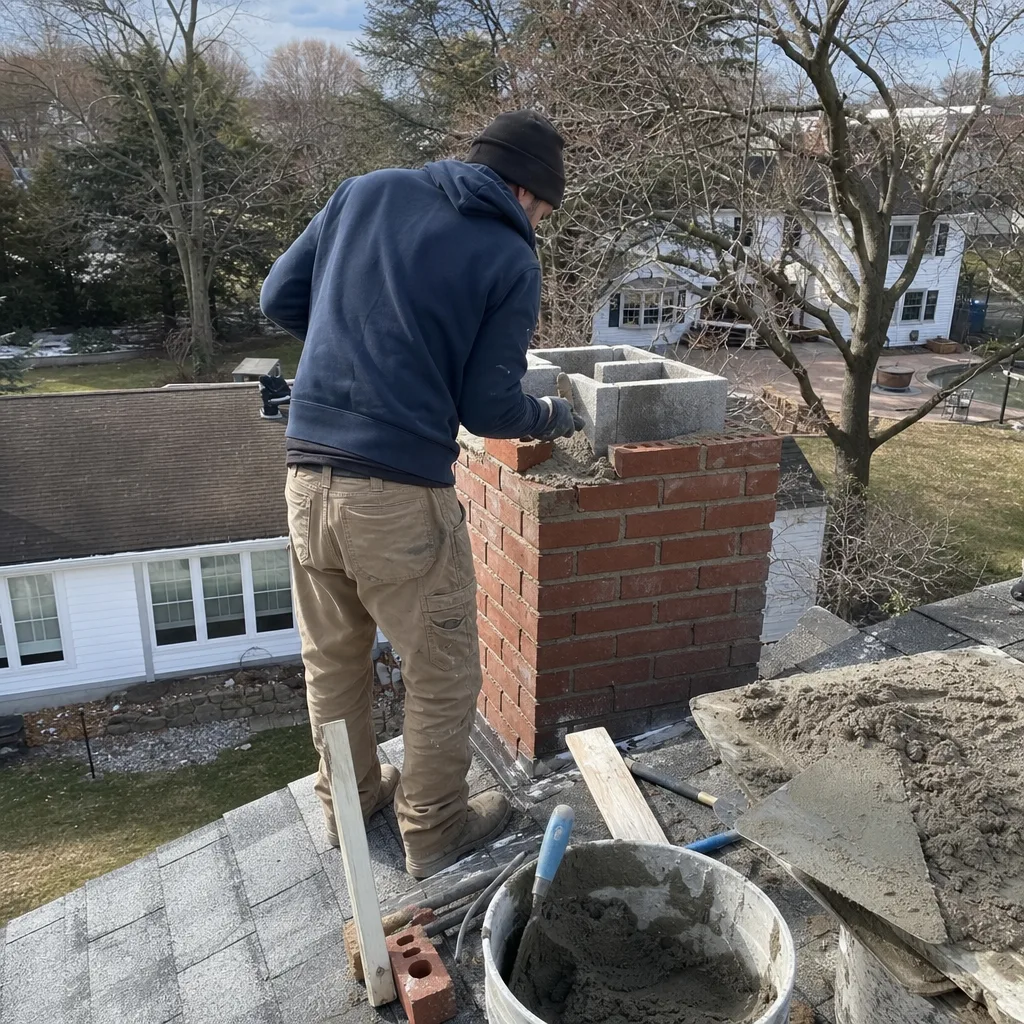
- Brown staining on the chimney face below the crown. This means water is running down the brick or stone because the crown isn’t shedding it properly. The stain is mineral-laden water that’s already leaching through the masonry, not just surface dirt.
- Spalling brick at the top three or four courses. When water soaks into the brick and freezes, the face of the brick pops off in sheets. In Greenwich, we see this after one bad winter once the crown has been cracked for a couple of years. If you see brick faces on the ground or in the gutter, the crown has been failing for a while.
- Cracks you can see from the ground, especially around the flue pipe. Hairline cracks at the flue collar widen with every heating cycle. A crack wider than about 1/8 inch is letting water through. Use binoculars if you don’t want to climb; the crack will be obvious.
- Chunks of crown material in the gutter or on the roof. This is spalling at the crown itself, not the brick. It means the crown has lost enough structural integrity that pieces are breaking off under normal weather, and the remaining material is porous enough to soak water like a sponge.
- Water in the firebox after heavy rain. This is the late-stage signal. The water has traveled down through the crown, through the chase or masonry, and reached the firebox. By the time you see this, you’re also looking at possible damper rust and smoke chamber damage. The crown repair is still step one, but the camera usually finds more.
BeforeAfterReplacement Cost & What’s Included
In Greenwich, a DuraFlex crown repair with us runs $450 to $1,100 installed. Poured concrete recast is the higher end; mortar wash repair and reseal is the lower end. What drives the difference is whether we’re patching and sealing an existing sound crown or forming and pouring a new one. You also have to account for chimney height: a three-story Ridgefield Road chimney needs more staging time than a one-story ranch near Byram, and that labor is in the price. Everything is written before work starts: the scope, the material, the price, and the warranty. That’s Clause 1 of the Haven Standard, and it’s been our practice on all 38,000-plus inspections and cleanings since 2009. The warranty on crown work is in writing and covers material failure, not weather events. We don’t ask you to trust us on that.
DIY or Call Us?
You can safely do your own inspection from the ground. Look for the brown staining, the missing brick faces, the visible cracks, the chunks in the gutter. You can even get a good look at the crown with binoculars or a drone camera. What you shouldn’t do is get on the roof with a trowel and a bucket of patching compound, because crown repair is not caulking. A crown that’s cracked at the flue collar needs the area around the flue opened up so the expansion joint can be rebuilt correctly, and if you just smear sealant over the crack, you’ve bought one winter before the same crack reopens, usually wider. The one thing we tell every Greenwich homeowner: put the tube of masonry caulk down. Caulk has no place in crown repair. If you’ve got water in the firebox or visible crown spalling, call us at (516) 399-5497. The camera will show you exactly what we’re working with, and you’ll have a written price before we start.
FAQs
A properly poured crown with a drip edge and expansion joint lasts 15 to 25 years in Greenwich’s climate. The freeze-thaw cycling here is hard on any concrete work, but the failure we see is almost always a crown that wasn’t detailed right in the first place: no drip edge, no expansion joint, or a crown poured with the wrong mix. If you fix the detailing as part of the repair, you fix the lifespan. Call (516) 399-5497 for a written quote on your specific chimney.
Sometimes. If the crown is structurally sound and the damage is limited to hairline cracks and surface erosion, we patch and seal. If the crown is spalling, crumbling, or cracked through at the flue collar, patching just buys time and the cracks reopen. The camera tells us which situation you have, and the photo record that comes with every visit is yours to keep. Call (516) 399-5497 to schedule.
Most crown repairs in Greenwich are done in one visit, typically four to six hours on site. That includes setup, removing the damaged material, forming or patching, and finishing. The material needs a day to cure before it sees rain, and we’ll tell you that before we start so you know what to expect from the weather window. Call (516) 399-5497 for a specific timeframe on your chimney.
We stock the crown materials on the truck: the mix, the bonding agents, the expansion joint material, the drip edge forms. For DuraFlex-specific hardware like top plates and storm collars, we carry the common sizes and source anything unusual through Haven’s buying network within a day or two. When we say we can complete the repair in one visit, that’s based on what’s actually on the truck. Call (516) 399-5497 and we’ll tell you exactly what your chimney needs.
Written by Corrine Halstead, Owner, Level Two Chimney Greenwich at Level Two Chimney Greenwich, serving Greenwich and nearby areas.