
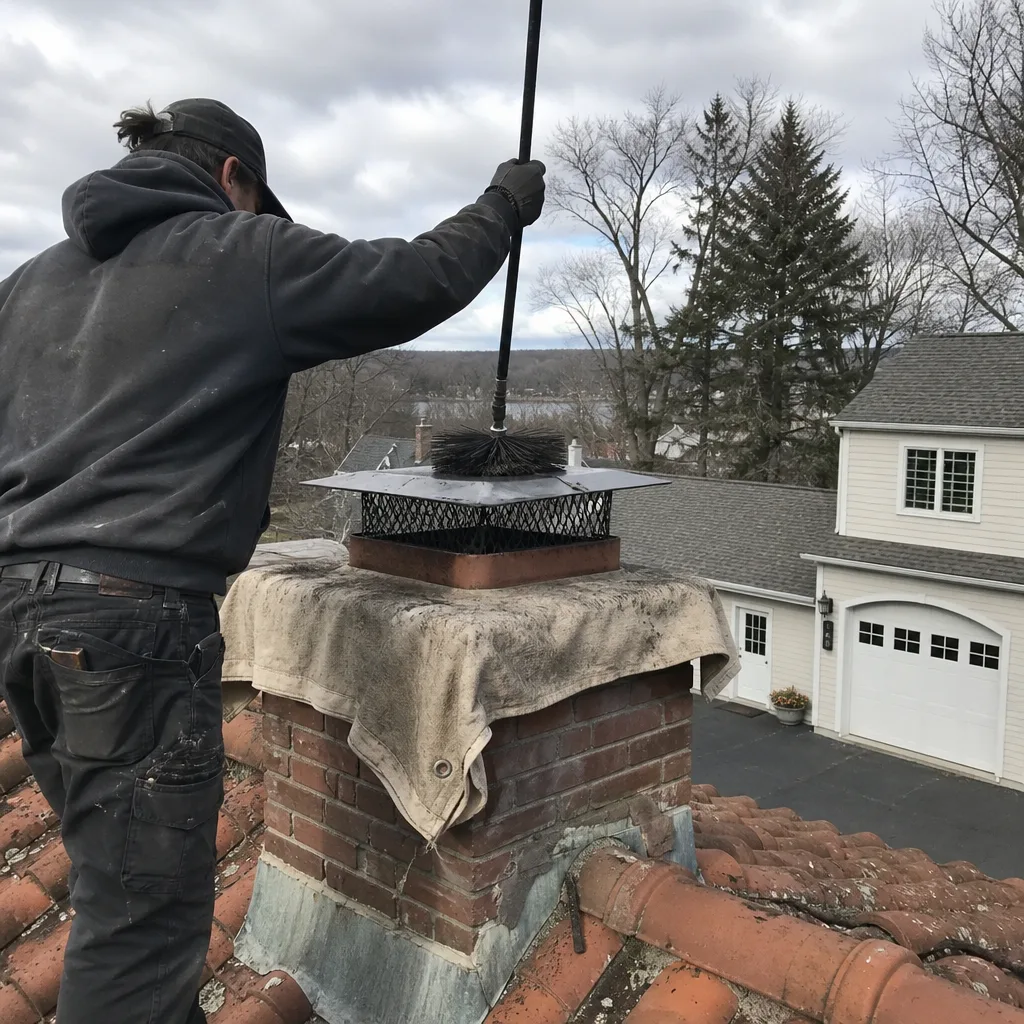
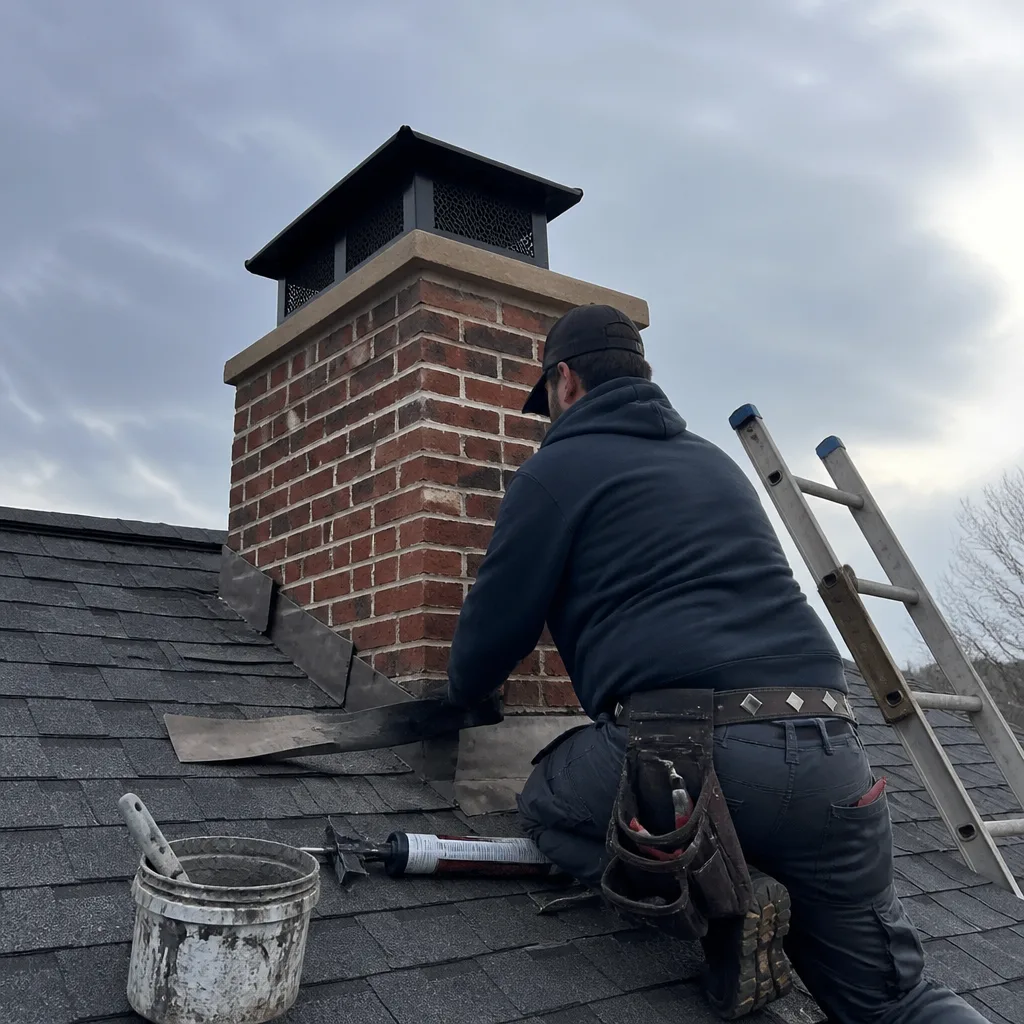
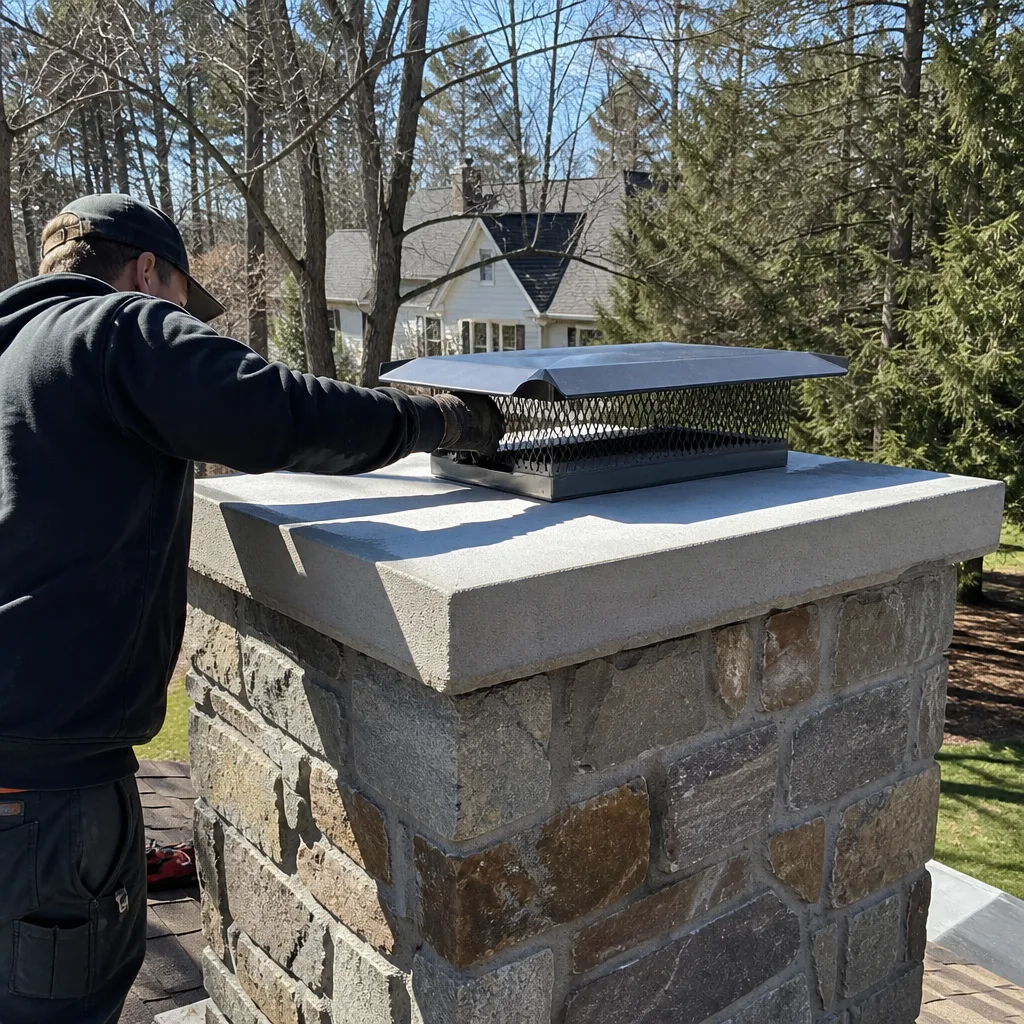
Level 1 sweep and inspection to the NFPA 211 annual standard - flue, crown, cap, and flashing checked and photographed
Chimney sweep logs do not sweep chimneys. They loosen some creosote - which then falls where a brush and vacuum still have to collect it.
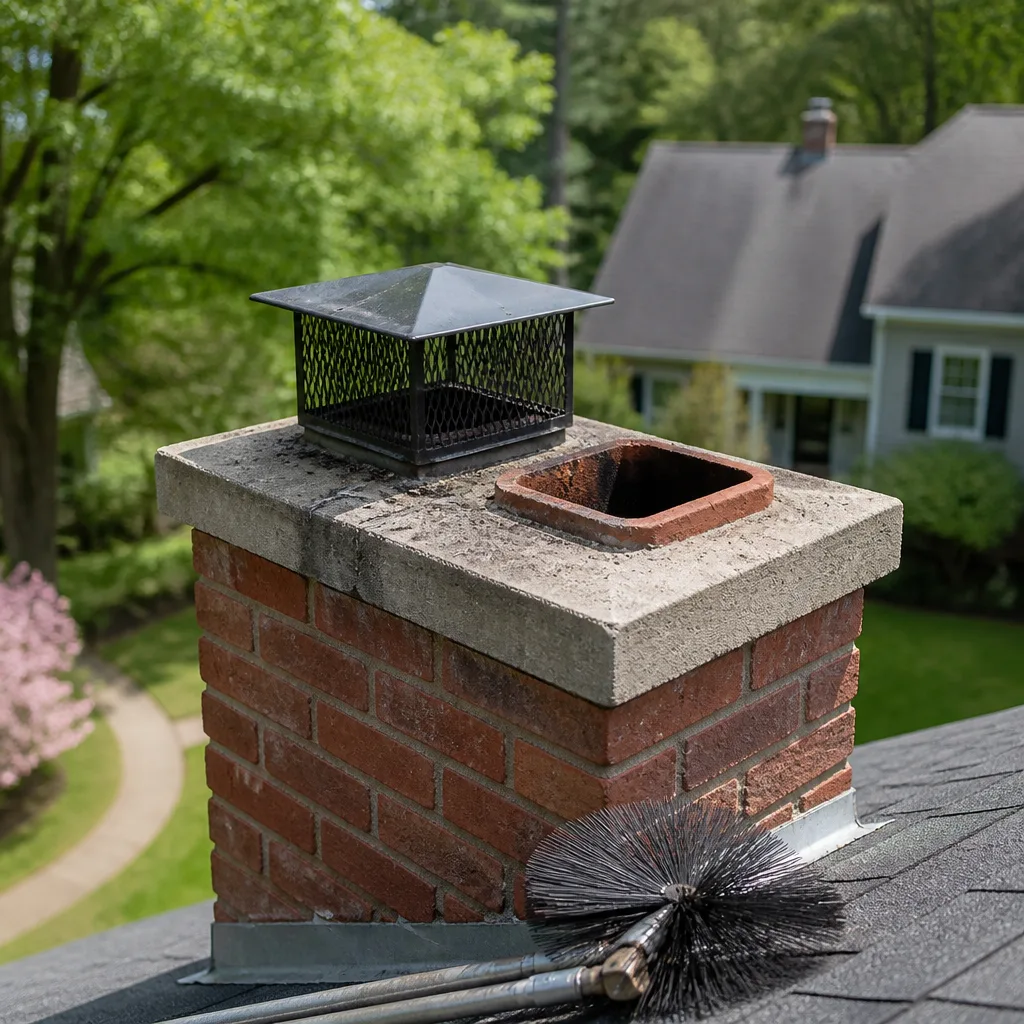
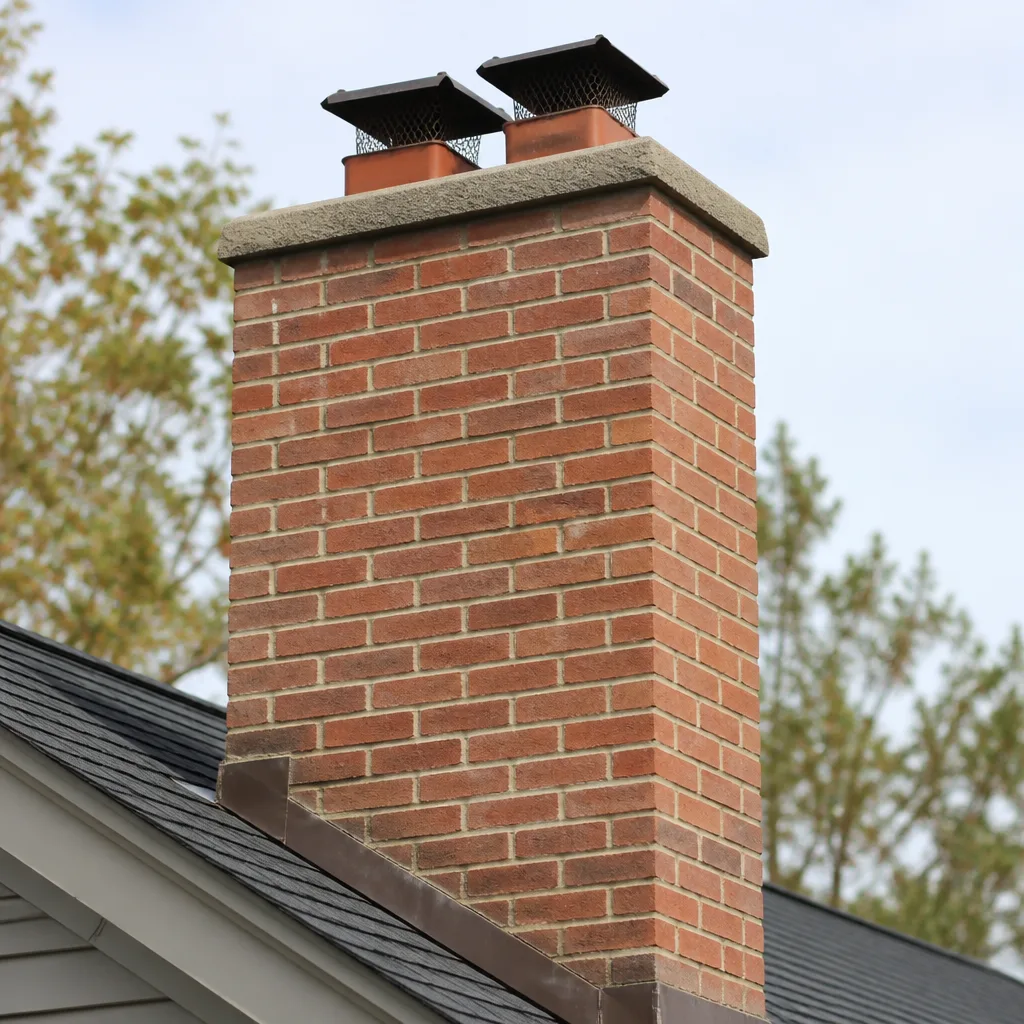
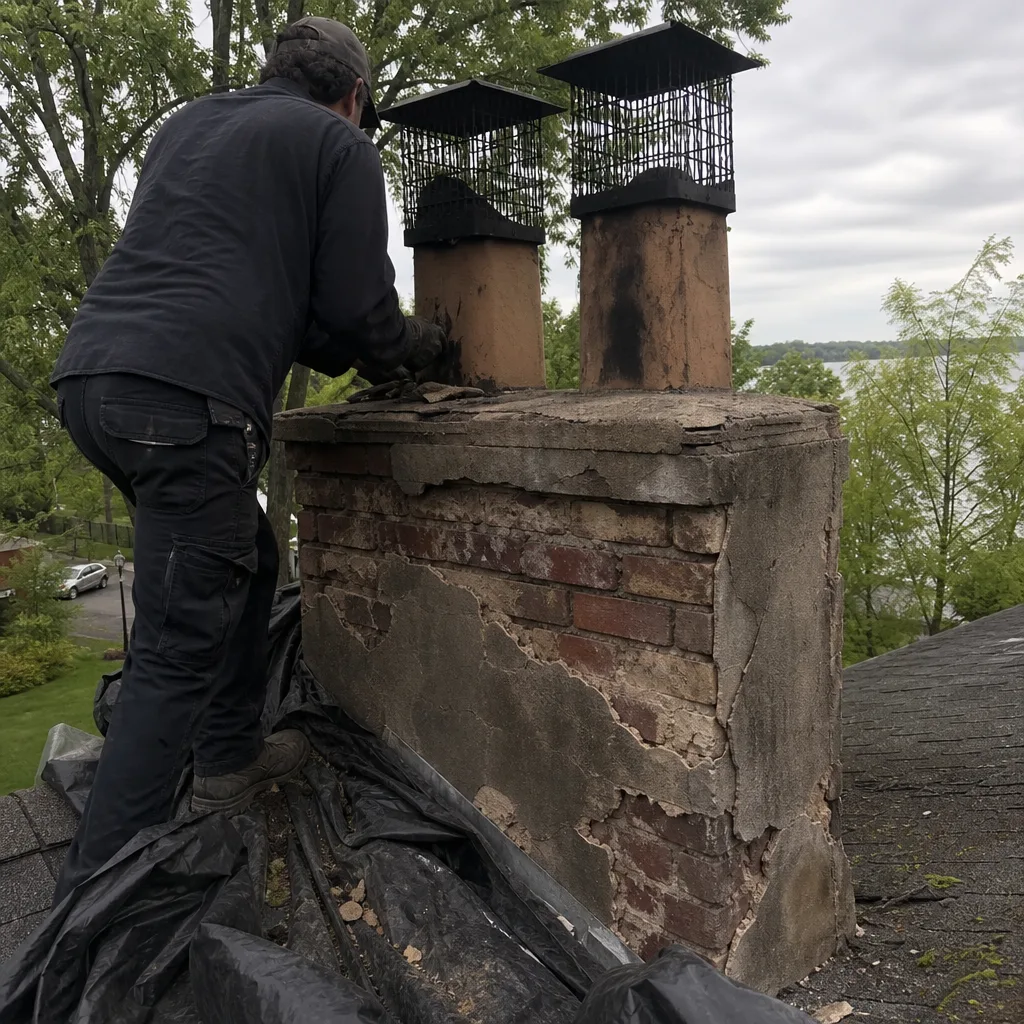 Before
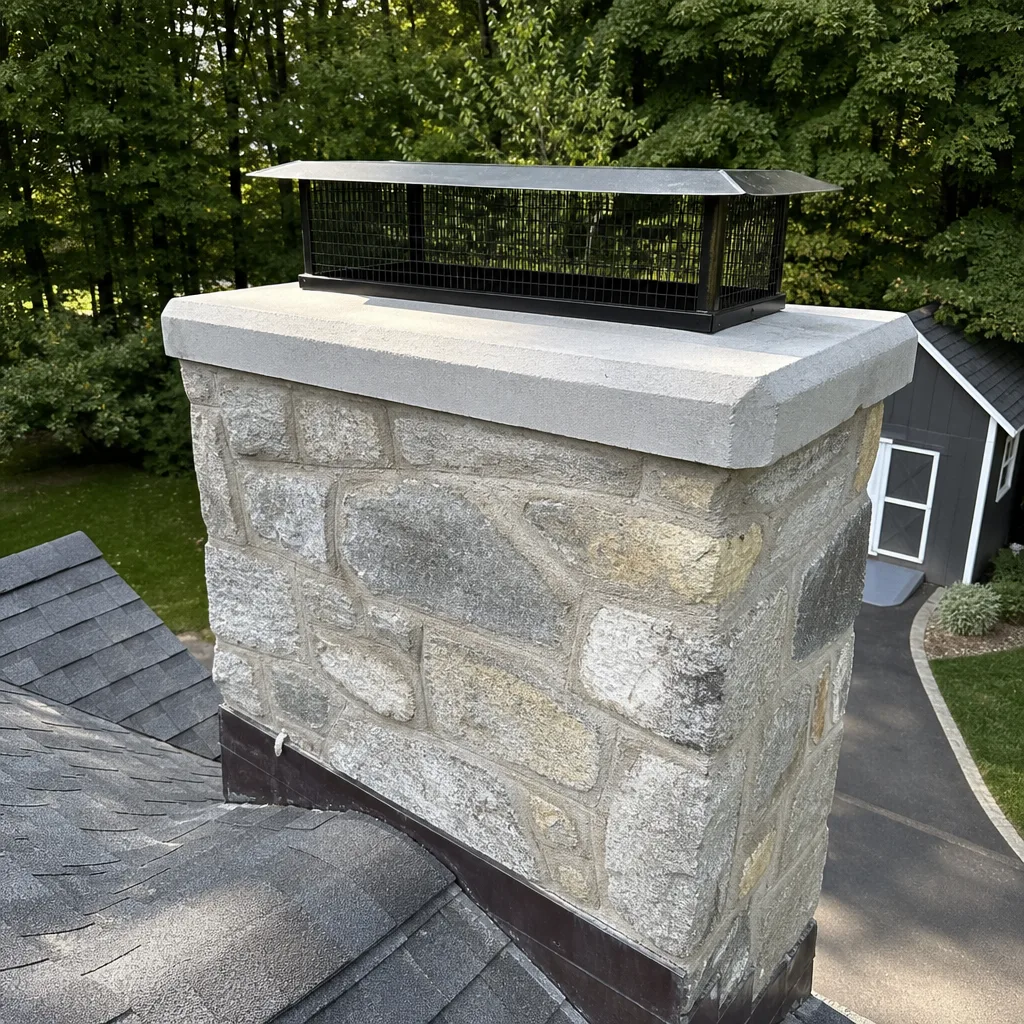 After
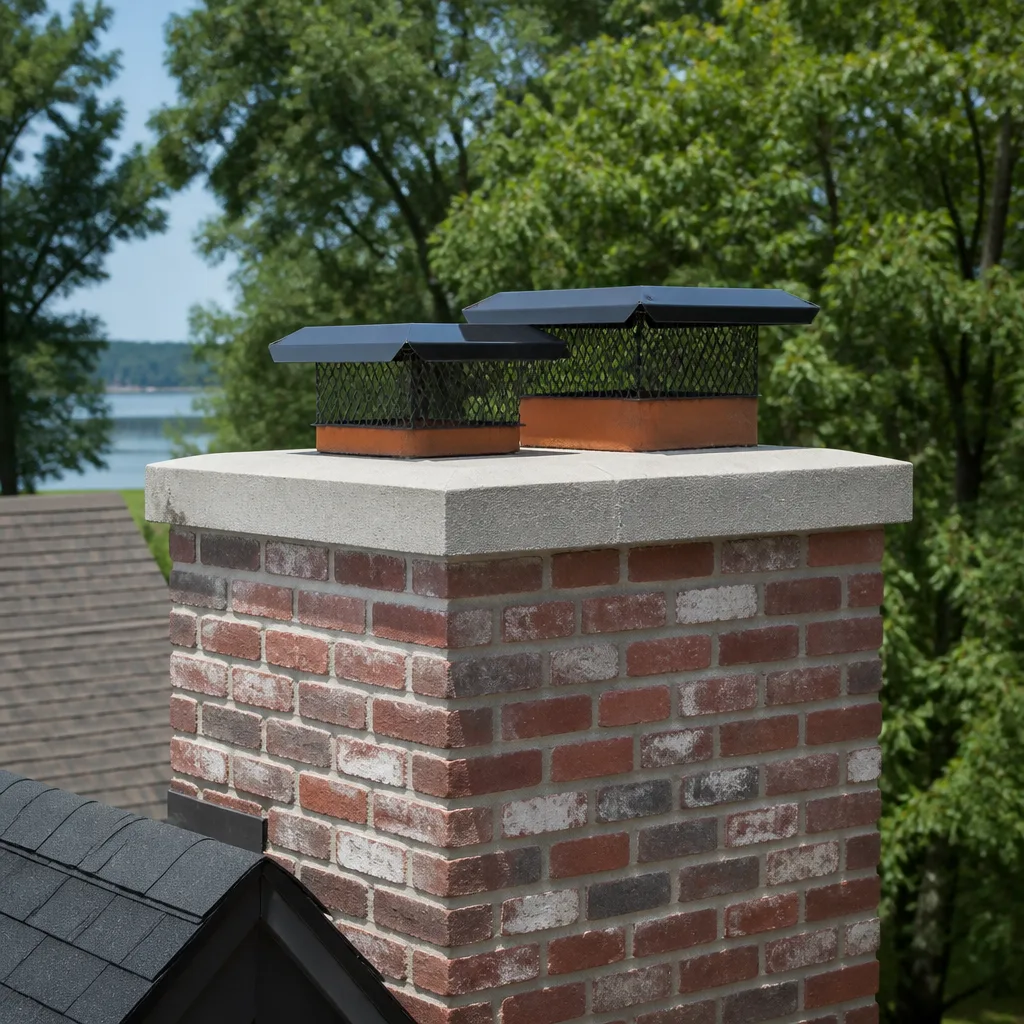
After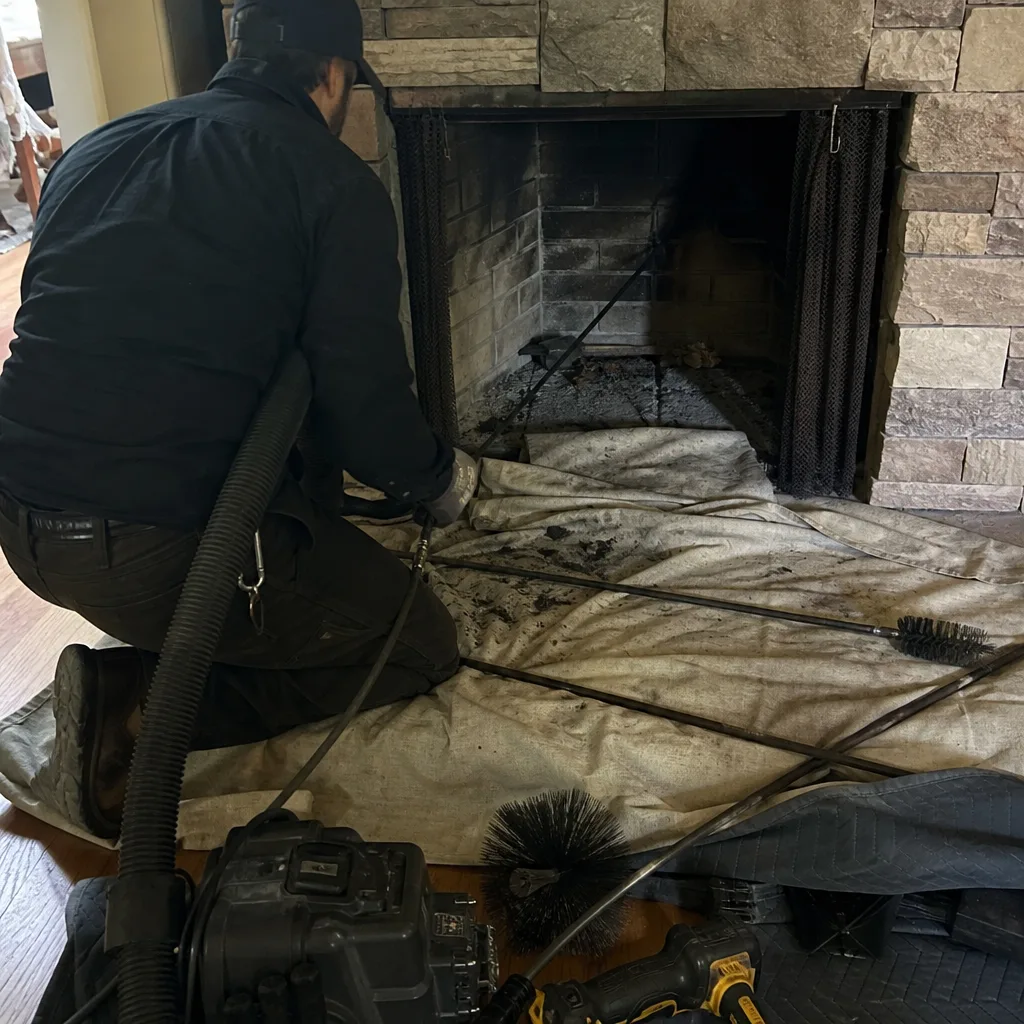 Before
 After
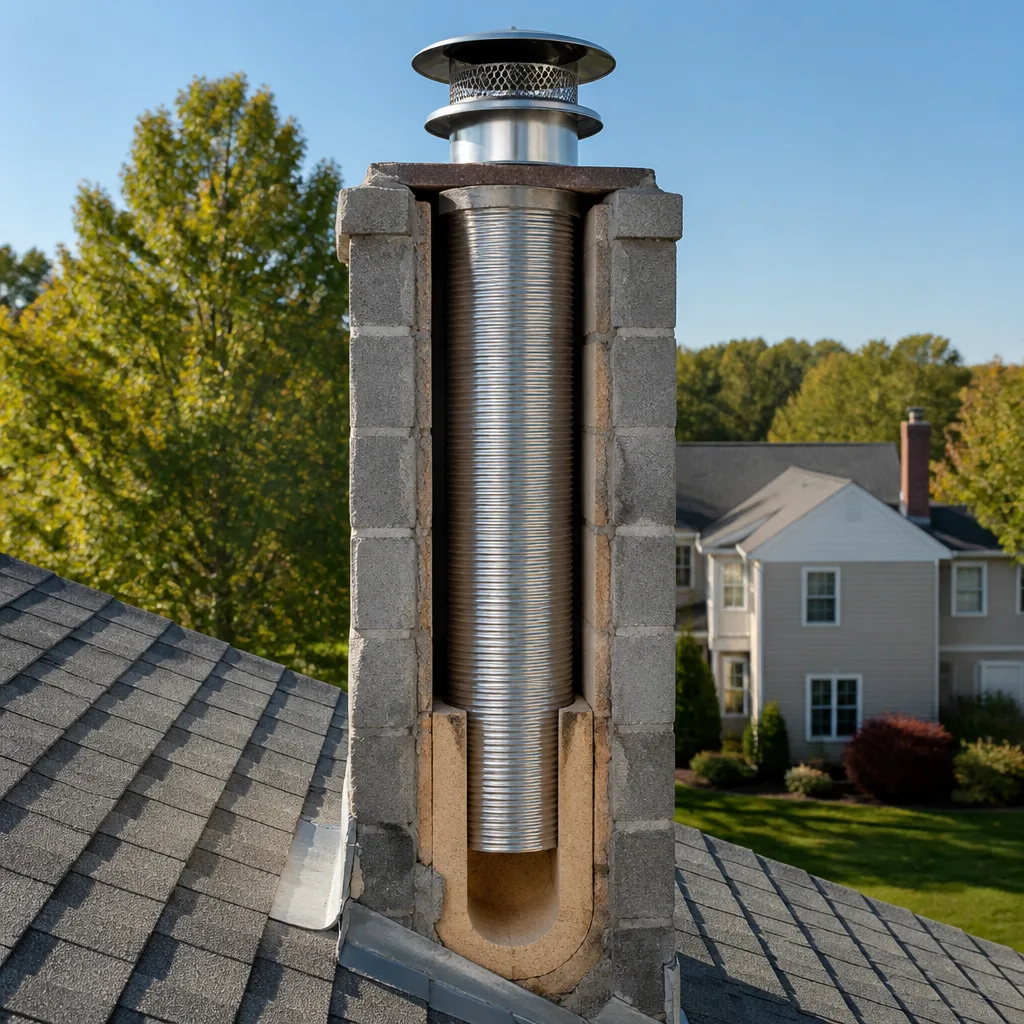
After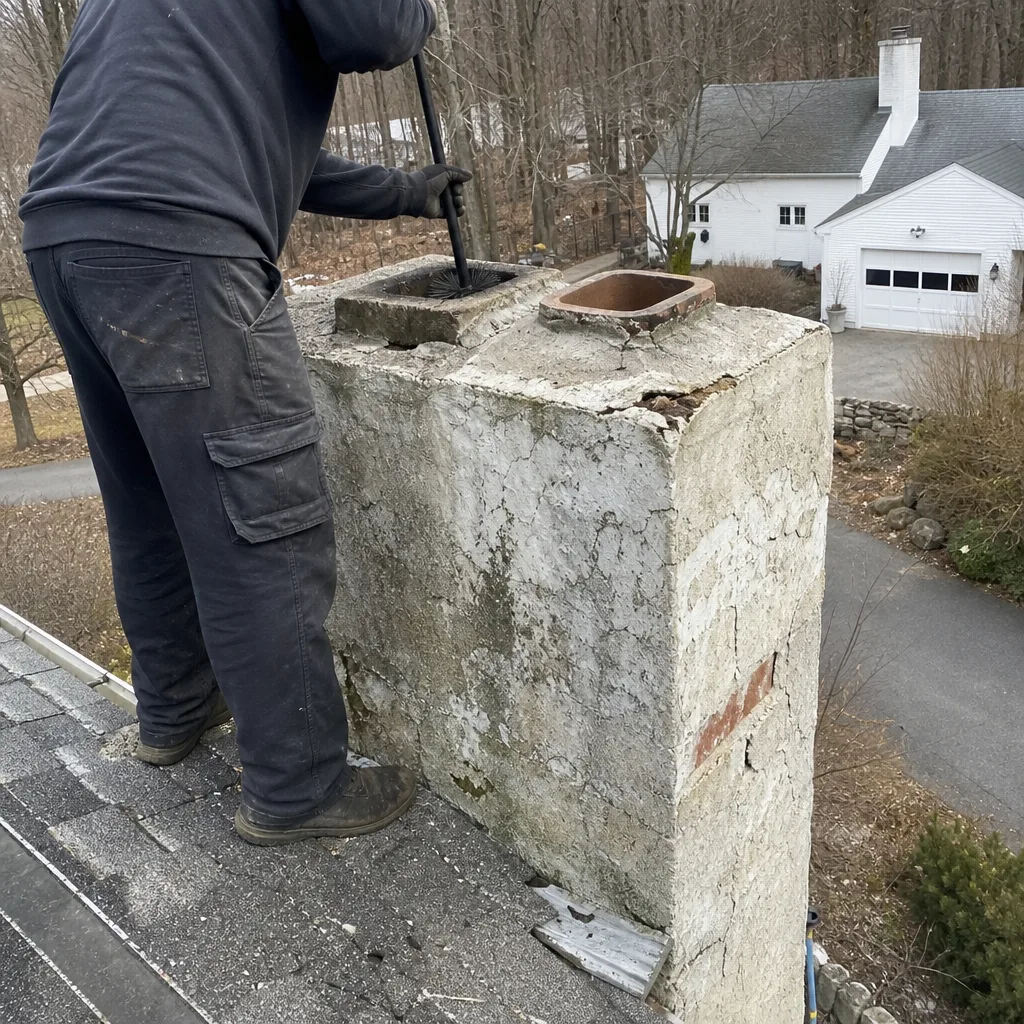 Before
 After
AfterCreosote Removal in Greenwich, CT
Creosote removal in Greenwich typically runs $199 to $599, depending on how much has built up in the flue and which stage of creosote you’re dealing with. Most single-flue cleanings with a light-to-moderate deposit fall in the lower half of that range; heavily glazed, Stage 3 accumulation that requires chemical treatment adds time, materials, and cost. Whatever the scope, we give you a written price before anyone touches the chimney – not after the technician is already on your roof.
If you burn wood in a fireplace or wood stove in Greenwich and the flue hasn’t been cleaned in the last year, there’s a reasonable chance creosote is building up in ways you can’t see from the firebox. Our camera-scan inspection puts a documented picture of what’s actually inside the flue liner in front of you before we talk about what the job costs or what it involves. That’s how every visit works here, and has been since 2009.
Creosote removal is one part of a broader service – for the full picture on what a professional sweep covers, see our Chimney Cleaning & Sweep in Greenwich page. Or call us directly at (516) 399-5497 – someone picks up every time, around the clock.
What Creosote Is and Why It Matters
Creosote is a byproduct of incomplete combustion. When wood burns and the smoke rises through the flue, some of it condenses on the liner walls before it exits the chimney. The deposit it leaves behind is creosote: part tar, part carbon, part chemical compounds that vary depending on wood species, moisture content, and burn temperature.
It builds up in three stages, and the stage matters a lot for what removal actually involves.
- Stage 1 (Class I): Flaky, sooty residue. Standard rotary brush equipment removes it in a single visit. This is what a well-maintained chimney produces when burned correctly.
- Stage 2 (Class II): A harder, tar-like coating that looks almost crunchy. It adheres to the liner walls more aggressively and often requires both rotary brushing and additional passes with heavier tools. Removal takes longer and costs more.
- Stage 3 (Class III): Glossy, glazed creosote – the kind that looks almost lacquered on the inside of the liner. Standard brushing doesn’t break it down. Chemical treatment is applied first to change the consistency of the deposit, then mechanical removal follows. This is the most time-intensive scenario and also the most dangerous if it ignites: Class III creosote burns at temperatures that can crack a clay liner or compromise a stainless flue system.
Greenwich homes – particularly older colonials and cape-style houses in Cos Cob, Riverside, and Old Greenwich – often have clay tile liners installed decades ago, which is why Fireplace Cleaning requires extra care. Clay doesn’t flex the way stainless does, and a flue fire involving Stage 3 creosote is one of the most reliable ways to crack a tile liner and turn a cleaning job into a relining job. That’s not urgency theatre; it’s what we see on the camera.
When You Need Creosote Removal
- You smell smoke or a sharp, acrid odor when the fireplace isn’t in use. This almost always points to a creosote buildup thick enough to off-gas through the damper, especially on warm or humid days. Greenwich summers are humid; that moisture activates the smell in ways that aren’t obvious in dry weather.
- You notice a dark, oily residue around the damper or firebox opening. Stage 2 creosote can migrate down under certain draft conditions, leaving residue on metal components you can actually see. If it’s reached the damper, it’s been building in the flue above it for a while.
- You burn wood more than three times a week during heating season. At that frequency – common in the back-country sections of Greenwich where lots are larger and wood heat supplements a whole-house system – deposits accumulate faster than most people expect, particularly if the wood isn’t fully seasoned.
- You’ve had a chimney fire, even a small one. A “mini” chimney fire – sometimes described as a roaring sound or the chimney running very hot for a few minutes – can partially combust Stage 2 or Stage 3 creosote and leave behind a hardened, porous residue that’s even more combustible on the next fire. This needs camera documentation before the fireplace is used again.
- Your last professional cleaning was more than 12 months ago. The National Fire Protection Association’s NFPA 211 standard calls for an annual inspection of every chimney in active use, with cleaning when deposits warrant it. One season of regular use in a Connecticut winter can move a flue from clean to Stage 2 depending on wood quality and burn habits.
- You’re buying or selling a home in Greenwich and the inspection flagged creosote buildup. Buyers’ inspectors increasingly note creosote stage in their reports. A documented Level 2 camera inspection with a clean record – or a record showing completed removal – carries weight in a transaction.
BeforeAfterOur Creosote Removal Process
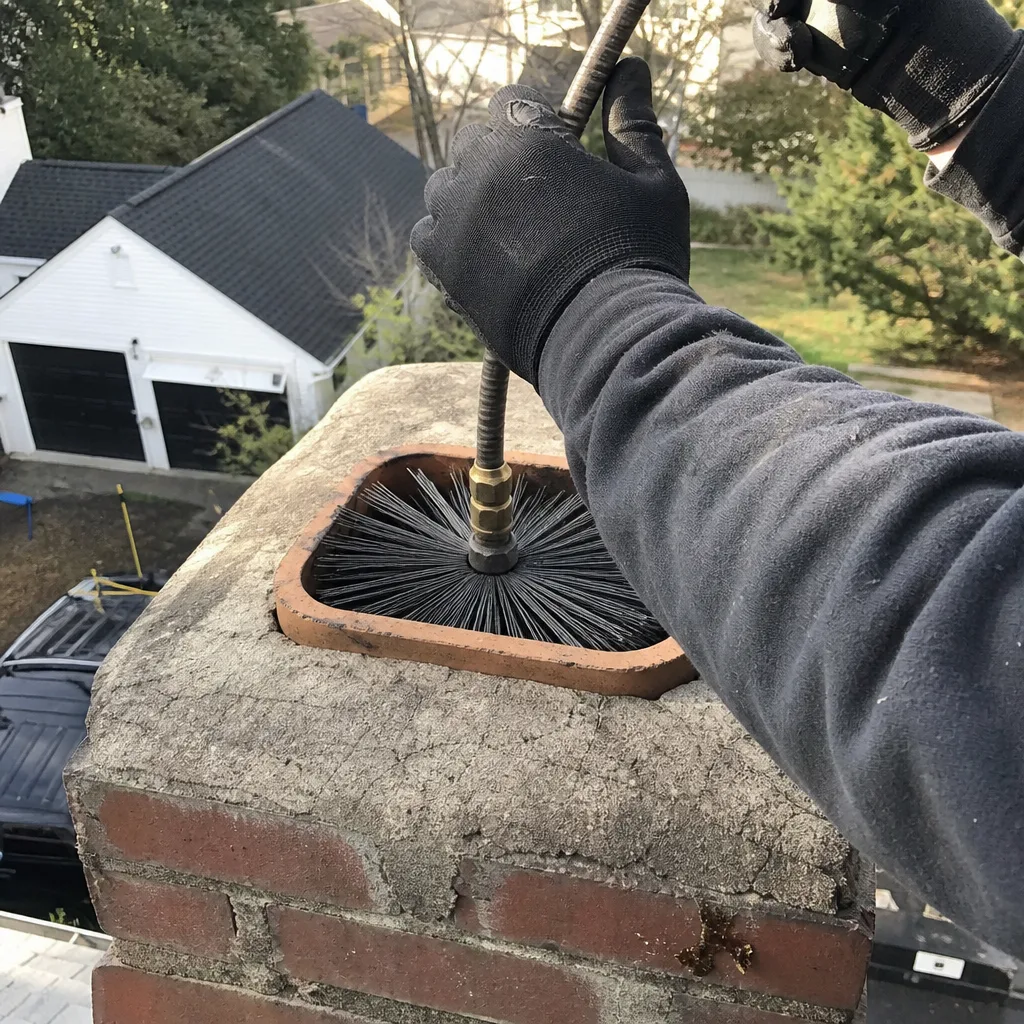
- Camera-scan inspection first, always. Before we pick up a brush, a camera goes down the flue. We’re looking at the liner condition, the stage of creosote present, any cracks, gaps at mortar joints, and the condition of the smoke chamber above the damper. You see the same footage we do – on a screen in the room, not described to you afterward. This is Clause 4 of the Haven Standard: a documented photo record on every visit, included as standard.
- Written scope and price, before any work starts. Based on what the camera shows, we write out exactly what the job involves, what it costs, and what we warrant. Haven Standard Clause 1 – written price, written scope, written warranty – before work begins. No estimate on the back of a business card.
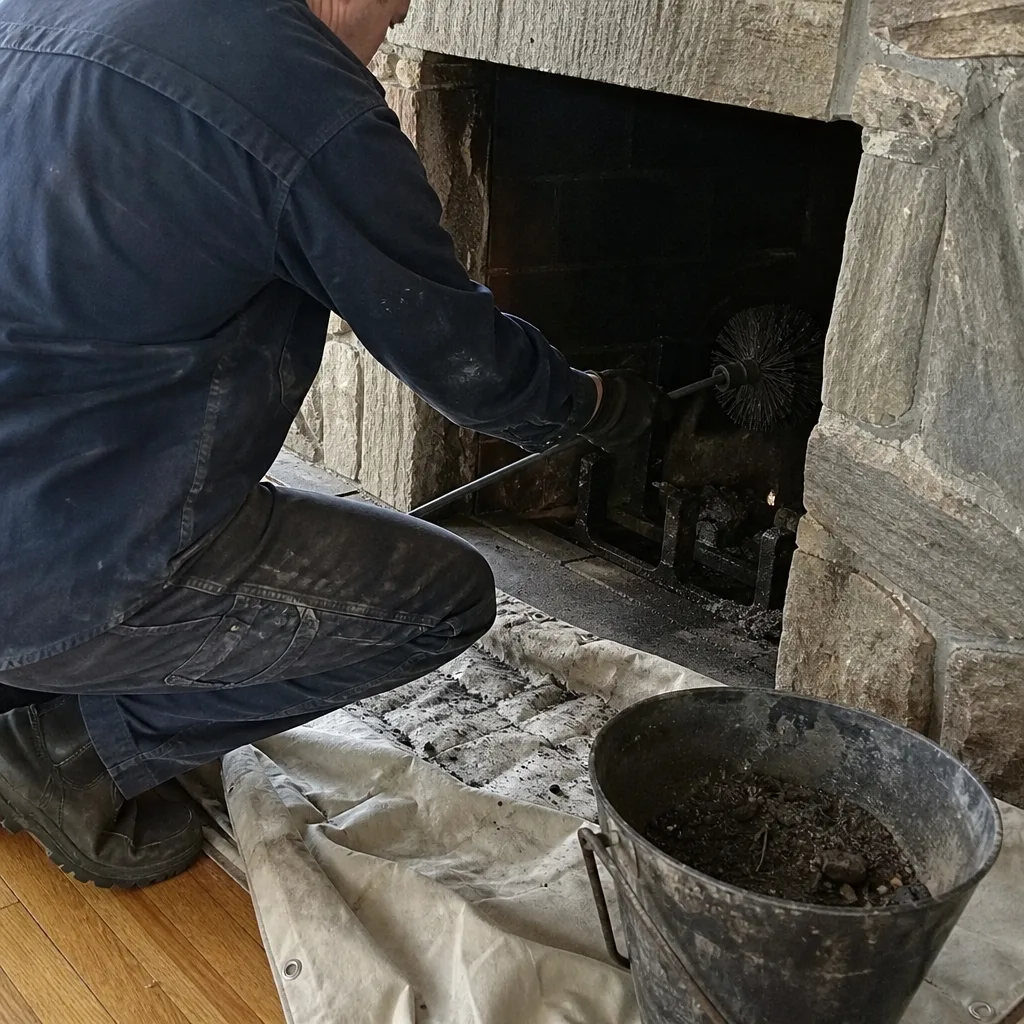
- Stage-matched removal. For Stage 1 and light Stage 2 deposits, we use rotary brush systems – commercial-grade equipment that reaches the full height of the flue without abrading a sound liner. For heavier Stage 2 or Stage 3 glazed deposits, we apply a chemical modifier first (sourced through materials from our supply network, which includes Copperfield chimney products and HeatShield system materials) to convert the glazed creosote into a more friable consistency. Removal follows once the modifier has done its work. The chemistry matters; off-brand or improperly applied chemicals can leave residue that behaves unpredictably in the next fire.
- Smoke chamber and firebox cleaning. The smoke chamber – the funnel-shaped section between the firebox throat and the flue – collects creosote at a rate many homeowners don’t realize. We clean it as part of the job, not as an add-on that gets mentioned after the price is set.
- Second camera pass and documentation. After removal, the camera goes back down. The before-and-after footage is part of your documented record. If we find a crack in the liner that wasn’t visible through the deposit on the first pass, we show you that image, describe what it means, and give you a written scope and price for any repair before we leave. We don’t pressure a decision; we give you the evidence.
- Clean exit. Drop cloths in the firebox, a HEPA-filtered vacuum on the removal site, and a quick wipe of the surround. The fireplace room should look the same leaving as it did when we arrived, minus the creosote.
Creosote Removal Pricing in Greenwich, CT
Prices below reflect current market rates for Greenwich and the surrounding Fairfield County area. A written quote based on your specific flue – its height, liner type, and actual deposit stage – is delivered before any work starts.
| Service | Typical Price Range | Notes |
|---|---|---|
| Stage 1 creosote removal (single flue) | $199 – $299 | Included in a standard chimney sweep visit in most cases |
| Stage 2 creosote removal (single flue) | $299 – $449 | Additional passes and heavier equipment; liner condition affects time |
| Stage 3 / glazed creosote removal (single flue) | $449 – $599+ | Chemical modifier required; multiple visits sometimes necessary |
| Camera-scan inspection (Level 2) | Included on every visit | Not an add-on; Clause 4 of the Haven Standard |
| Smoke chamber cleaning | Included in scope | Not billed separately when done as part of a creosote removal visit |
What affects the final number in Greenwich specifically: flue height (older colonials in Cos Cob and Riverside sometimes have 30-foot-plus runs), liner material (clay tile requires more care than stainless; a cracked tile found during the job changes the scope), and how long the deposit has been there. A Stage 2 buildup that’s been accumulating for three seasons is thicker and harder to remove than one that formed in a single winter.
If you’ve already gotten a written estimate from another company, bring it to us. We offer a free second opinion on any written estimate – we’ll review it, tell you what it covers, what it doesn’t, and what our price would be for the same work.
Why the Camera Inspection Changes the Conversation
Most homeowners in Greenwich who call about creosote have never seen the inside of their own flue. They’re working from a description – sometimes accurate, sometimes not. When we put the camera footage on a screen in front of you, the conversation shifts from “trust me” to “here’s what we found.” That shift is the point.
Since 2009, we’ve run a camera on every Level 2 Inspection and cleaning we’ve done – more than 38,000 visits total. That practice became Clause 4 of the Haven Standard not because regulators required it but because it’s the only honest way to price a job. If we can’t show you the Stage 3 glaze in the flue, we shouldn’t be charging you Stage 3 removal rates. And if the liner is cracked behind the deposit, you need to know that before you light another fire, not after.
The documented photo record stays on file. If you sell the house, it’s part of your disclosure documentation. If there’s ever a question about the condition of the flue at a specific point in time, you have the footage.
A Note on Safety – Specifically for Stage 3
Stage 3 creosote removal is not a DIY project. The glazed, lacquer-like deposit that characterizes Class III buildup requires chemical treatment that, if applied incorrectly, can accelerate a chimney fire rather than prevent one. More practically: working inside a flue system – removing components, reaching the smoke chamber, handling spent creosote residue – involves exposure to carbon deposits and, in older Greenwich homes, possible asbestos-containing materials in fireplace surrounds or insulation installed before the 1980s.
If you’re dealing with a heavy deposit and are tempted to rent a brush kit and handle it yourself, our honest recommendation is: don’t, for Stage 2 and above. Get the camera inspection, get the written scope, and let a trained technician handle the chemical application and the mechanical removal. The cost of getting it wrong is a cracked liner or, worse, a flue fire in a structure.
FAQs – Creosote Removal in Greenwich, CT
How much does creosote removal cost in Greenwich, CT?
Creosote removal in Greenwich runs $199 to $599 for a single flue, depending on the stage of buildup. Stage 1 removal is typically $199-$299 and often folded into a standard Chimney Cleaning & Sweep services visit. Stage 3 glazed creosote, which requires chemical treatment before mechanical removal, runs $449-$599 or more for a particularly severe buildup. Every job gets a written price before work starts – call (516) 399-5497 and we can usually give you a ballpark range over the phone once you describe the fireplace setup and last cleaning date.
Is Stage 3 creosote actually dangerous, or is that overstated?
Stage 3 (Class III) creosote is genuinely dangerous. It ignites at lower temperatures than Stage 1 or 2 deposits, burns hotter, and is dense enough to sustain a flue fire that can reach temperatures exceeding 2,000 degrees Fahrenheit – enough to crack a clay tile liner in a single event. In a Greenwich home with an older clay tile flue (common in pre-1990 construction throughout Cos Cob, Old Greenwich, and Byram), a flue fire involving glazed creosote can compromise the liner’s integrity and allow combustion gases to reach adjacent framing. That’s not a theoretical risk; it’s what we document on camera in affected homes. Stage 3 warrants professional removal before the fireplace is used again.
Can you remove creosote the same day you inspect?
For Stage 1 and most Stage 2 deposits, yes – the inspection and removal typically happen in the same visit, which runs two to three hours for a standard single-flue setup. Stage 3 glazed creosote is different: the chemical modifier needs time to work before mechanical removal, which can mean a second visit depending on how much product is required and how the deposit responds. We’ll tell you this in writing before the first visit, not as a surprise on the day. Call (516) 399-5497 to schedule and we’ll give you a realistic timeline based on what you describe.
How often should a Greenwich homeowner have creosote removed?
NFPA 211 calls for an annual Level 1 Inspection of any chimney in active use, with cleaning whenever deposits reach a level that warrants it. In Greenwich, where winters run roughly November through March and many homes supplement heating with wood burning, one season of three-plus fires per week can push a flue from clean to Stage 2 – especially if the wood isn’t fully seasoned or the fires are run low and slow. If you’re burning regularly, an annual cleaning before the heating season is the practical standard. If you burned more than usual last winter or skipped a cleaning, a camera inspection will tell you exactly where things stand.
Key Takeaways
- Creosote removal in Greenwich runs $199-$599 for a single flue; the stage of buildup is the main cost driver.
- Stage 3 (glazed) creosote requires chemical treatment before mechanical removal and is not safe to attempt yourself.
- Every visit includes a Level 2 camera-scan inspection and a documented photo record – included, not billed separately.
- A written price, written scope, and written warranty are delivered before any work begins, on every job, without exception.
- Greenwich’s older clay tile flues (common in Cos Cob, Riverside, Old Greenwich, and Byram) are particularly vulnerable to liner damage from a creosote-related flue fire.
- The 365-Day Done Right Promise covers every job: if it’s not right, we make it right.
Schedule Creosote Removal in Greenwich
If you’re not sure what stage of creosote you’re dealing with, that’s exactly what the camera inspection is for. We put the footage in front of you, name the deposit class in plain terms, give you a written price for whatever removal the job actually requires, and get it done – usually the same day for Stage 1 and 2. If you’ve already gotten a written estimate from another company, bring it; the second opinion is free.
Level Two Chimney Greenwich serves homeowners throughout Greenwich and Fairfield County, including Cos Cob, Old Greenwich, Riverside, Byram, and Glenville. Our home page has the full list of services and coverage areas. Call (516) 399-5497 – a live person answers every call, any hour of the day – and we’ll get a camera in your flue and a written price in your hand before anyone starts work.
Written by Corrine Halstead, Owner at Level Two Chimney Greenwich, serving Greenwich.