
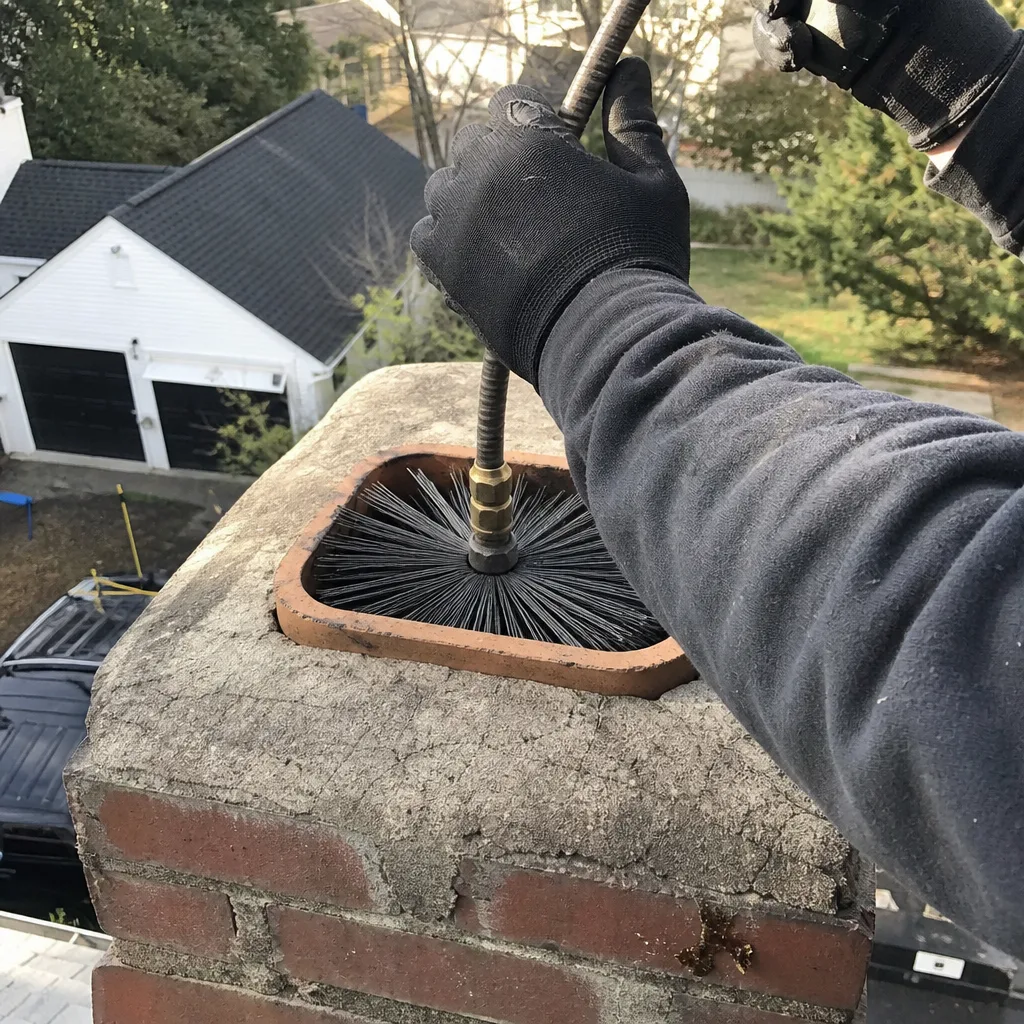
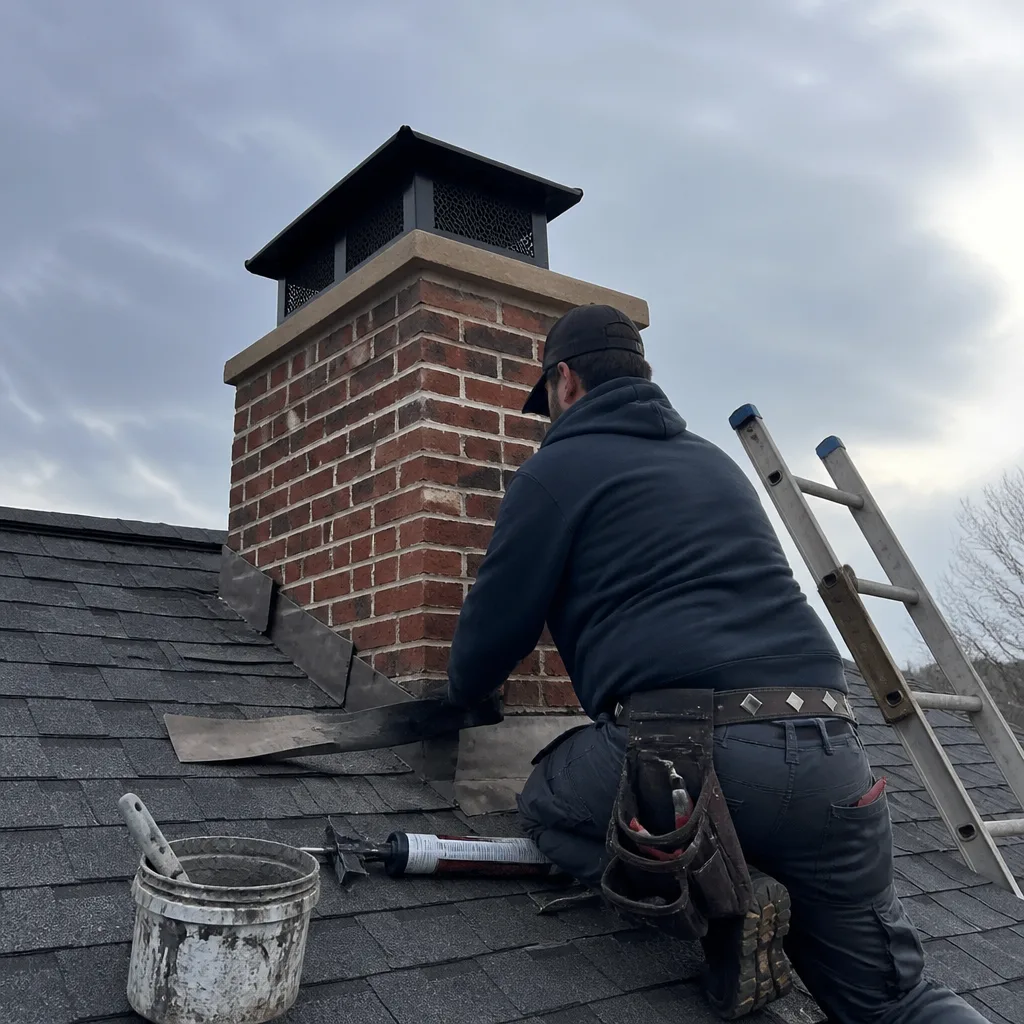
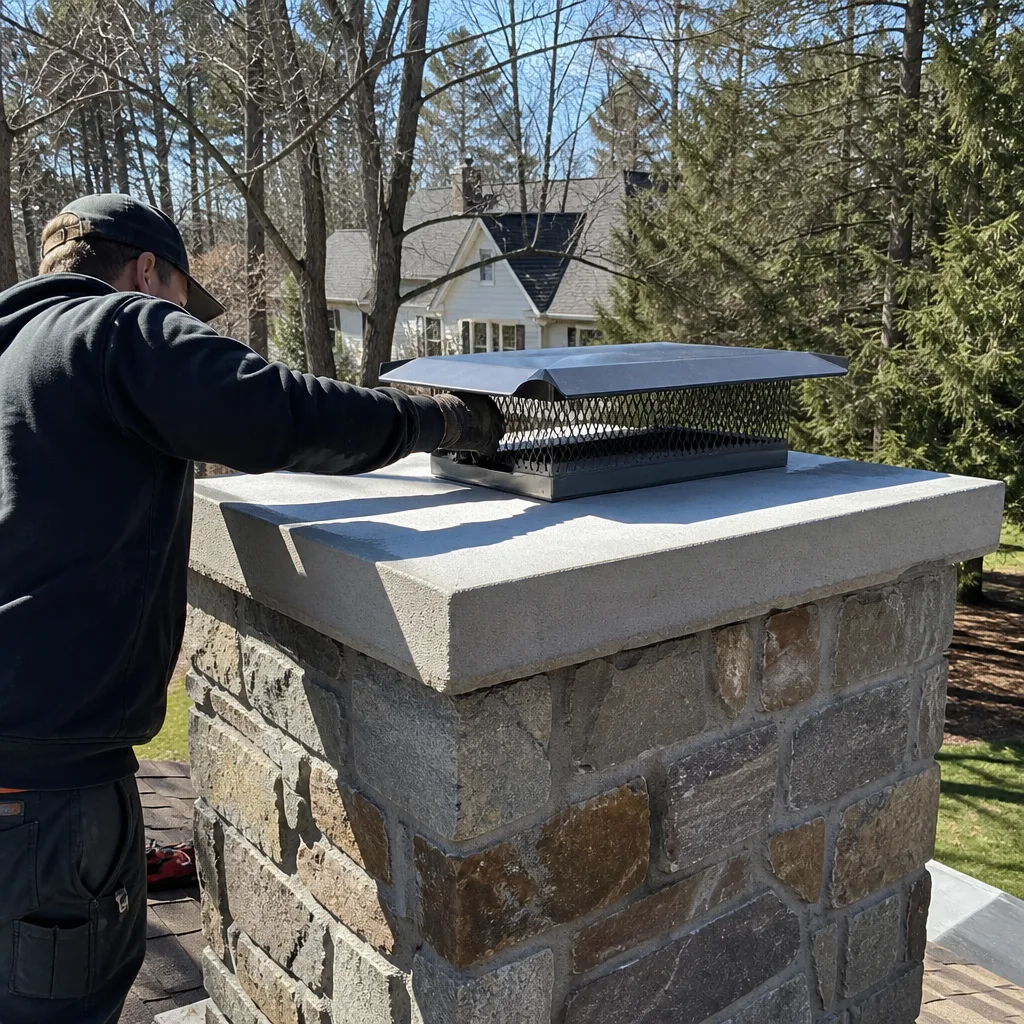
Level 1 sweep and inspection to the NFPA 211 annual standard - flue, crown, cap, and flashing checked and photographed
Chimney sweep logs do not sweep chimneys. They loosen some creosote - which then falls where a brush and vacuum still have to collect it.
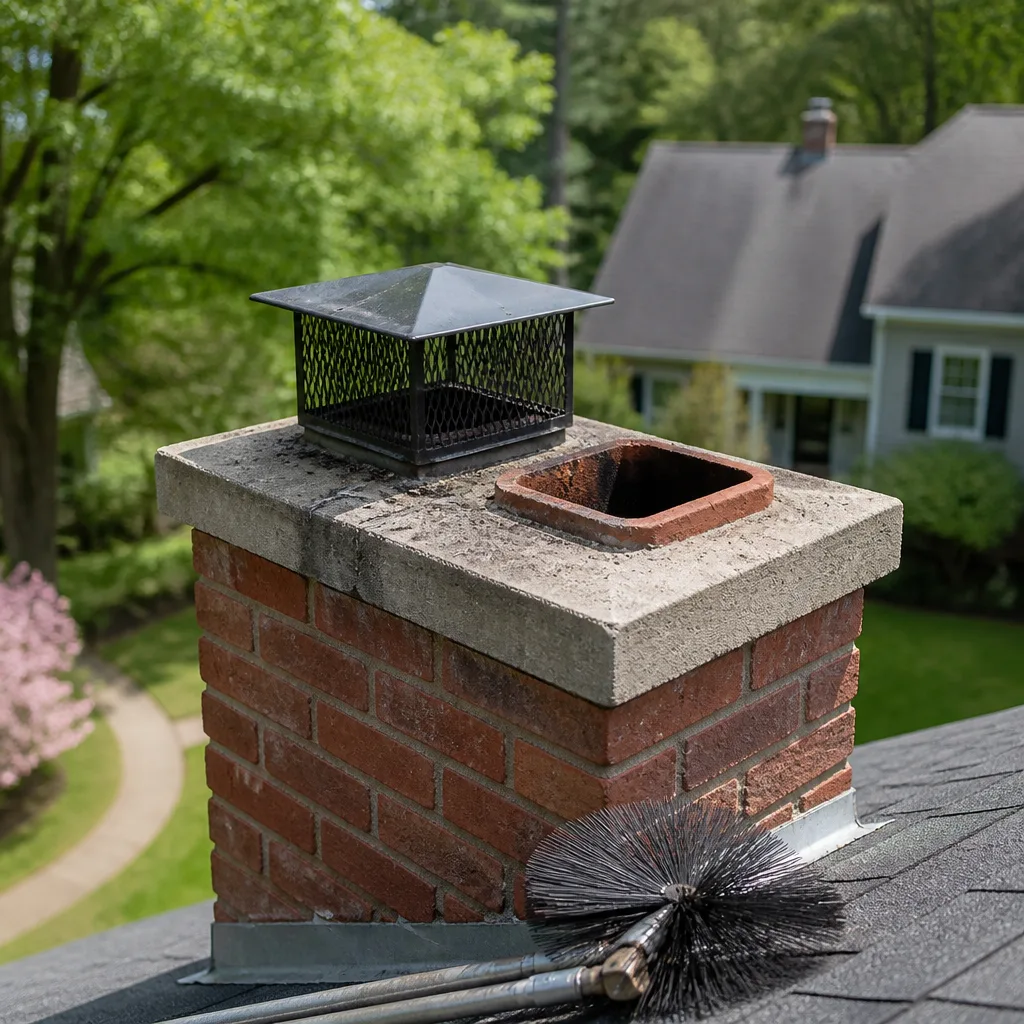
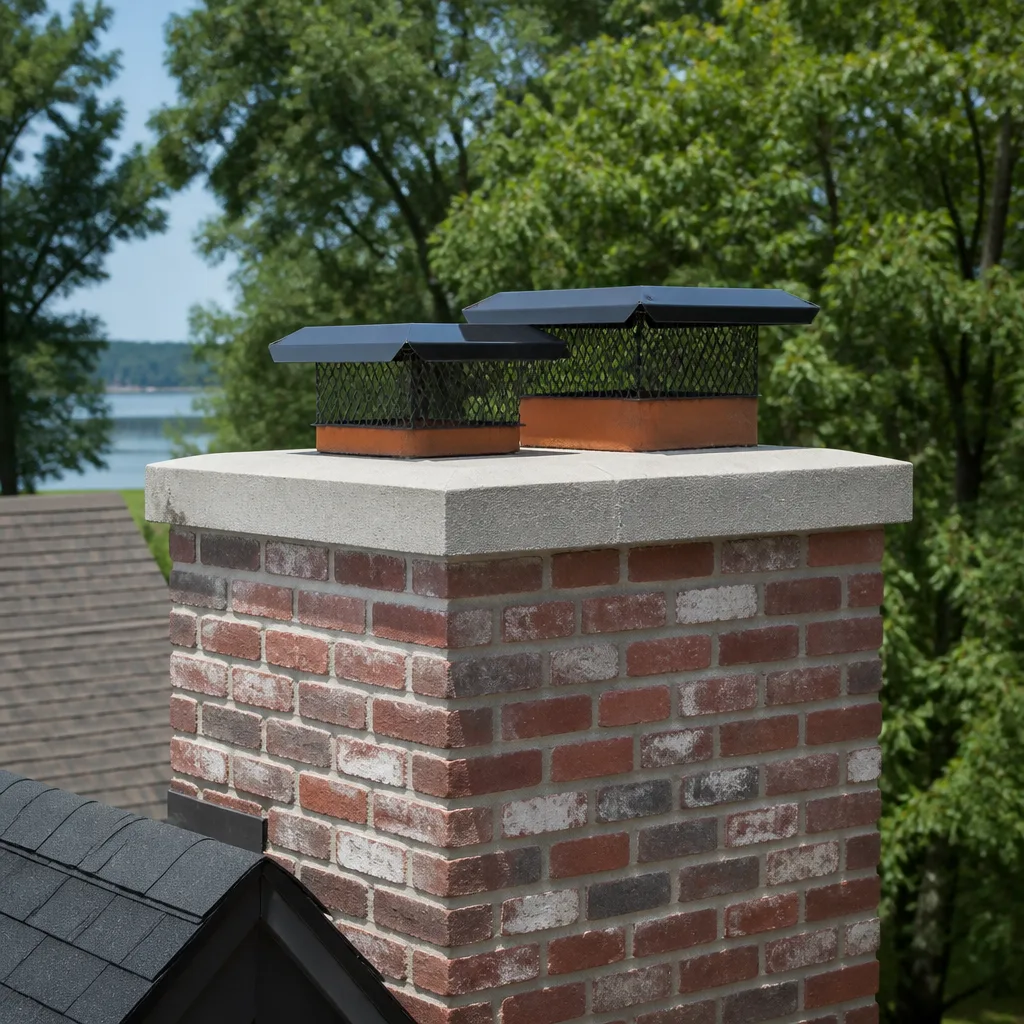
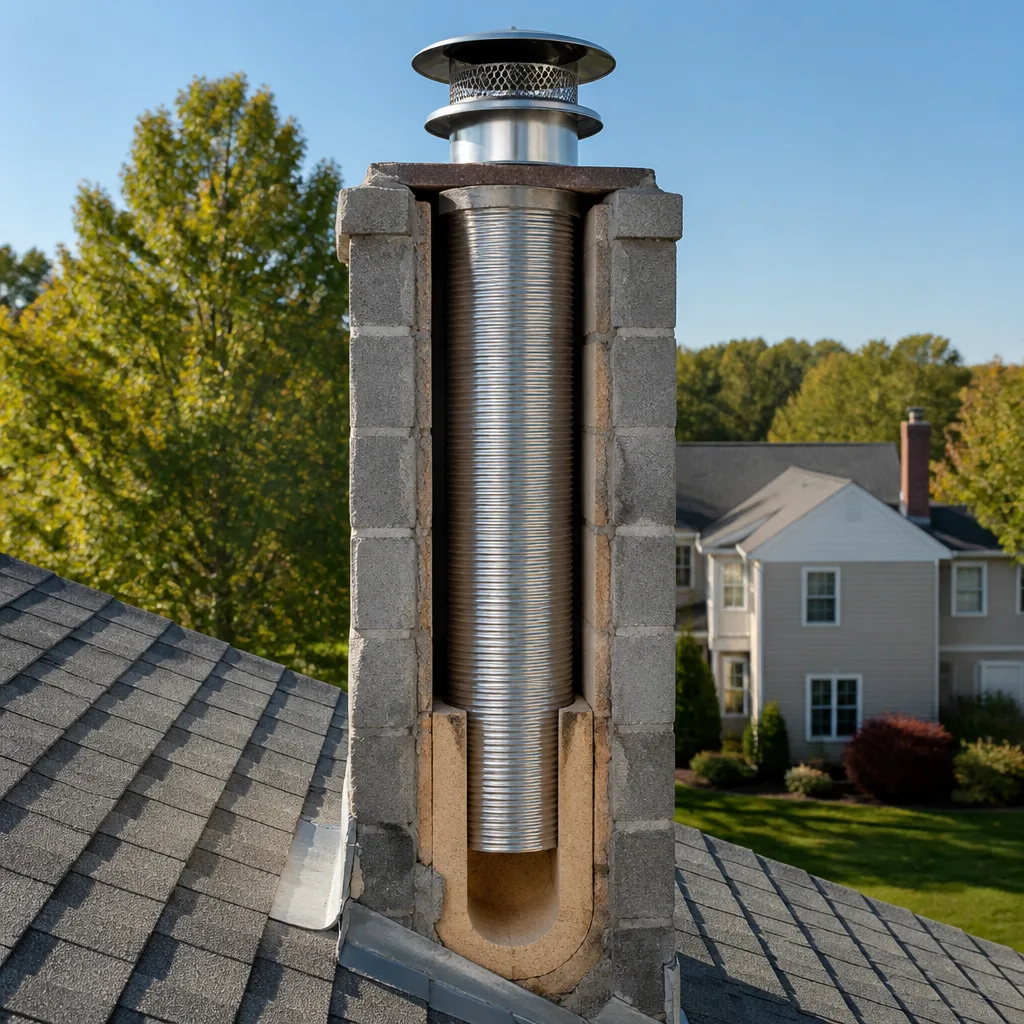
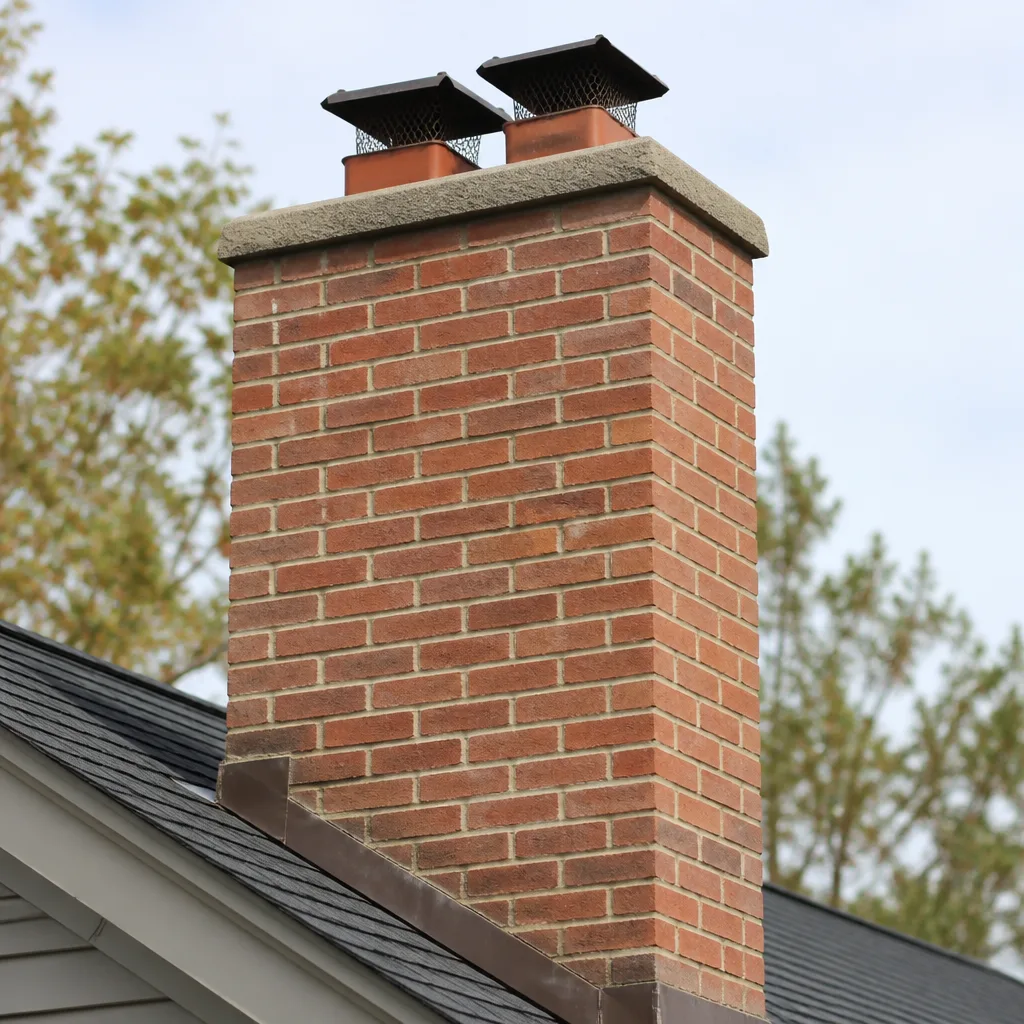
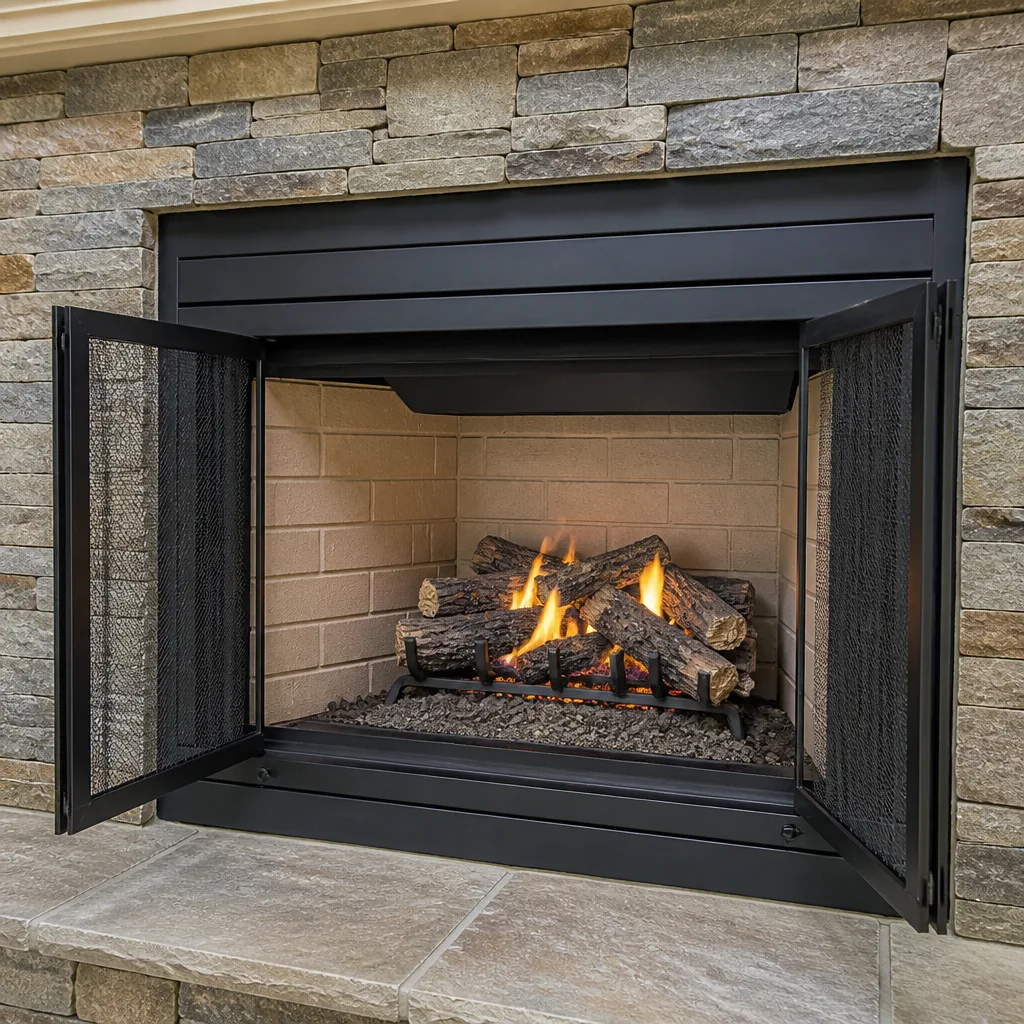
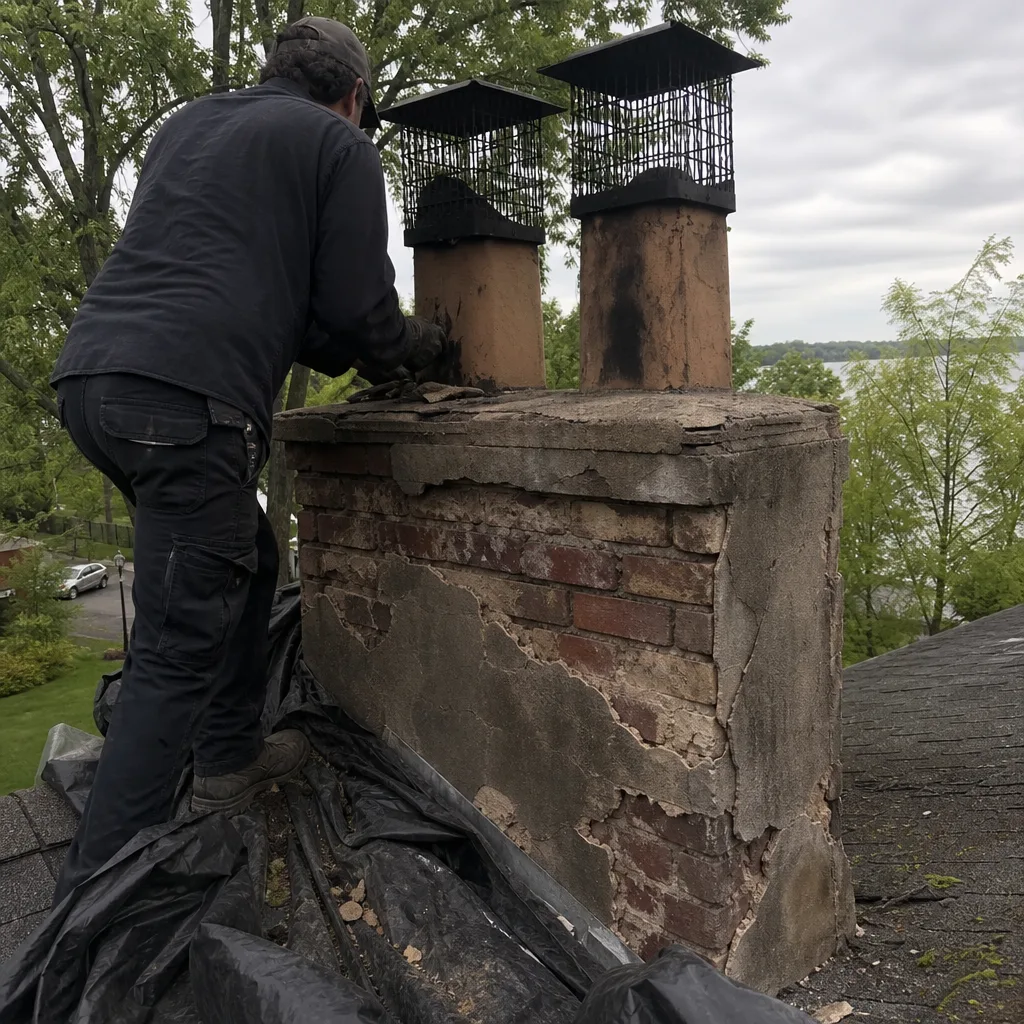 Before
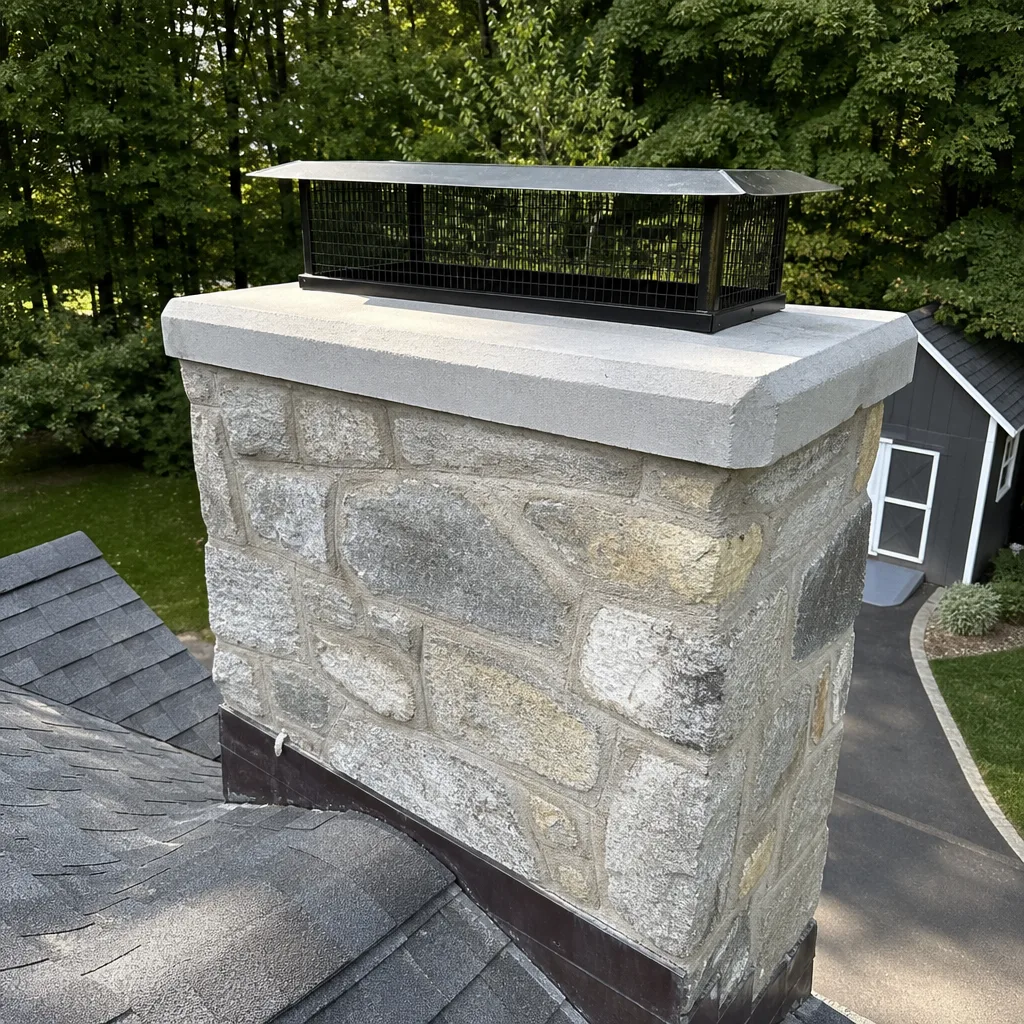 After
After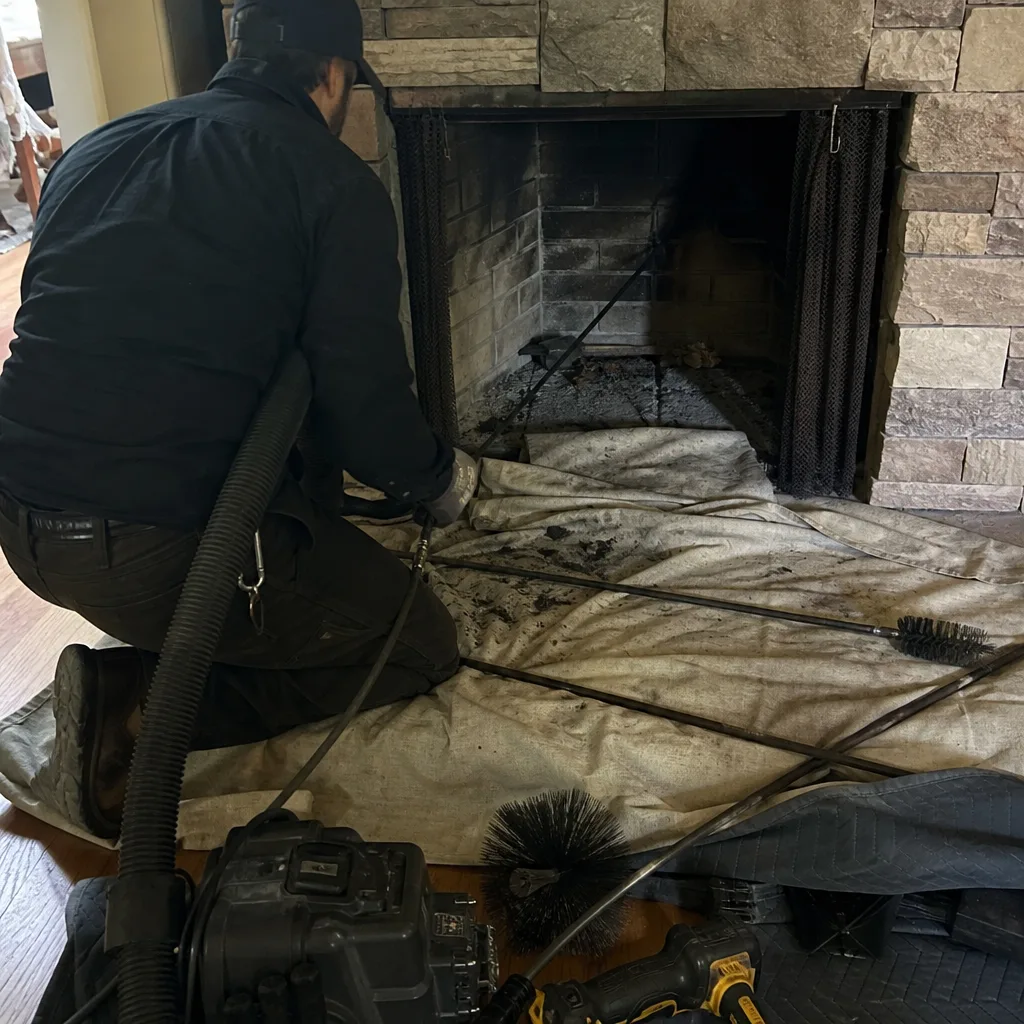 Before
 After
After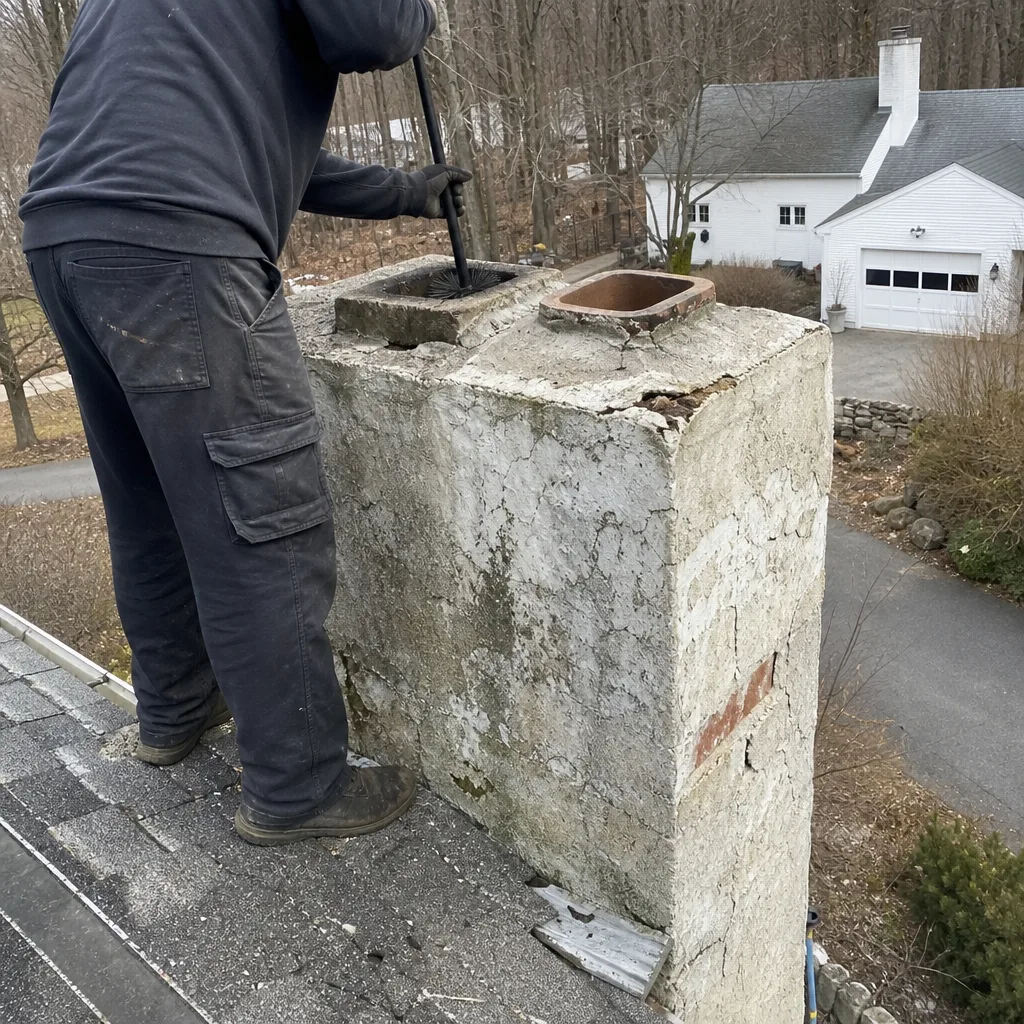 Before
 After
AfterSoot Removal in Greenwich, CT
Soot removal in Greenwich typically runs between $149 and $349, depending on flue length, the degree of buildup, and whether a full camera-scan inspection is folded into the visit. Most single-flue cleanings are completed in under two hours, and every job leaves the house with a written price, a documented photo record, and the 365-Day Done Right Promise already stamped on it.
Soot is the fine black carbon residue that coats the inside of your flue liner, smoke chamber, and firebox every time wood or gas burns incompletely. Unlike third-degree creosote, which hardens into a glazed crust, soot stays loose and powdery – which sounds less serious, but means it travels. It drifts down into the firebox, works into mortar joints, and eventually shows up on the face of your fireplace or, in bad cases, on walls and ceilings nearby. Left alone through a full burn season, it also traps moisture against the liner and accelerates the kind of spalling and joint erosion we see regularly in Greenwich’s older Pre-Revolutionary and Colonial Revival homes.
Our Chimney Cleaning & Sweep in Greenwich service covers the full flue system. Soot removal is the specific process of extracting that carbon deposit before it causes anything structural – and before it becomes the Class II or Class III creosote problem that costs five to ten times more to fix. Call us at (516) 399-5497 and a live person answers, 24 hours a day.
When You Need Soot Removal
- Black dust or smearing on the firebox face. If soot is migrating out of the firebox onto the surrounding stone or brick, the flue is holding more buildup than a single season should produce. This is one of the most common calls we get from homeowners in the Riverside and Cos Cob sections of Greenwich, where older chimneys tend to be narrower and draft less efficiently.
- A persistent smoky or musty smell, especially in summer. Soot holds moisture, and that trapped moisture produces a sharp, acrid odor that pushes back down the flue when humidity rises. If you’re smelling something off in your living room when the fireplace hasn’t been used in months, soot accumulation is the first thing to check.
- Visible black staining on the damper or smoke shelf. The smoke shelf sits just above the damper and is one of the first places soot packs in. If you open the damper and see heavy black buildup without any reflective sheen, that’s soot – not glazed creosote – and it comes out cleanly with the right brushes and HEPA-filtered equipment.
- Reduced draft or slow-starting fires. A flue lined with a thick soot deposit has a smaller effective diameter. That chokes airflow, makes fires harder to light, and increases smoke rollout into the room. Homes in the backcountry Greenwich area, where chimneys often run through large, cold attic spaces, see this most in late fall.
- It’s been more than 12 months since the last documented cleaning. The NFPA 211 standard recommends annual inspection and cleaning for any actively used fireplace. If you can’t produce a written record of a cleaning in the last year – with photos – the flue needs to be looked at before the next fire goes in.
- You’ve just purchased the home. A significant share of the soot removal calls we take in Greenwich come from buyers who closed in the last 12 months. Real estate inspectors check the firebox visually; they don’t send a camera down the liner. Knowing exactly what’s in the flue before you light your first fire is the only way to know what you’re working with.
Our Soot Removal Process
- Written price, written scope, written warranty – before anything starts. Clause 1 of the Haven Standard (H.A.V.E.N. “Have it in writing”) requires that you see a flat, itemized price and a written description of what will be done before a single brush goes up the flue. No “we’ll see what we find and bill you after.” The number on the page is the number on the invoice.
- NFPA 211 Level 2 camera-scan inspection. Before the cleaning begins, we run a camera down the flue liner. This isn’t a flashlight look at the bottom of the firebox – it’s a documented scan of the full liner, the smoke chamber, the smoke shelf, and the crown. We’ve run this protocol on every visit since 2009, and Clause 4 of the Haven Standard makes the resulting photo record a permanent deliverable on every job. You see what we see.
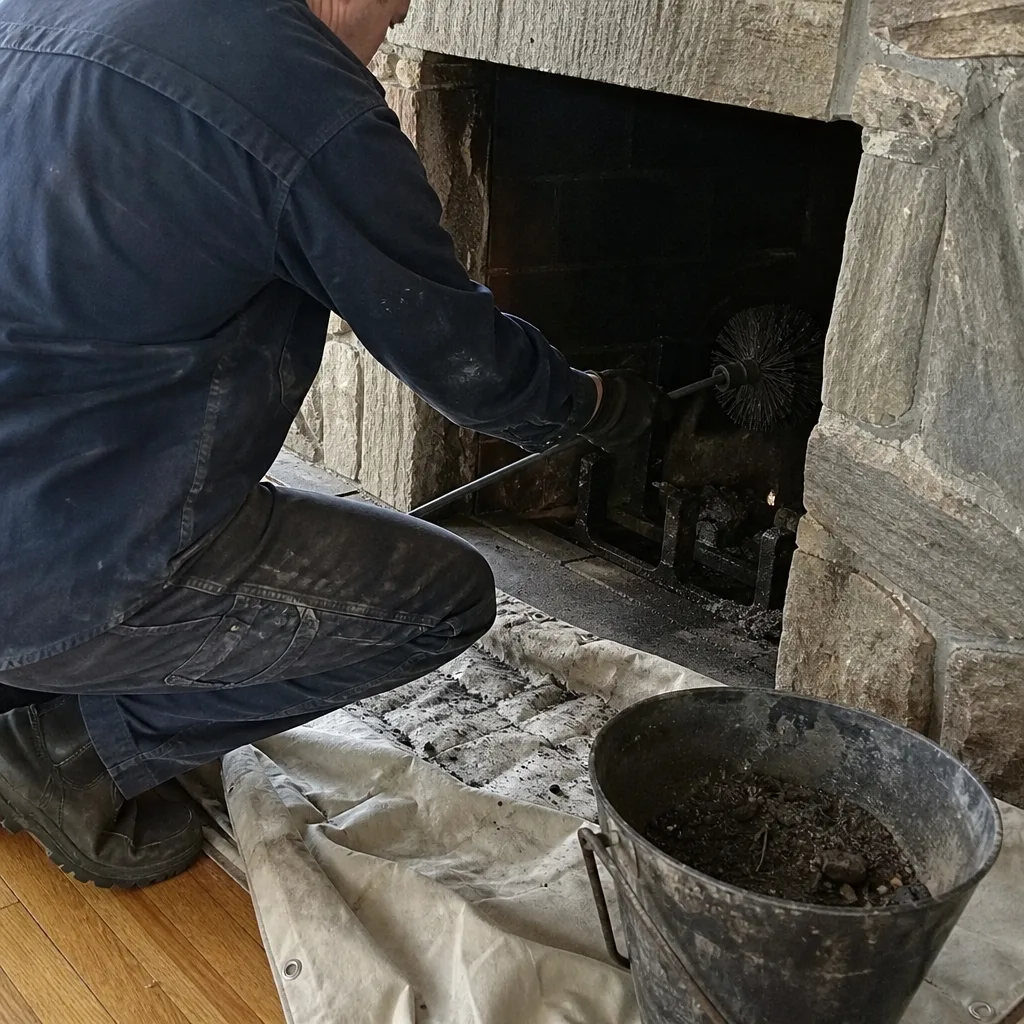
- Sealed drop cloth and HEPA-filtered vacuum setup. A named, background-checked, uniformed technician seals the firebox opening with a heavy-duty drop cloth before any brushing begins. The vacuum runs continuously on negative pressure, pulling particulates into a HEPA-filtered canister rather than into your living room. Greenwich homes – especially those with open floor plans or radiant floor heat – don’t tolerate soot dust, and neither do we.
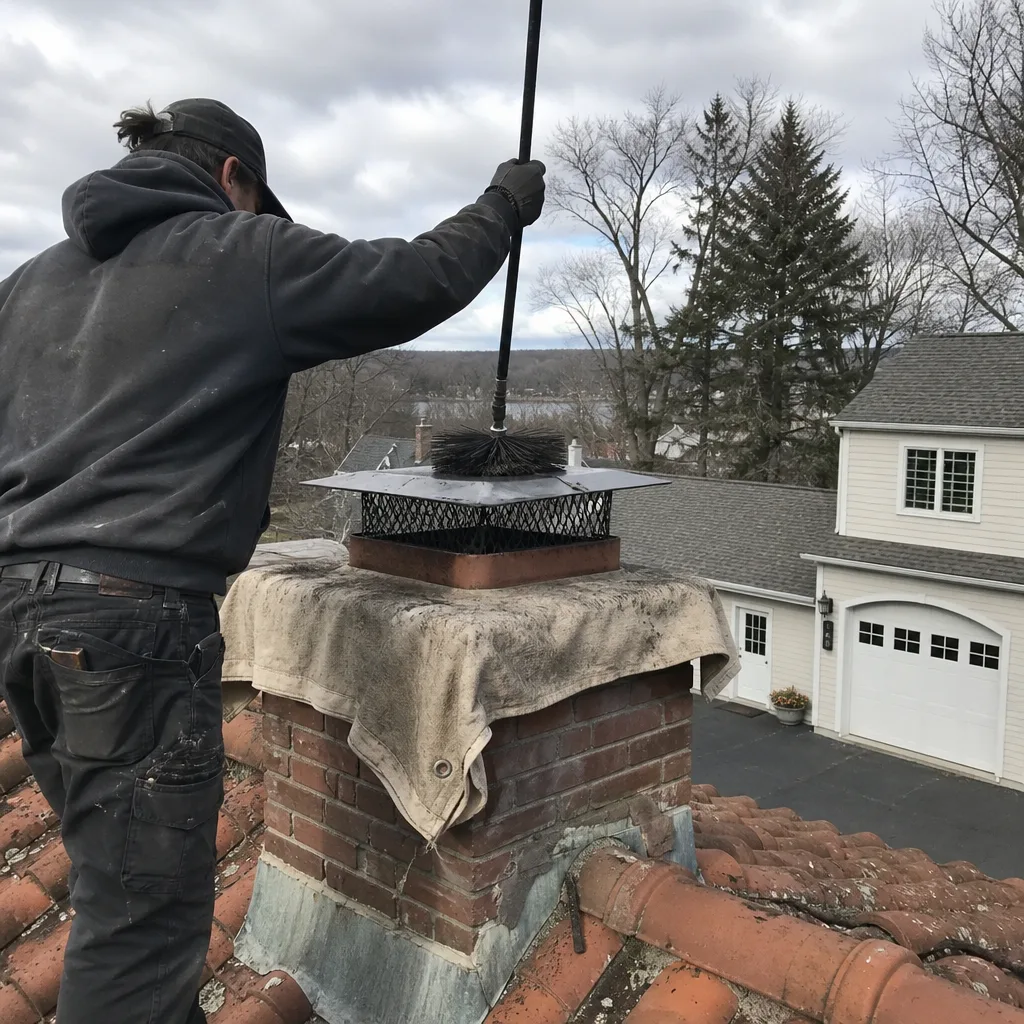
- Systematic brush cleaning from the top down. Rotary brushes sized to your specific flue liner – round, square, or rectangular – work from the crown downward, dislodging soot from the liner walls. We use Copperfield brushes and rods for their dimensional accuracy; an undersized brush on a 10×10 clay tile liner misses the corners every time. The smoke shelf and smoke chamber get hand-tool attention separately, since they’re shaped surfaces that rotary brushes don’t fully reach.
- Post-cleaning camera verification. After the cleaning, the camera goes back down. You get a before/after comparison on the same visit – not a verbal report that “it looks good.” If the scan shows a section of liner that needs a second pass, we do it before we pack up. If it shows a crack, a damaged tile, or the early signs of spalling, that’s documented in writing and explained in plain terms before anyone asks you to spend another dollar.
- Documented photo record and written completion summary. Every job closes with a written summary: what was found, what was cleaned, what the liner condition is, and what – if anything – warrants a follow-up. Photos are yours to keep. Under the 365-Day Done Right Promise, if something isn’t right, we make it right. That promise doesn’t require a call to a manager or a review of contract terms – it’s on every job, automatically.
BeforeAfterSoot Removal Pricing in Greenwich
Soot removal in Greenwich runs $149 to $349 for a single-flue system. The range reflects real variables, not an excuse to quote low and bill high. Here’s what moves the number:
| Service | Typical Price Range |
|---|---|
| Single-flue soot removal (standard buildup) | $149 – $249 |
| Single-flue soot removal + camera inspection (Level 2) | $249 – $349 |
| Second flue (same visit) | +$99 – $149 |
| Smoke chamber hand-cleaning (heavy buildup) | +$75 – $125 |
| Firebox surface cleaning (visible soot staining) | +$50 – $85 |
What affects cost in Greenwich specifically: flue height matters more here than in most markets. A lot of the large Colonial and Tudor-style homes in the North Street and Round Hill Road corridors have exceptionally tall chimneys – sometimes 30 to 40 feet from firebox to cap. More liner means more time. Flue liner shape also matters. Older round clay tile liners clean differently than the rectangular tile systems common in post-1970 construction, and some older Greenwich chimneys have rubble-stone interiors with no dedicated liner at all, which changes the approach entirely.
Every estimate is written. If you’ve already received a written estimate from another company, we offer a Free Second Opinion on it at no charge. Bring the paperwork; we’ll tell you what we’d do differently and what we’d charge before you commit to anything.
Materials for any follow-up repair work – HeatShield for smoke chamber resurfacing, DuraFlex liner systems if the tile turns out to be cracked – are procured through Haven’s buying network specifically to keep customer pricing honest. You see the material cost itemized on the quote, not absorbed into a lump-sum number.
Why the Camera Inspection Is Part of Soot Removal, Not an Upgrade
Some companies offer a Level 2 camera inspection as an add-on, priced separately after the cleaning is already sold. We’ve included it as the default since 2009 because soot removal without a documented baseline is, practically speaking, incomplete. You can’t know how clean a flue is by looking at the bottom of it from the firebox. The camera is what tells you whether the soot was the only problem, or whether it was hiding a cracked tile, a joint separation, or the early stages of Class II creosote forming in a section you couldn’t see any other way.
Greenwich chimneys in particular earn this scrutiny. The coastal humidity, the freeze-thaw cycling that starts as early as November in the back country, and the prevalence of original clay tile liners in homes built before 1960 all create conditions where a visual-only inspection misses things the camera catches. Clause 4 of the Haven Standard makes the documented photo record a deliverable on every visit – not optional, not billable as a separate line, just part of what “done” means here.
Since 2009, we’ve completed more than 38,000 chimney inspections and cleanings under that protocol. Every single one left with a written price beforehand and a documented photo record when it was done. That’s not a marketing claim – it’s the condition under which Corrine Halstead built this operation, and it hasn’t changed.
FAQs – Soot Removal
How much does soot removal cost in Greenwich, CT?
Soot removal in Greenwich costs between $149 and $349 for a single-flue system, with the camera-scan inspection included. The main variables are flue height, liner type, and the degree of buildup. Smoke chamber hand-cleaning, if needed, adds $75 to $125. Every price is written before work starts – not estimated over the phone and adjusted after. Call (516) 399-5497 for a written quote; the estimate is free and there’s no obligation.
Is soot dangerous, and do I need to remove it before every burn season?
Soot itself isn’t flammable at the levels that build up in a normal single burn season, but it becomes a problem for a few reasons. It holds moisture against the liner, accelerating joint erosion and spalling in clay tile systems. It restricts flue diameter, reducing draft and increasing the chance of smoke rollout. And left unaddressed, soot provides the organic substrate that second- and third-degree creosote builds on – and Class III creosote is both a chimney fire risk and a much more expensive cleaning problem. Annual removal is the standard under NFPA 211, and it’s cheaper by a significant margin than the liner repair that deferred cleaning tends to produce.
Can you come the same day for soot removal in Greenwich?
Same-day scheduling is available depending on current dispatch, and our phone line is answered by a live person 24 hours a day – not a voicemail. Call (516) 399-5497, tell us what you’re seeing, and we’ll give you an honest answer about when we can be there. A text goes out when the technician is on the way, so you’re not waiting around with no information.
What’s the difference between soot and creosote?
Soot is the loose, powdery carbon deposit produced by incomplete combustion – it brushes off cleanly with standard rotary equipment. Creosote is a more complex compound that forms when wood smoke condenses inside a cooler flue; it progresses from a dull, flaky coating (Class I) to a tarry, sticky substance (Class II) to a hard, glazed crust (Class III). Class III creosote can’t be removed with brushes alone and sometimes requires chemical treatment or liner replacement. The camera inspection we run on every visit classifies what’s actually present so you’re not paying for a Class III protocol on a soot job – or worse, treating a Class III problem as simple soot.
What Soot Removal Doesn’t Cover – and What to Do If There’s More
Soot removal cleans the deposit off the liner, smoke chamber, and smoke shelf. It doesn’t repair cracked tiles, repoint deteriorated mortar joints, resurface a damaged smoke chamber, or replace a liner that’s failed structurally. If the Level 2 camera scan turns up any of those findings, they’ll be on the written report with photographs and a separate written estimate for the repair work before anyone asks you to approve it.
The most common follow-up finding in Greenwich soot removal jobs is smoke chamber damage – specifically, the corbeled brick courses above the damper that form the smoke chamber in older homes. When mortar erodes there, the rough surface traps soot and turbulences the draft. HeatShield smoke chamber resurfacing is the standard repair, applied as a spray coating that smooths the chamber and seals the joint erosion in one step. It’s a different job from soot removal and priced separately, but it’s done in the same visit if the scope allows and you want to proceed.
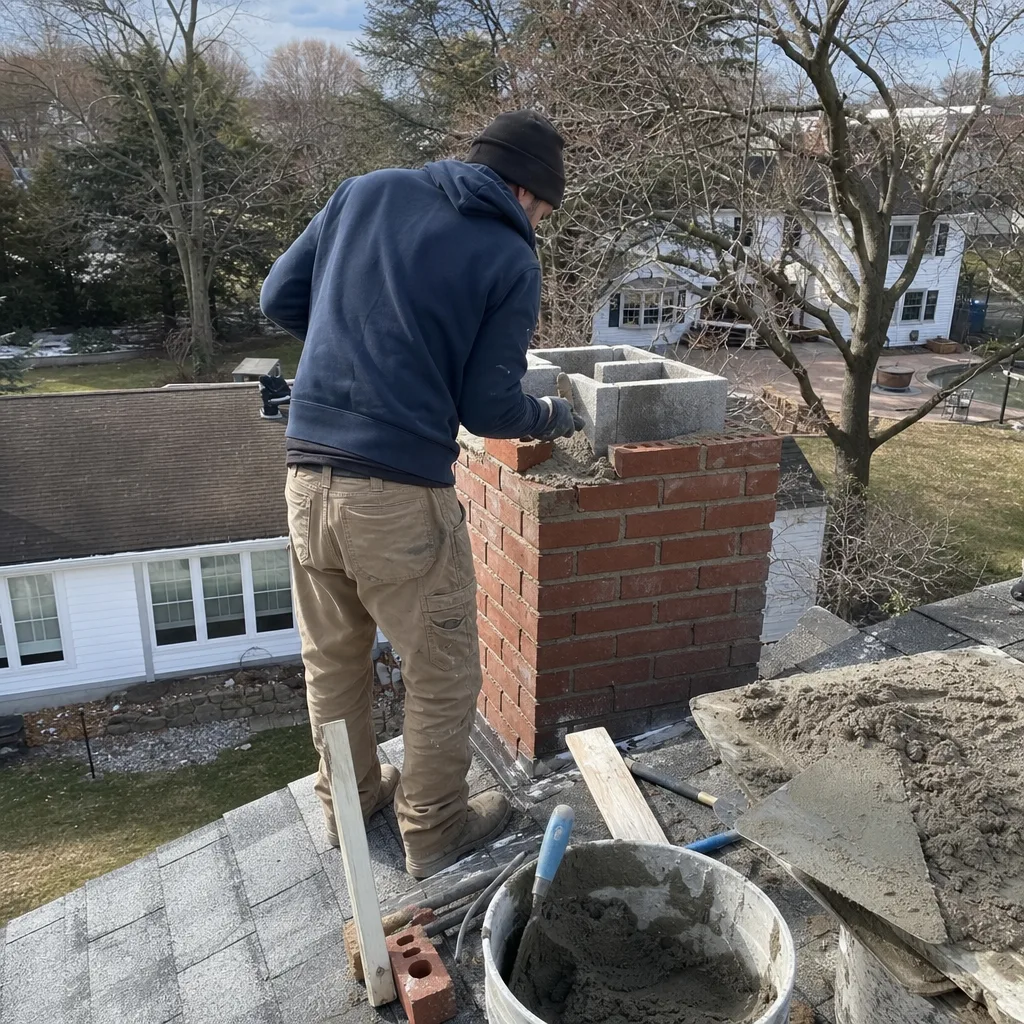
If the liner turns out to be cracked or has sections missing, that’s a structural issue. We’ll document it, explain what it means for safe operation, and give you a written estimate for a DuraFlex liner installation or, if the damage is localized, a targeted repair. No pressure to proceed that day – the written estimate and the photo record are yours to take and compare.
Key Takeaways
- Soot removal in Greenwich runs $149 to $349 for a single flue, with the camera-scan inspection included as standard.
- Every job is quoted in writing before work starts – Clause 1 of the Haven Standard, no exceptions.
- A Level 2 camera scan runs before and after every cleaning; the photo record is yours to keep under Clause 4.
- The 365-Day Done Right Promise covers every job: if it’s not right, we make it right.
- Annual soot removal is the lower-cost alternative to liner repair caused by deferred maintenance – the math is not close.
- Call (516) 399-5497 any time; a live person answers 24 hours a day.
Schedule Soot Removal in Greenwich
If your fireplace has been through a full burn season – or you’ve just moved into a Greenwich home and don’t have a documented record of the last cleaning – the right move is a camera scan and a cleaning before the next fire goes in. You’ll leave with a written price before anything starts, before-and-after photos from the camera, and a written summary of what the liner looks like right now. If there’s a problem, you’ll know exactly what it is and exactly what it costs to fix it. If there isn’t, you’ll have the paperwork to prove it.
Call (516) 399-5497 to schedule. Estimates are free, written, and come with no obligation. Corrine Halstead and the Level Two Chimney Greenwich team are ready to take the call.
Written by Corrine Halstead, Owner at Level Two Chimney Greenwich, serving Greenwich.