
Level 1 sweep and inspection to the NFPA 211 annual standard - flue, crown, cap, and flashing checked and photographed
Chimney sweep logs do not sweep chimneys. They loosen some creosote - which then falls where a brush and vacuum still have to collect it.
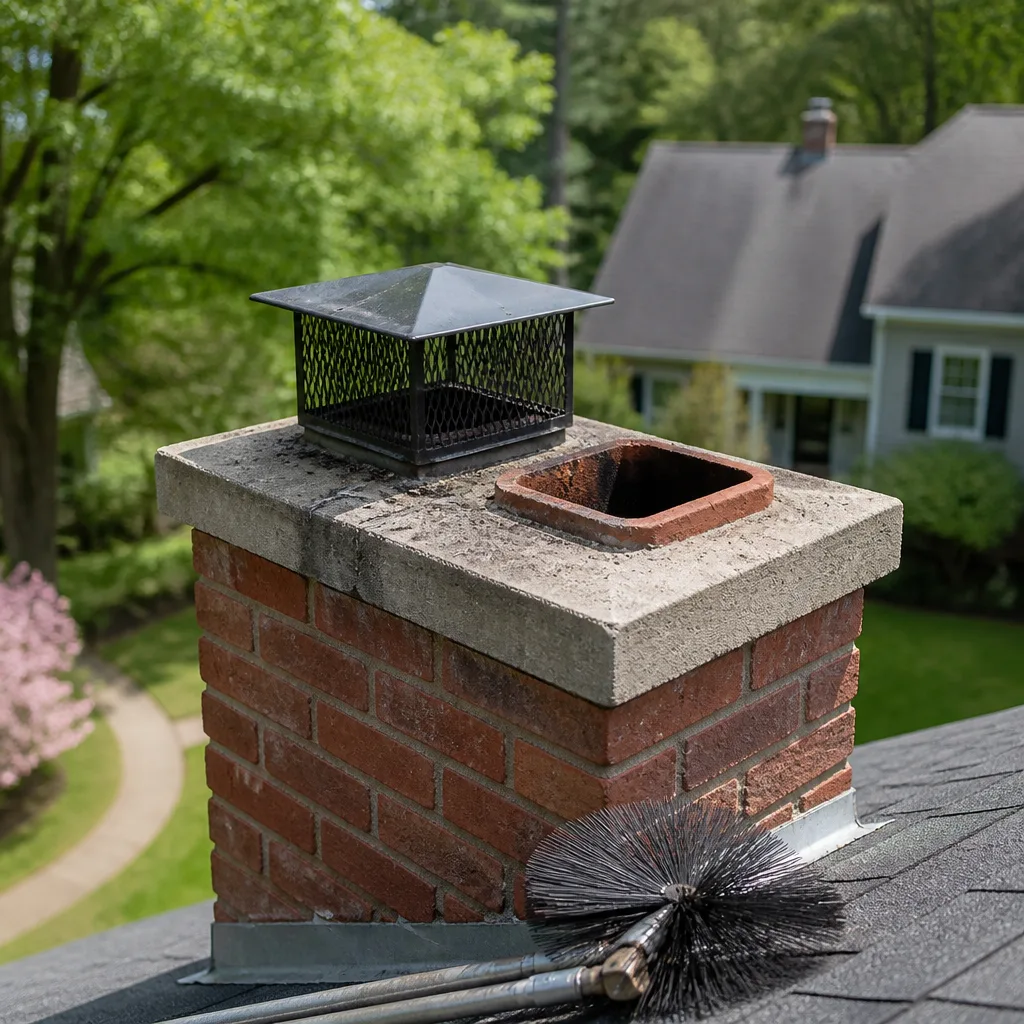
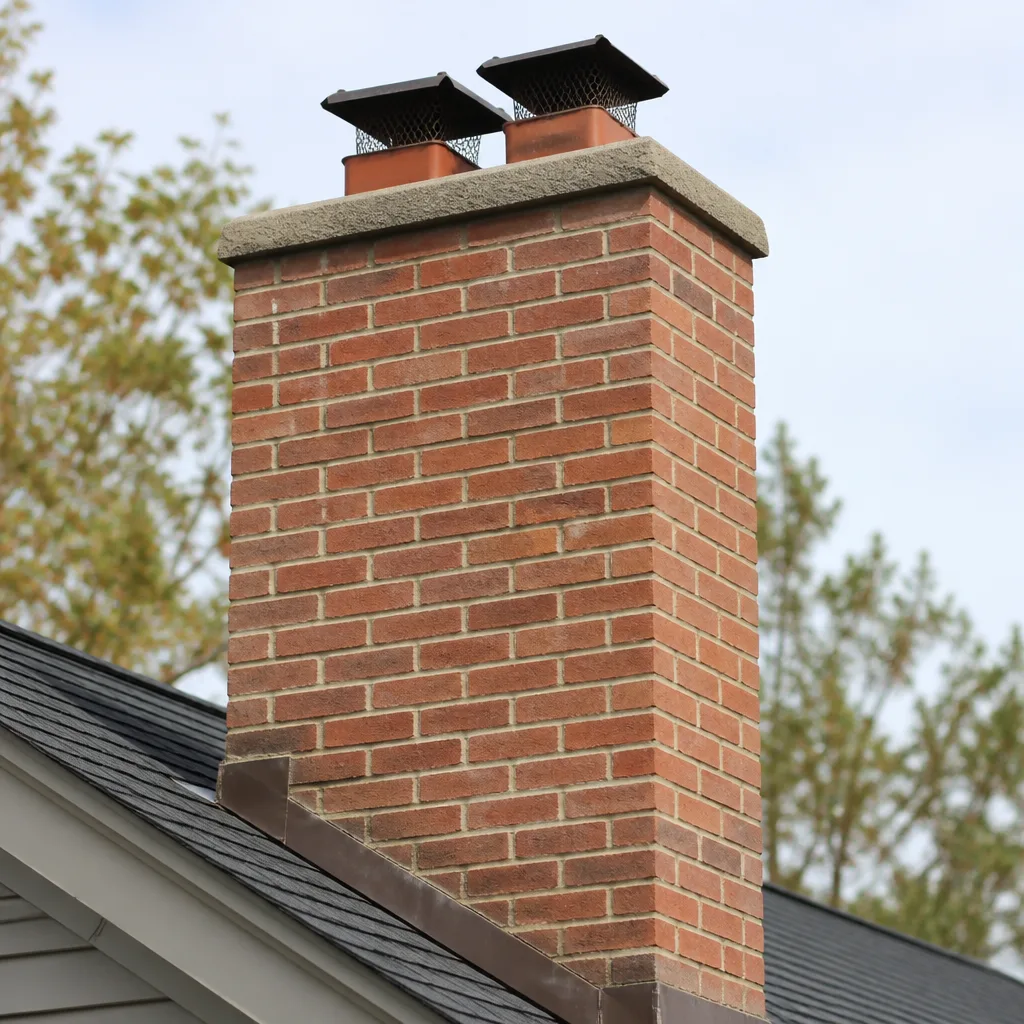
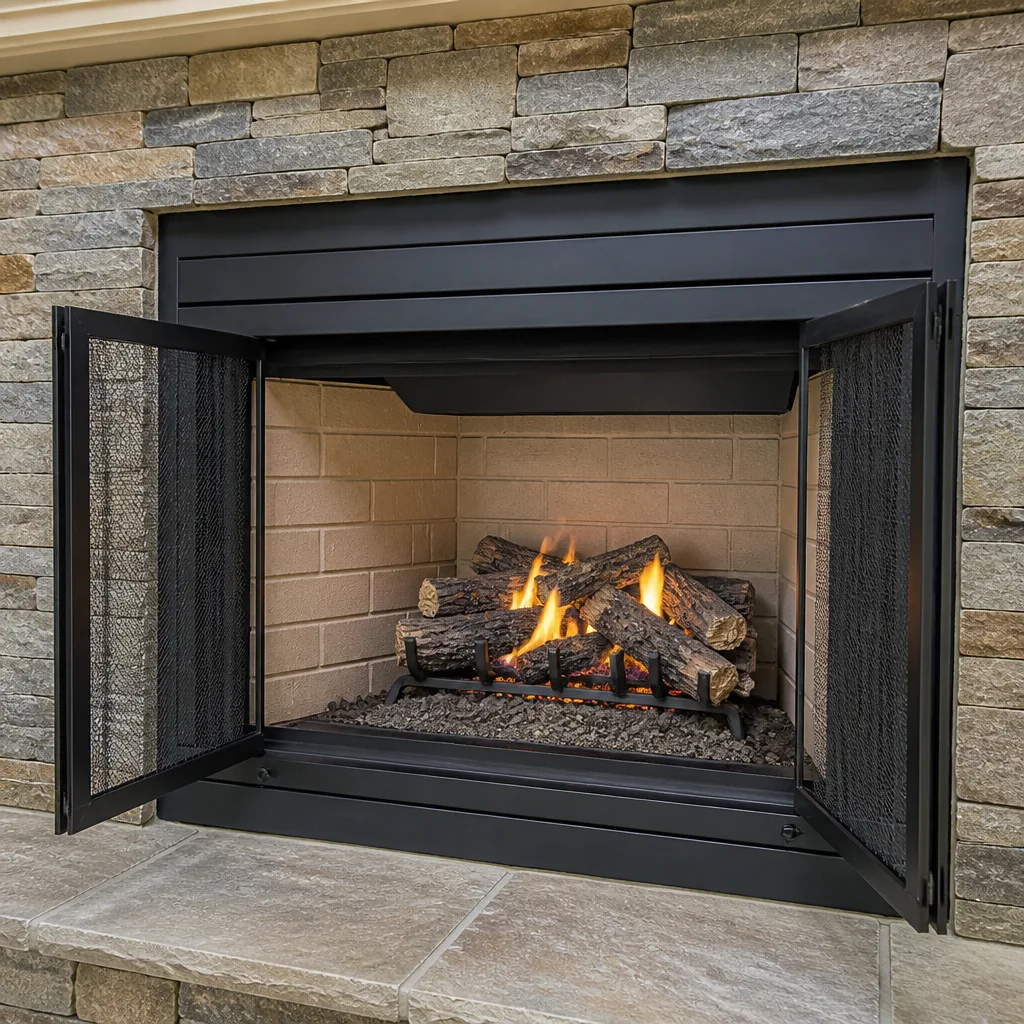
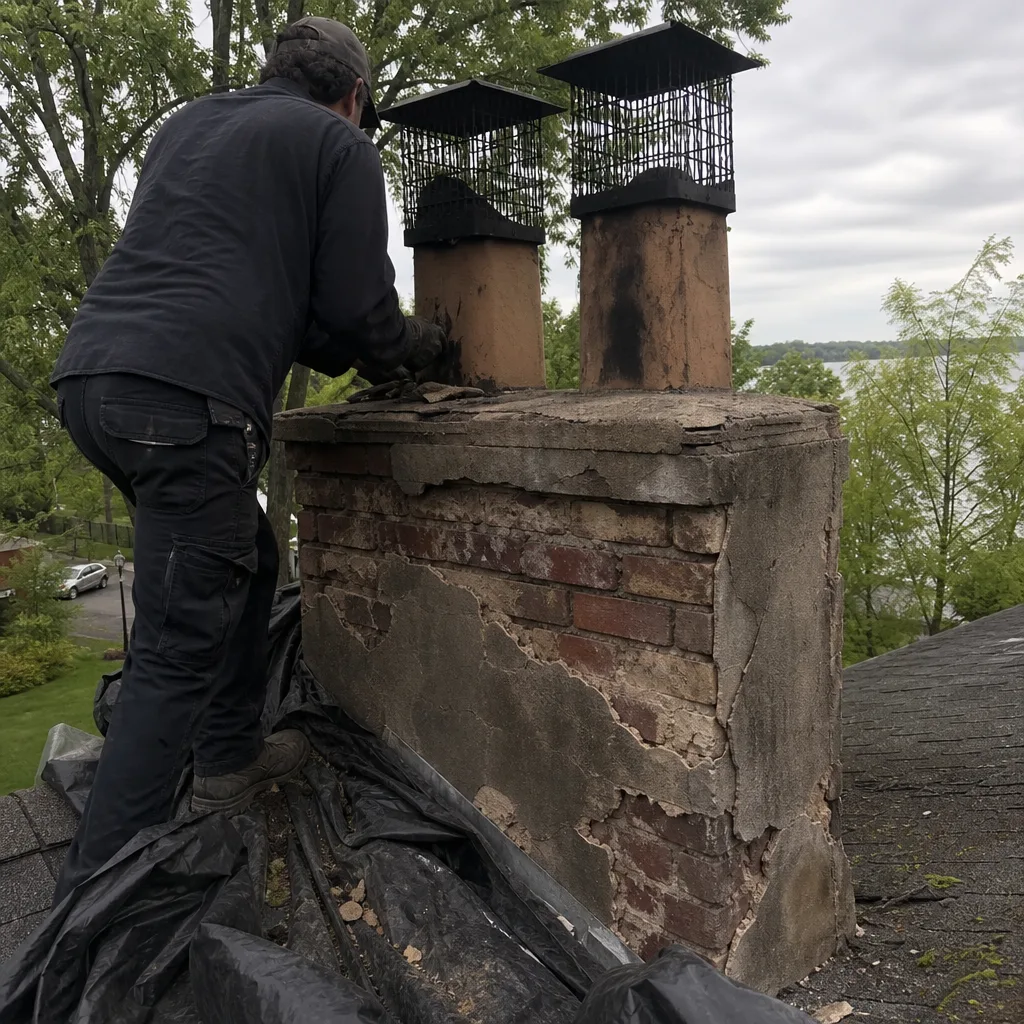 Before
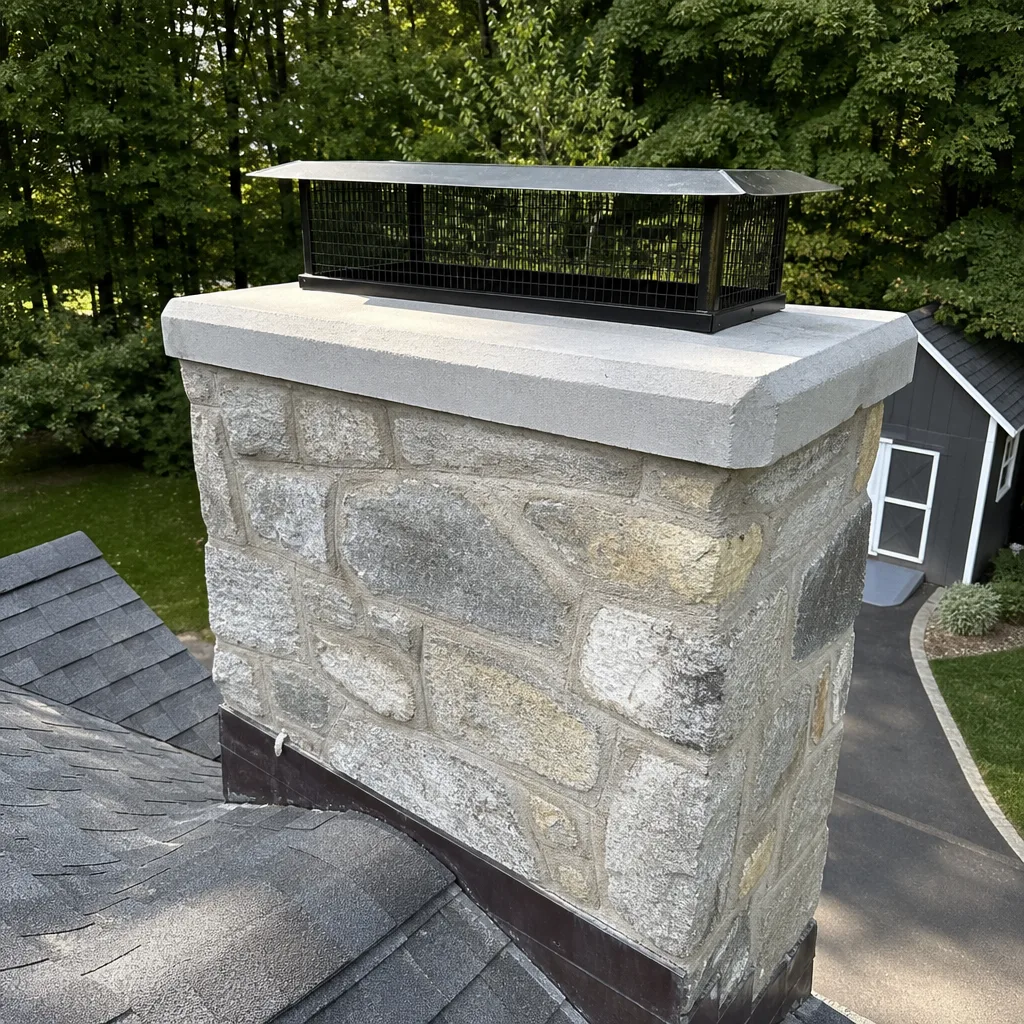 After
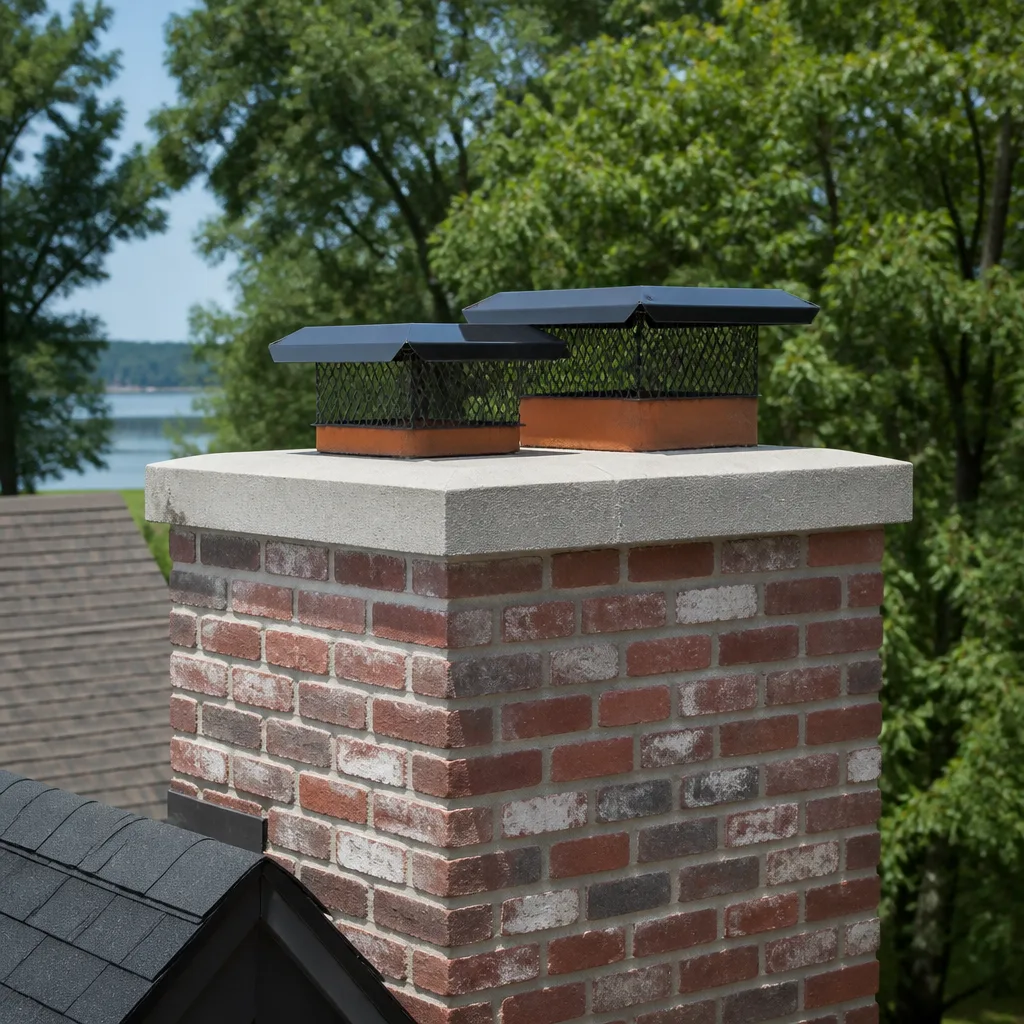
After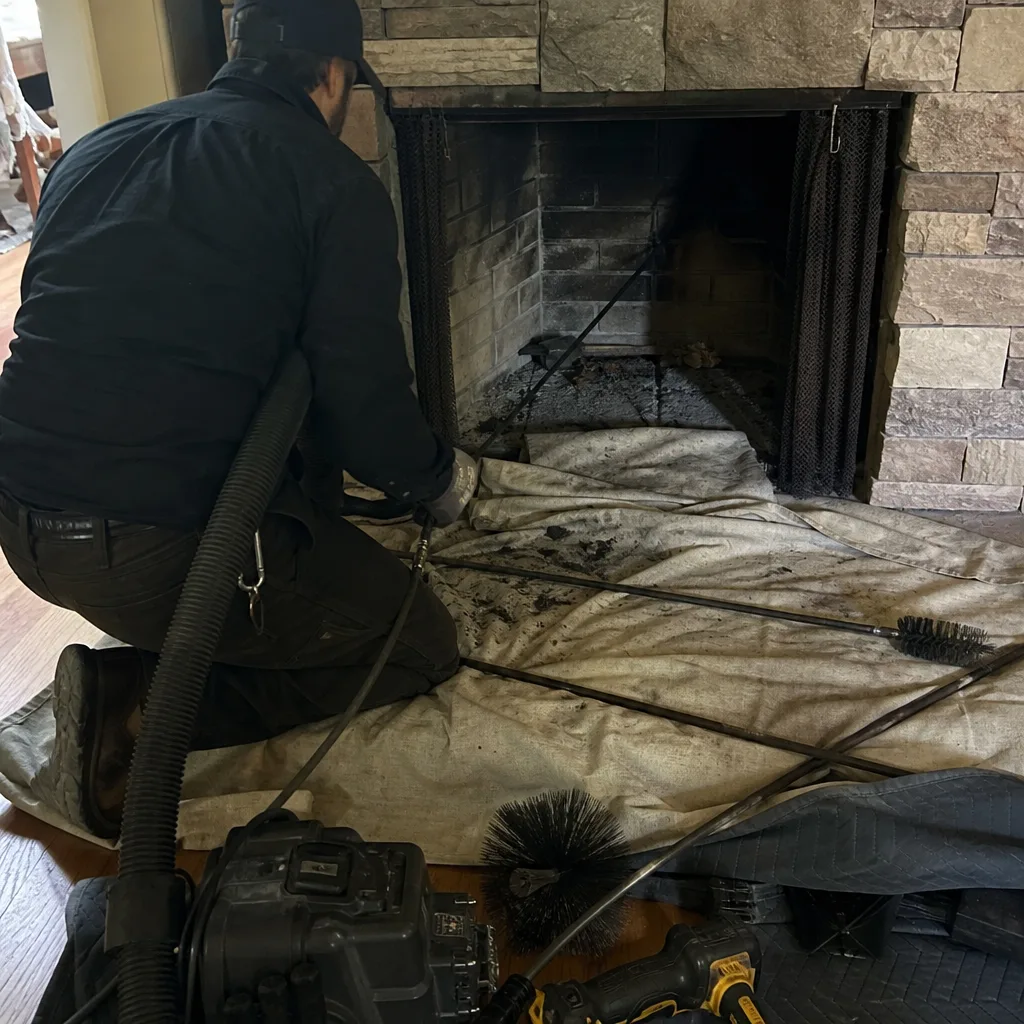 Before
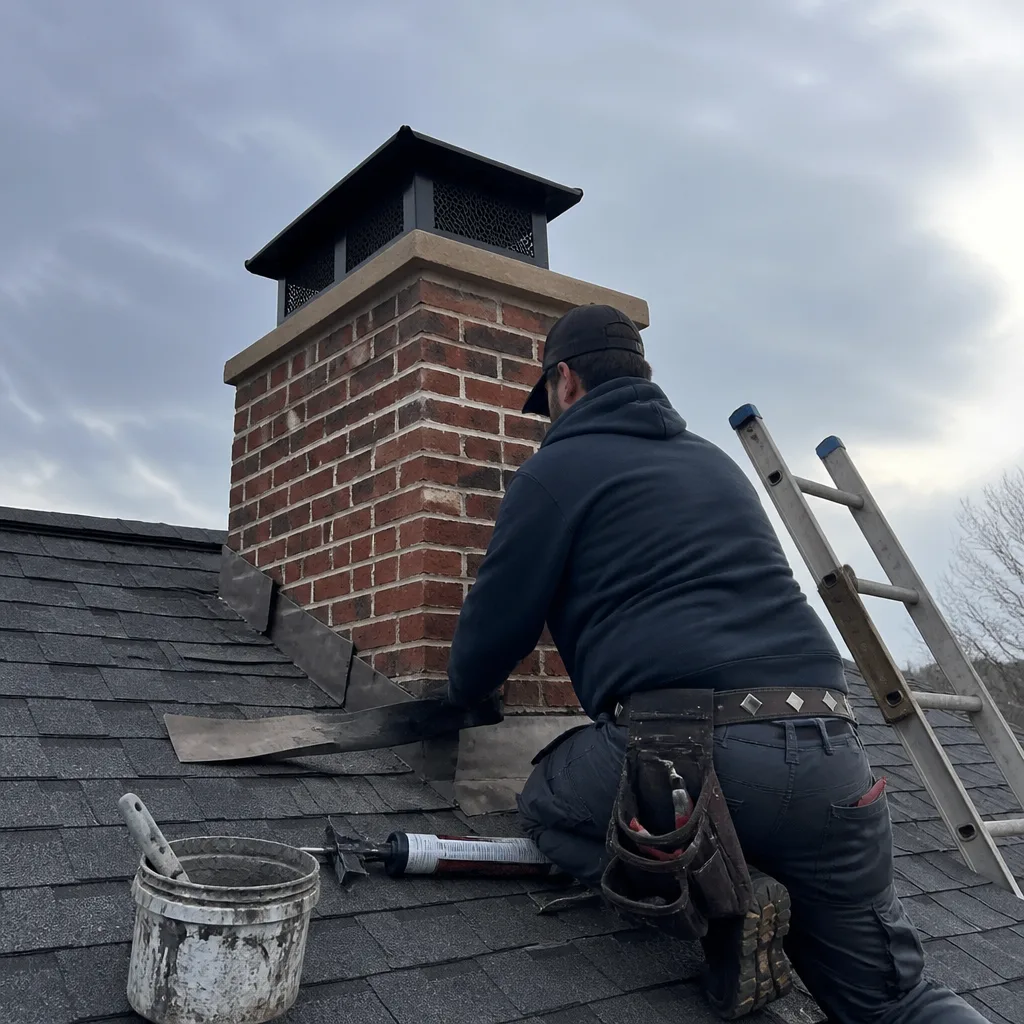 After
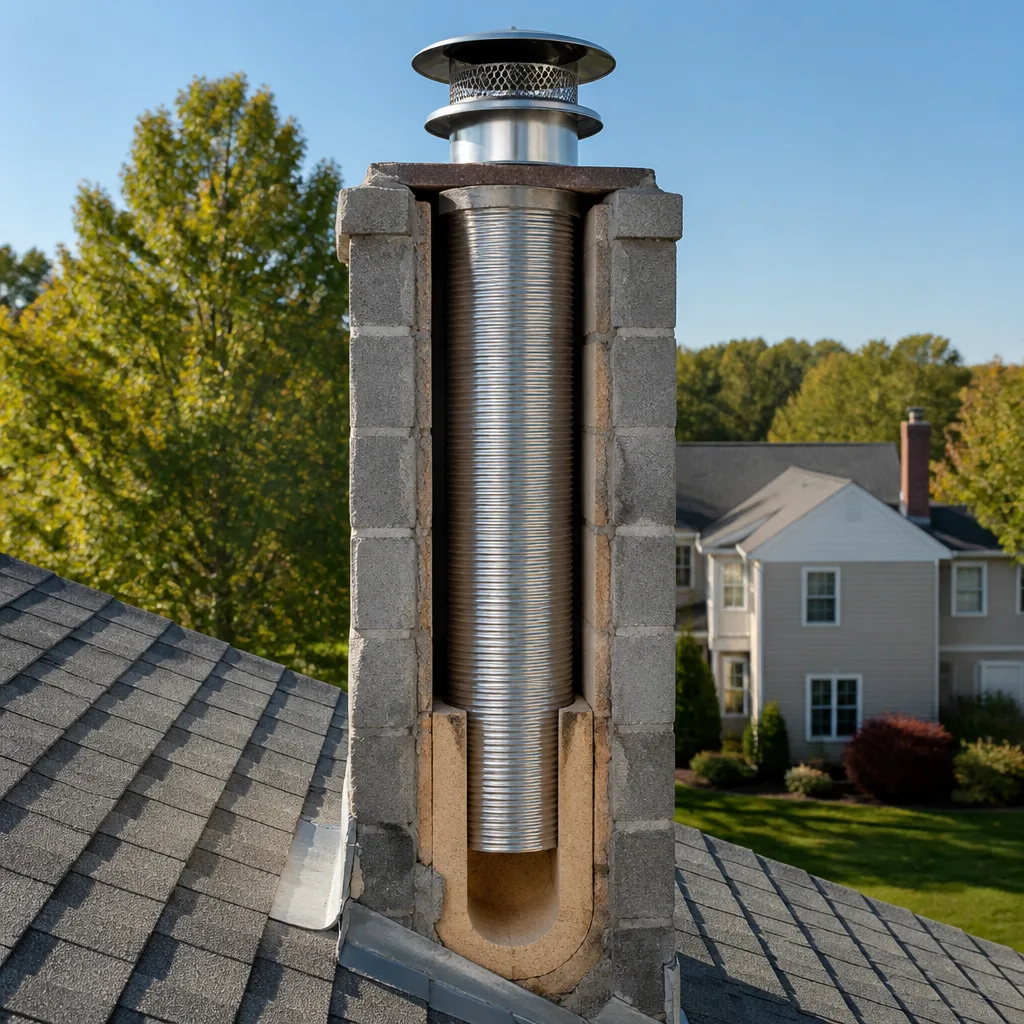
After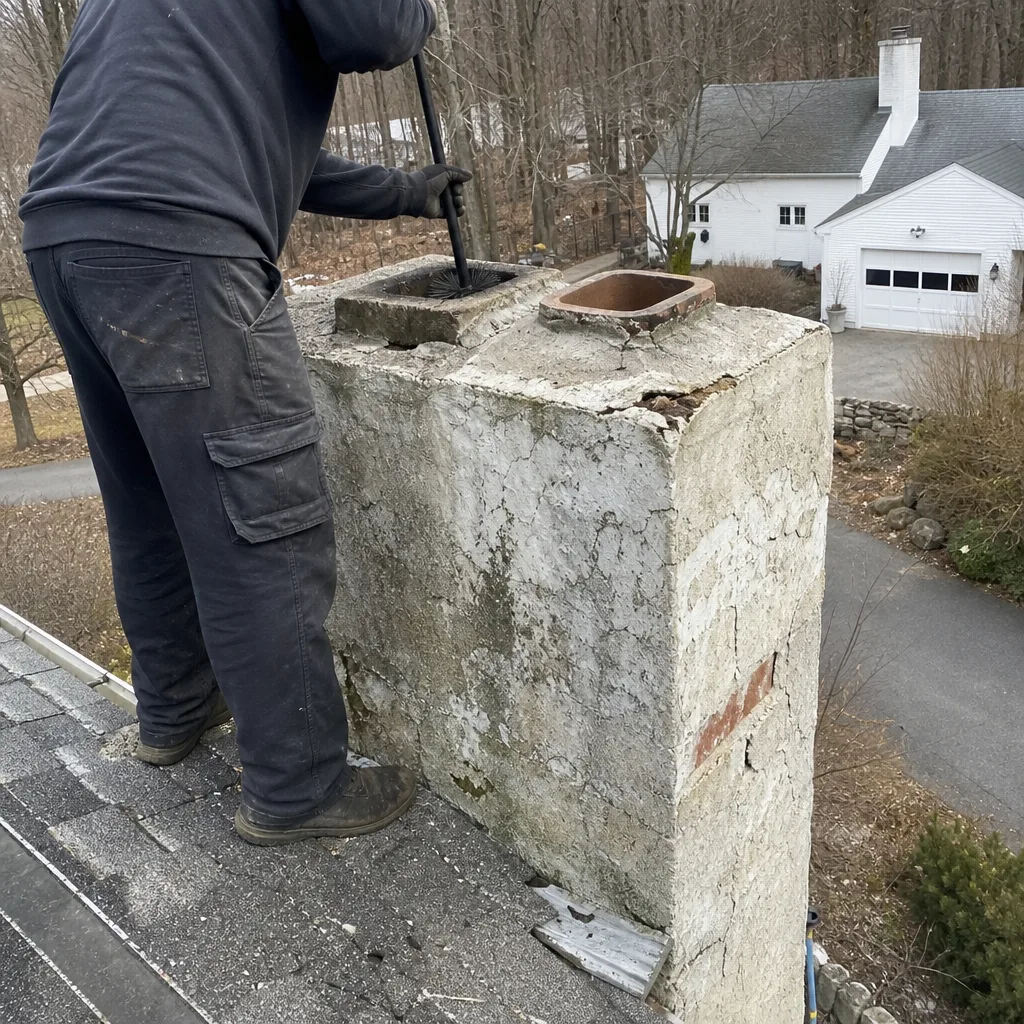 Before
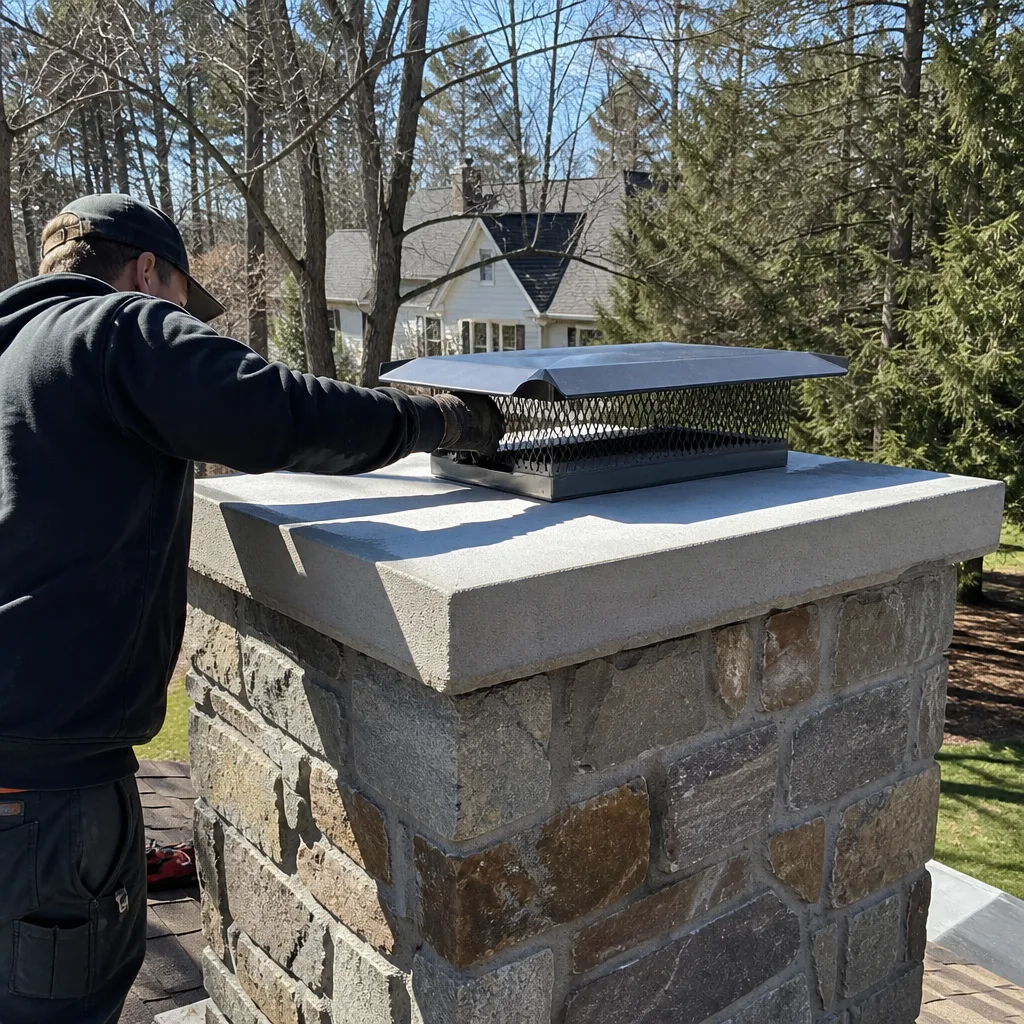 After
AfterSpalling Brick Repair in Greenwich, CT
Spalling brick repair in Greenwich typically runs between $400 and $2,800 depending on how many courses are affected, whether the mortar joints need Mortar Repointing, and how far moisture has worked its way into the chimney structure. Most jobs are completed in a single visit. If you’ve noticed brick faces cracking or flaking on your chimney, call us at (516) 399-5497 – a live person will answer, and we’ll give you a written price before anyone touches your chimney.
Spalling happens when water gets into the face of a brick and, when temperatures drop, freezes and expands from within. Greenwich winters are mild by New England standards, but the freeze-thaw cycle here is particularly punishing – we typically see 30-plus freeze-thaw cycles between November and March, just enough to fracture soft or aging brick faces without the prolonged deep freeze that would otherwise signal the problem sooner. By the time the damage is visible from the ground, it’s usually been progressing for two or three seasons.
Level Two Chimney Greenwich handles spalling brick repair as part of our broader Chimney Repair in Greenwich service. Every repair starts with a camera-scan inspection per NFPA 211 Level 2 standards – not a flashlight look from the roofline – so we know exactly what’s deteriorating before we quote. That written quote, written scope, and written warranty arrive before work starts. That’s Haven Standard Clause 1, and it’s not optional on our end.
When You Need Spalling Brick Repair
- Brick faces cracking or flaking off the chimney stack. If you’re finding reddish-brown chips on your roof deck or at the base of the chimney, the freeze-thaw cycle has already broken the surface bond. In Greenwich’s Old Greenwich and Riverside neighborhoods, we see this regularly on chimneys built with the softer common brick popular in homes from the 1940s through the 1970s.
- White chalky streaks on the brick exterior. This is efflorescence – mineral salts left behind as water moves through the brick and evaporates on the surface. It’s a reliable sign that moisture is actively migrating through the masonry, not just sitting on it.
- Mortar joints crumbling or recessed more than a quarter inch. Deteriorated mortar is usually the entry point. Once joints open up, water tracks directly into the brick body and the spalling process accelerates.
- A chimney crown with visible cracks. The crown is the first line of defense against water intrusion. A cracked or open crown – common on Greenwich homes built before 2000, when poured concrete crowns became standard practice – funnels water straight down the flue and into the upper courses of brick.
- Staining or dampness inside the firebox after rain. If the firebox smells damp or shows water marks on the smoke shelf or firebox walls, water has already passed through compromised masonry. By this point, spalling is almost always present higher on the stack.
- A chimney that hasn’t been inspected in more than three years. Spalling in its early stages is invisible from the ground. Our camera scan documents every inch of the flue liner and exterior masonry with dated photographs, so early deterioration gets caught before it becomes a structural problem.
Our Spalling Brick Repair Process
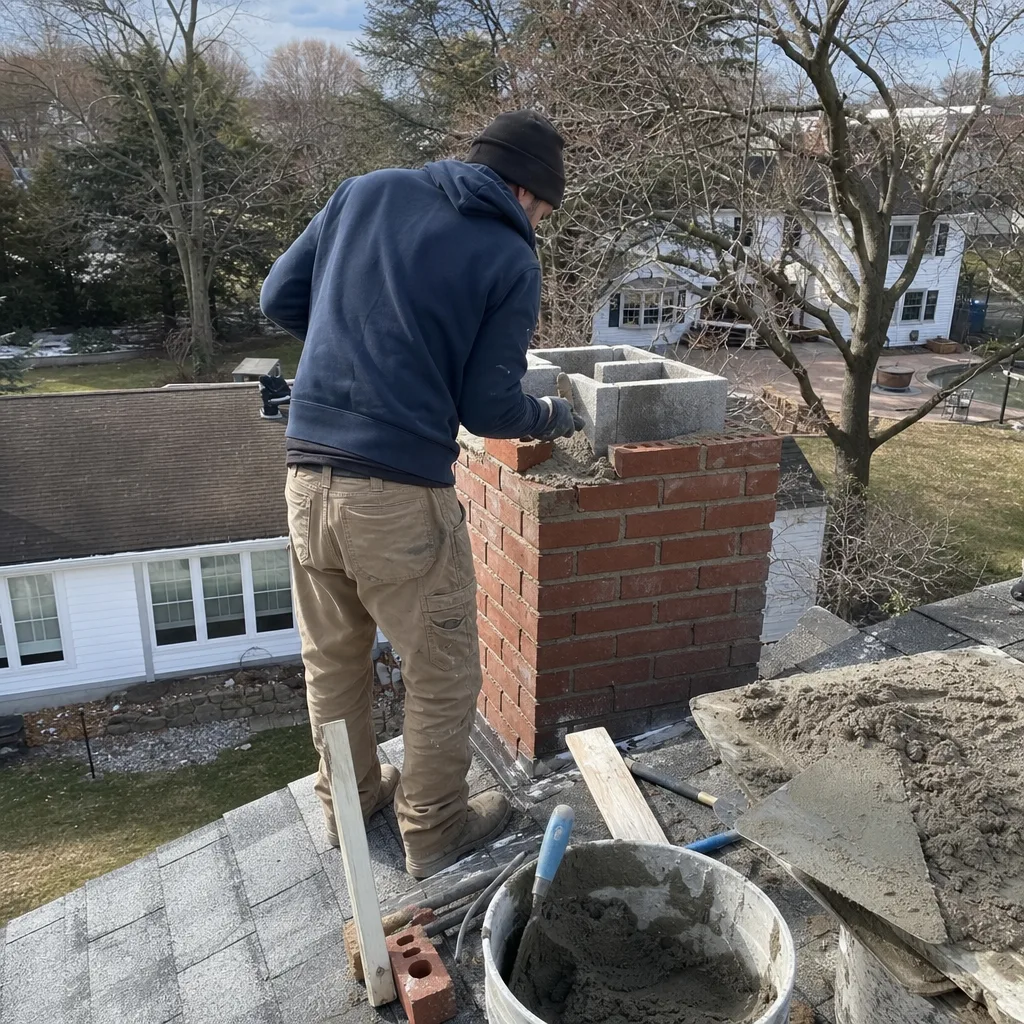
- Camera-scan inspection and photo documentation. Before we pull a single tool, we run an NFPA 211 Level 2 camera inspection and document the condition of the flue liner, smoke chamber, crown, and exterior masonry with dated photos. You get a copy of that record – it’s required under Clause 4 of the Haven Standard, and it’s included on every visit, not sold as an add-on. This step tells us exactly which courses are spalling, how deep the water intrusion goes, and whether the damage is isolated to the exterior face or has reached the flue liner.
- Written price, written scope, written warranty – before work starts. Once we know what we’re looking at, we put the full repair scope in writing: which bricks are being replaced, how many linear feet of mortar need repointing, what sealant or waterproofing is included, and the cost. You sign off on that written price before anyone picks up a trowel. Haven Standard Clause 1 exists for exactly this reason – no surprises on the invoice.
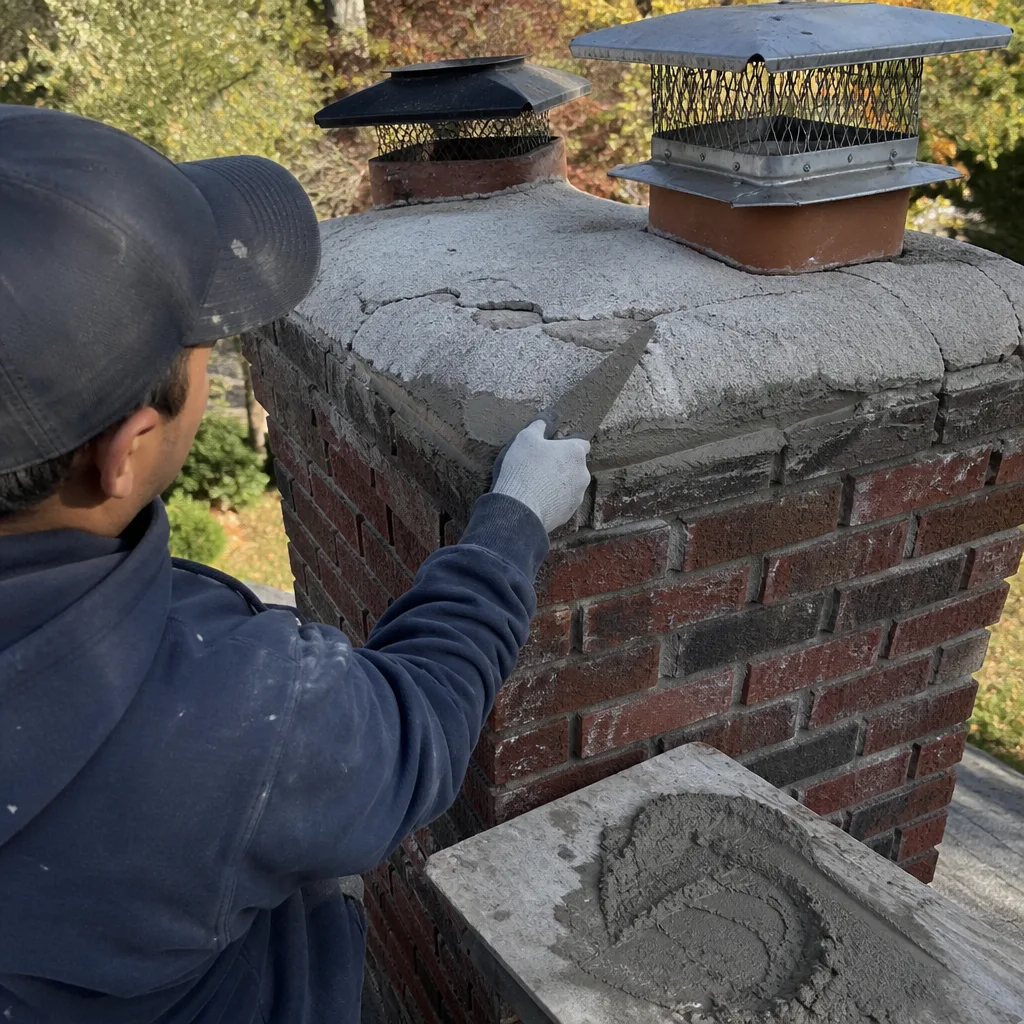
- Removal of damaged brick and mortar. Spalled brick faces can’t be patched back onto a deteriorated substrate – the patch fails within a season. We remove the damaged bricks and cut out the deteriorated mortar to a clean edge, typically to a depth of at least three-quarters of an inch, so the new mortar has enough surface area to bond properly.
- Replacement with matched masonry and proper mortar mix. We source replacement brick as close a match to your existing chimney as possible, which matters in Greenwich where many homes have architect-specified or period-specific brick that’s visible from the street. The mortar mix is matched to the existing – this is a detail that causes long-term failure when overlooked. Hard Portland-heavy mortars applied to older soft brick create a mismatch in flexibility, and the brick cracks again within a few years. We use the right mix for your specific masonry.
- Crown repair or replacement if indicated. If the inspection flagged crown damage as the source of water entry, we address it at the same visit when possible. Repairing the brick without sealing the crown is fixing the symptom while leaving the cause in place.
- Waterproofing sealant application. After new mortar has cured, we apply a vapor-permeable masonry waterproofing sealant to the repaired courses. This allows the brick to breathe – releasing moisture vapor from inside – while blocking liquid water from outside. On Greenwich chimneys close to Long Island Sound, where salt air accelerates brick degradation, this step extends the repair considerably.
BeforeAfterSpalling Brick Repair Pricing in Greenwich
Spalling brick repair in Greenwich runs $400 to $2,800 for most residential chimneys. Here’s how those ranges break down by scope:
| Scope of Repair | Typical Price Range |
|---|---|
| Minor spalling, 1-5 bricks replaced, mortar touch-up | $400 – $650 |
| Moderate spalling, 6-20 bricks, repointing 2-4 courses | $650 – $1,200 |
| Extensive spalling, 20+ bricks, upper stack repointing | $1,200 – $2,000 |
| Full chimney repoint plus brick replacement plus crown repair | $2,000 – $2,800+ |
| Camera-scan inspection (NFPA 211 Level 2) | Included on every visit |
What drives the cost up or down:
- Height and roof pitch. A two-story colonial in Cos Cob costs more to work on than a single-story ranch in Byram, simply because setup time and safety equipment increase.
- Brick availability. Matching a custom or unusual brick adds cost. Standard red common brick is easy to source; handmade or antique brick costs more to match.
- Extent of mortar joint failure. Repointing is labor-intensive. If the joints are failing across multiple courses, that adds time regardless of how many individual bricks need replacement.
- Crown condition. A failing crown that needs to be rebuilt at the same time adds $300 to $700 to the total, but addressing it during the same visit avoids a separate mobilization charge.
- Waterproofing sealant. Included on most repair scopes as a standard line item, but the square footage of the chimney affects material cost.
We don’t do “call for a quote.” Your written price is on paper before any work starts – that’s the entire point. If you already have a written estimate from another company, bring it to us. We offer a free second opinion on any written estimate, no strings attached.
Call (516) 399-5497 to schedule an inspection. Estimates are free, and you’ll have a written price in hand before we leave your property.
Why Greenwich Chimneys Spall Faster Than You’d Expect
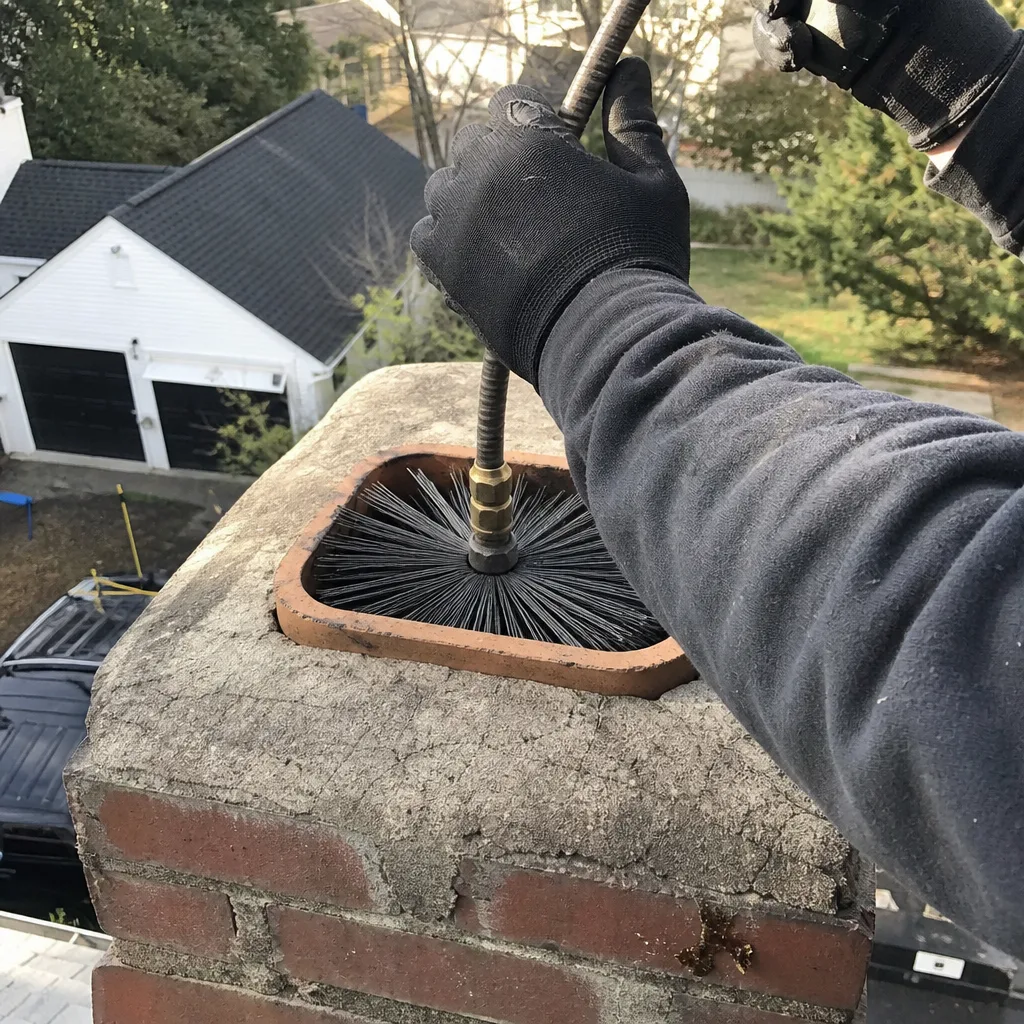
Greenwich sits in a microclimate that’s rougher on masonry than the weather app suggests. The proximity to Long Island Sound means chimneys near the water – particularly in Old Greenwich, Shore Road, and the Byram Shore corridor – absorb salt-laden air that accelerates brick and mortar breakdown even before freeze-thaw cycles have a chance to do their work. We’ve inspected chimneys in Riverside that looked fine from the ground and showed active spalling across four courses when the camera went up.
The other factor is the housing stock. Greenwich has a high concentration of homes built between 1920 and 1975, and a significant percentage of those chimneys used sand-struck or wire-cut brick – softer, more porous varieties that were common before harder-fired brick became standard. Those bricks absorb water more readily and spall earlier. A chimney that was built with that material and hasn’t been repointed or sealed in the last decade is a reasonable candidate for at least minor repair.
This is also why a camera scan matters here more than in many markets. Our 38,000-plus inspections since 2009 have consistently shown that early spalling – the kind that’s still cheap to fix – shows up in the upper courses first, where it’s not visible from the ground. By the time chips appear at the roofline, the affected area is usually larger than it looks.
As part of our work under the home inspection standard we’ve operated since founding, every photo record goes into a documented file you keep. If you sell the house, you have a dated record of chimney condition. If you refinance or make an insurance claim, you have documentation. It’s not marketing – it’s what the inspection record should have always been.
Key Takeaways
- Spalling brick repair in Greenwich runs $400 to $2,800 depending on scope – price is in writing before work starts.
- The freeze-thaw cycle and salt air near Long Island Sound make Greenwich chimneys particularly prone to early spalling, especially on pre-1975 housing stock.
- An NFPA 211 Level 2 camera scan is included on every visit and documents the full condition of your chimney – not just the courses visible from the ground.
- Repairing spalling brick without addressing a cracked crown or failed mortar joints first means the damage returns within a few seasons.
- The 365-Day Done Right Promise covers every repair: if it’s not right, we make it right.
- Free second opinion on any written estimate from a competitor – bring us the quote.
FAQs – Spalling Brick Repair in Greenwich
How much does spalling brick repair cost in Greenwich, CT?
Spalling brick repair in Greenwich runs $400 to $2,800 for most residential chimneys, with the most common range landing between $650 and $1,400 for moderate damage affecting 5 to 20 bricks plus mortar joint repointing. A camera inspection is included, and your written price is on paper before any work begins. Call (516) 399-5497 for a free estimate – no quote is ever given verbally and then adjusted on the invoice.
Is spalling brick a structural problem, or just cosmetic?
Spalling brick is a moisture-intrusion problem first, and it becomes structural if left untreated. When brick faces break off, they expose the inner masonry core and mortar joints to water. Over two or three seasons in Greenwich’s freeze-thaw cycle, that water migration can reach the flue liner and smoke chamber. At that point you’re looking at liner repair in addition to masonry work. Caught early – before chips appear at roofline level – it’s usually a contained, single-visit repair. Caught late, costs increase significantly. The camera scan tells you exactly which category you’re in.
Can spalling bricks be patched, or do they need to be replaced?
Spalled bricks generally need to be replaced, not patched. A surface patch applied to a brick that has already lost its face bond fails within one to two seasons – the new material has nothing solid to adhere to, and the freeze-thaw cycle finishes the job. We remove the damaged brick completely, prep the opening, and set a replacement brick with the correct mortar mix for your existing masonry type. Repointing the surrounding joints at the same time is standard practice, because open joints are almost always what allowed the water in to begin with. For more on our Chimney Repair services, call to schedule an inspection.
How do I know if my Greenwich chimney has spalling I can’t see from the ground?
Most early-stage spalling isn’t visible from the ground – it starts in the upper courses and inside the masonry face before chips reach a size you’d notice. The clearest indicators without a camera scan are efflorescence (white mineral streaks on the brick), dampness or odor inside the firebox after rain, and crumbling mortar joints at any height you can see. An NFPA 211 Level 2 camera inspection documents the full picture with dated photos. We’ve been running camera scans as the default since 2009, and it’s the only way to know with confidence what’s actually there. Call (516) 399-5497 to schedule one – the inspection is included with your service visit, and your written price comes before any work starts.
Written by Corrine Halstead, Owner at Level Two Chimney Greenwich, serving Greenwich.