
Last updated September 20, 2026
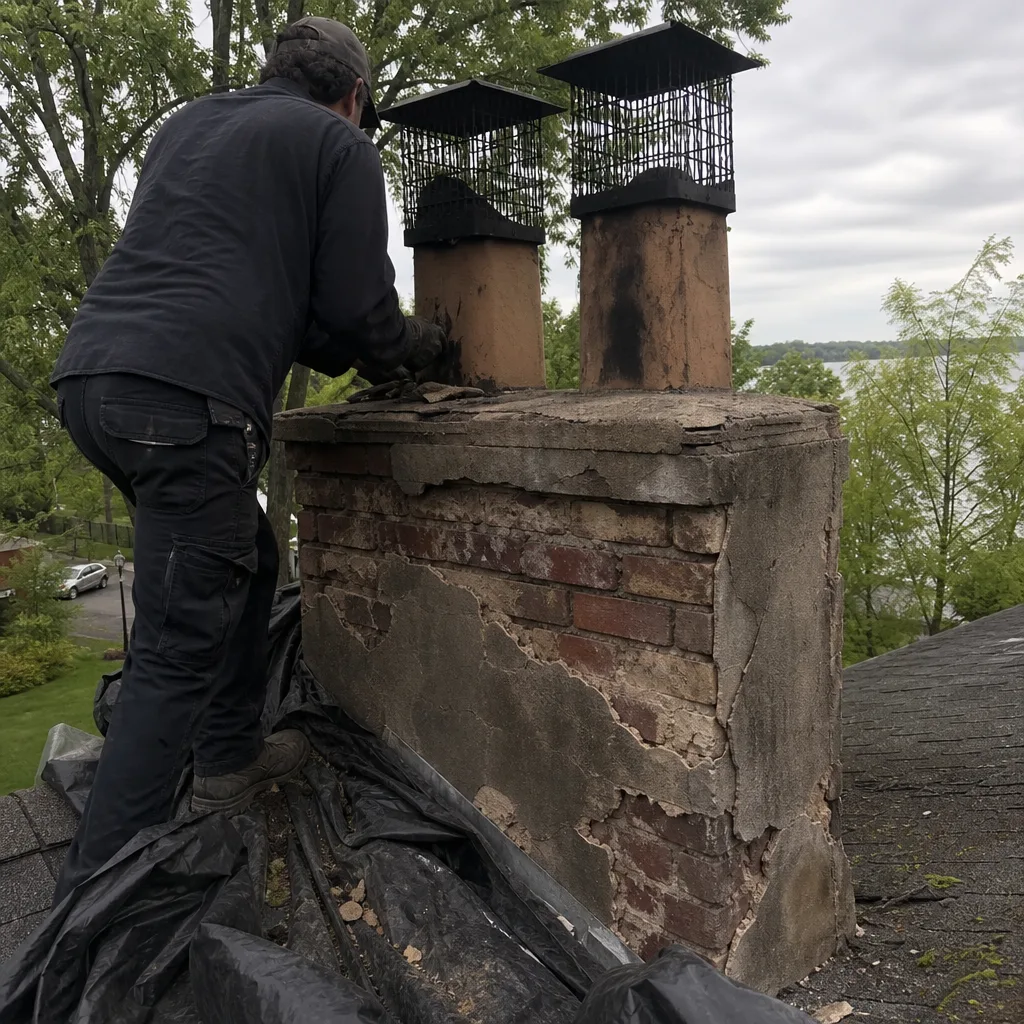
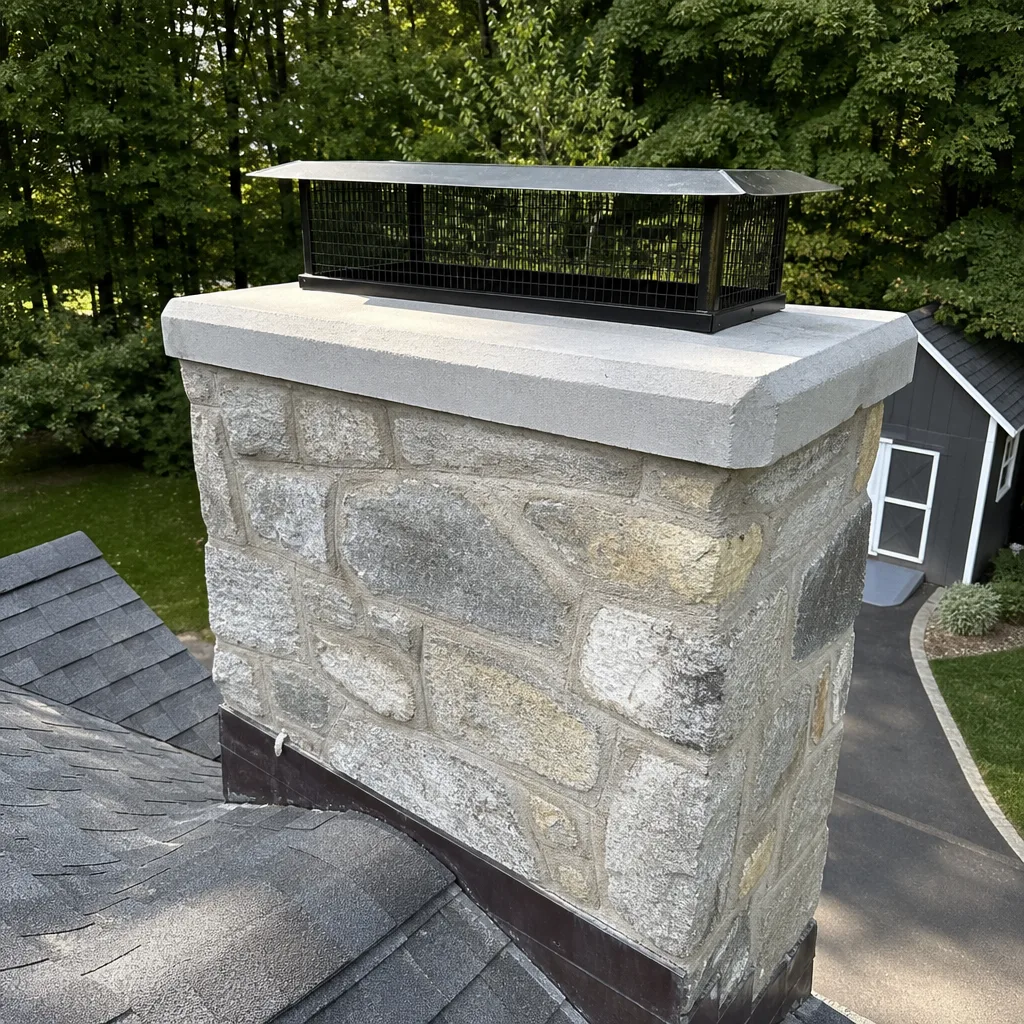
Level 1 sweep and inspection to the NFPA 211 annual standard - flue, crown, cap, and flashing checked and photographed
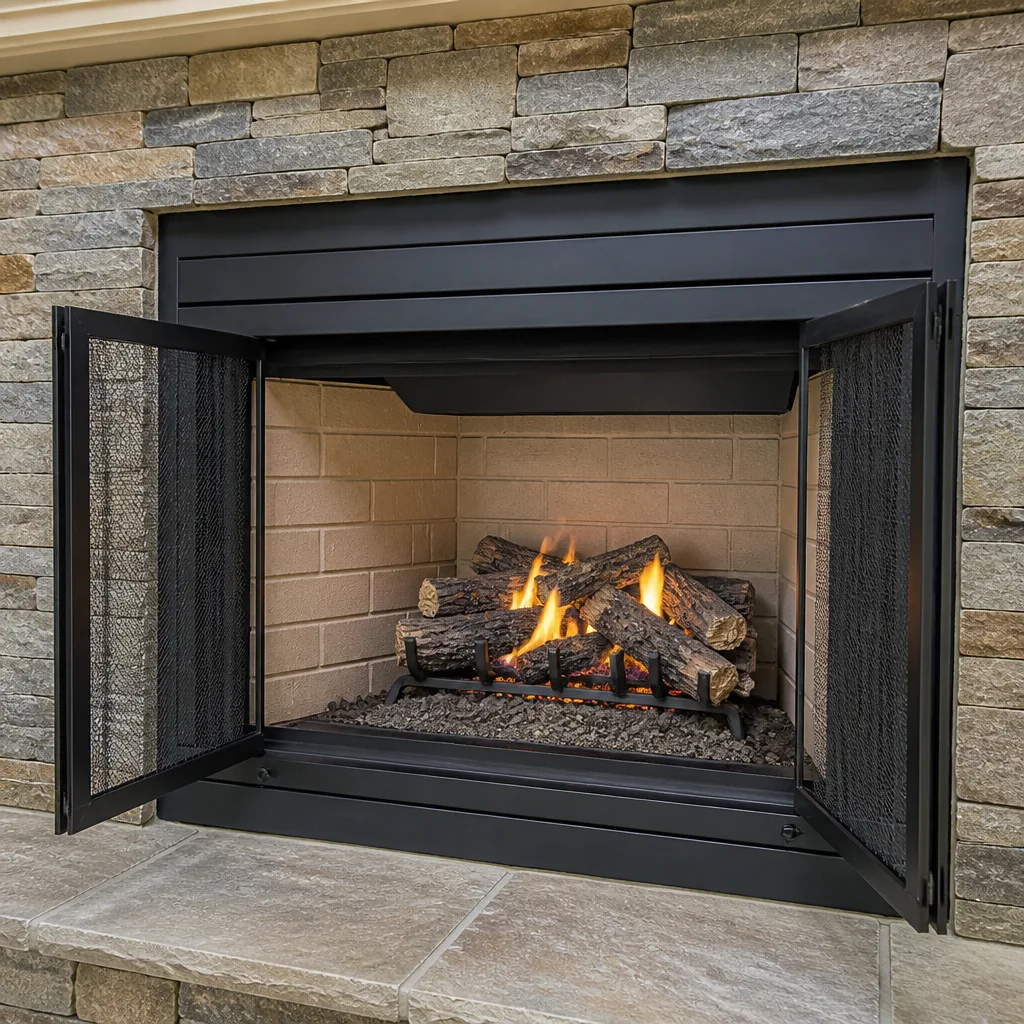
Chimney sweep logs do not sweep chimneys. They loosen some creosote - which then falls where a brush and vacuum still have to collect it.
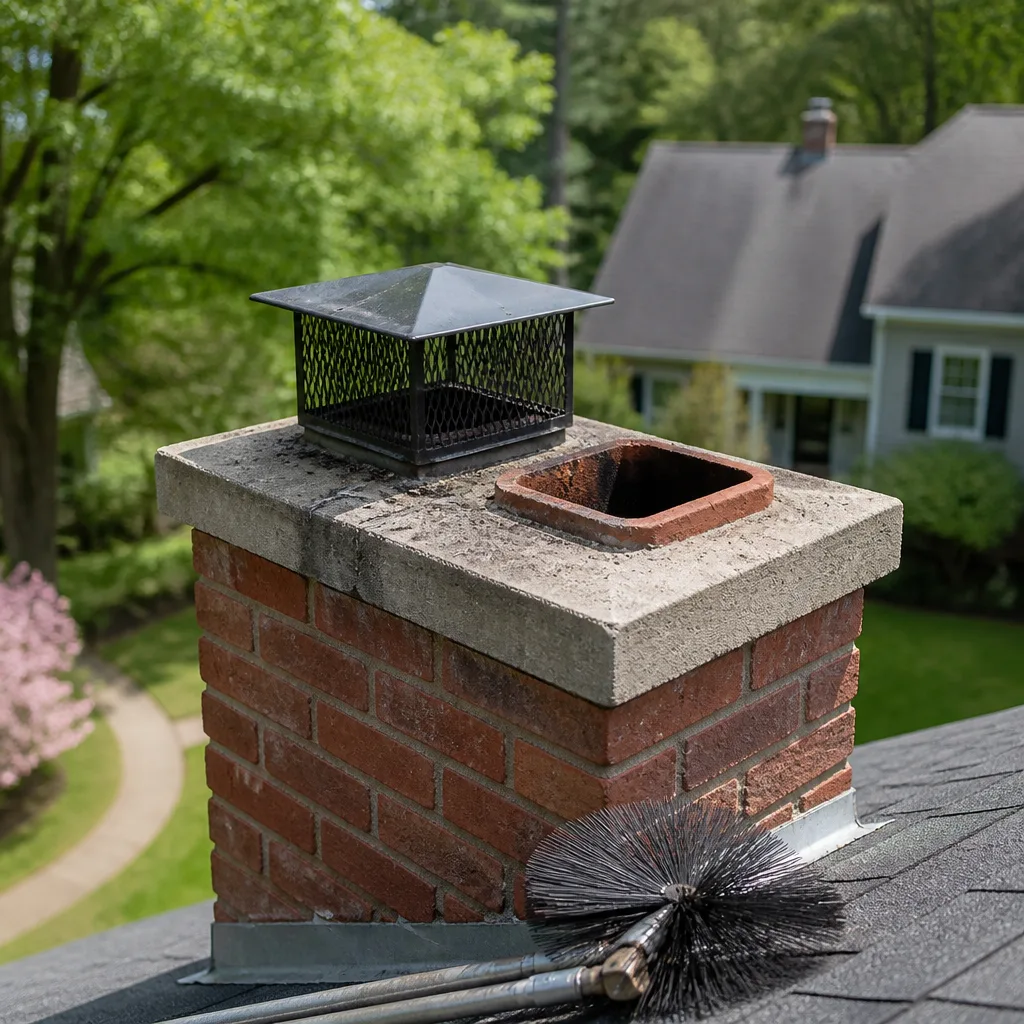
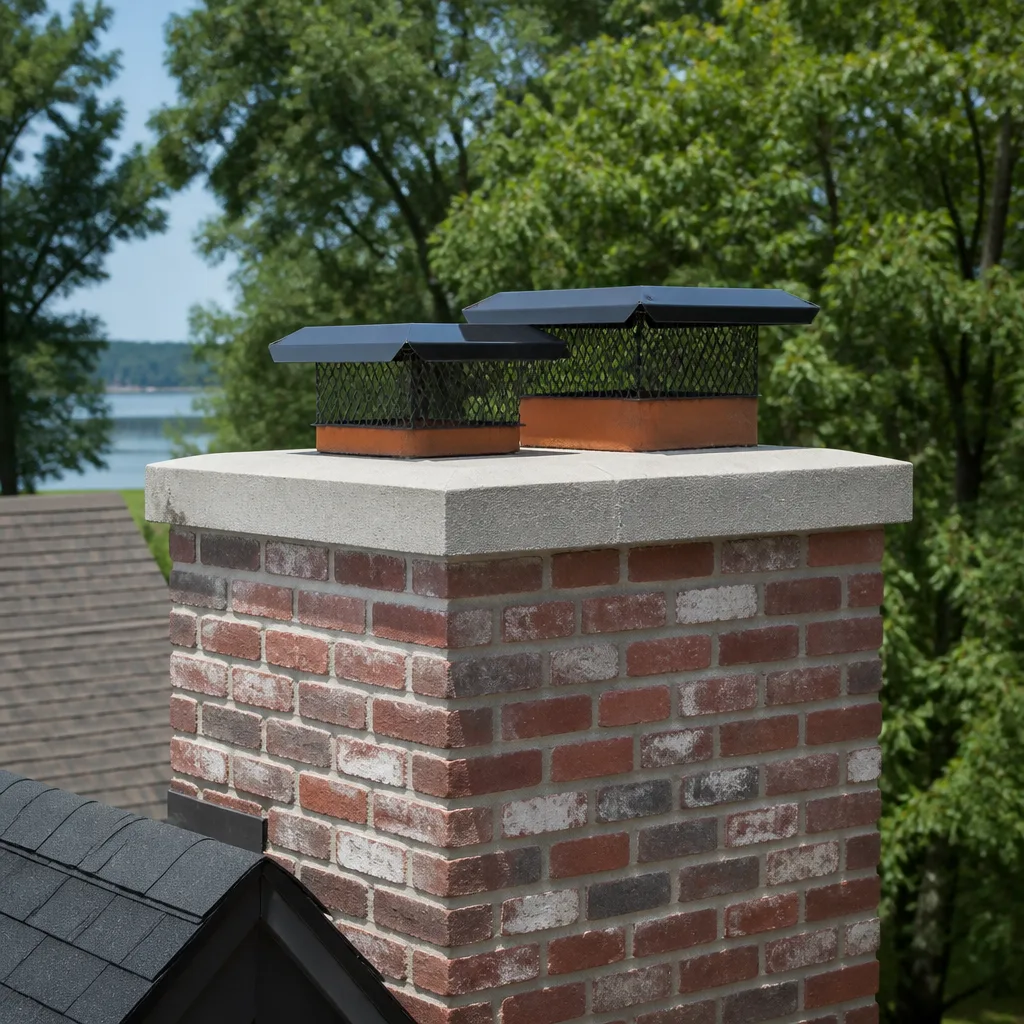
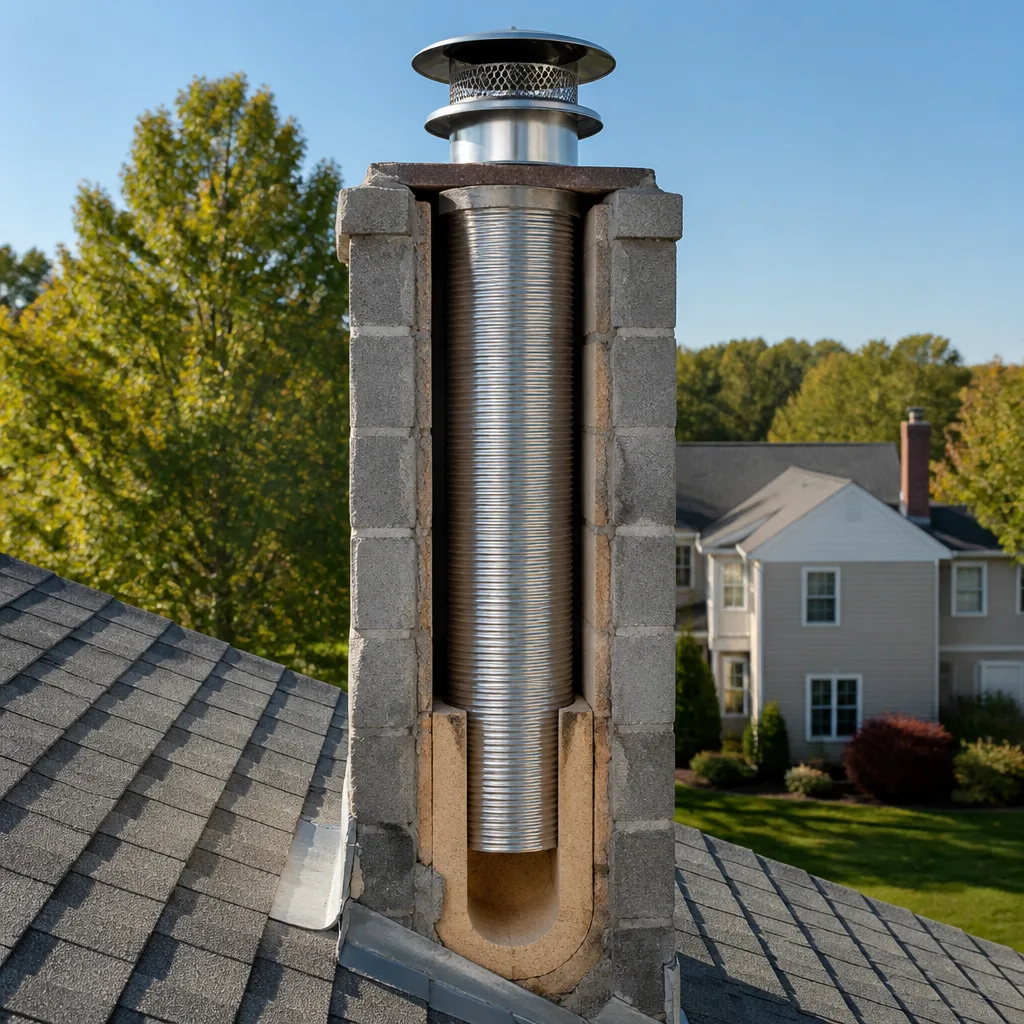
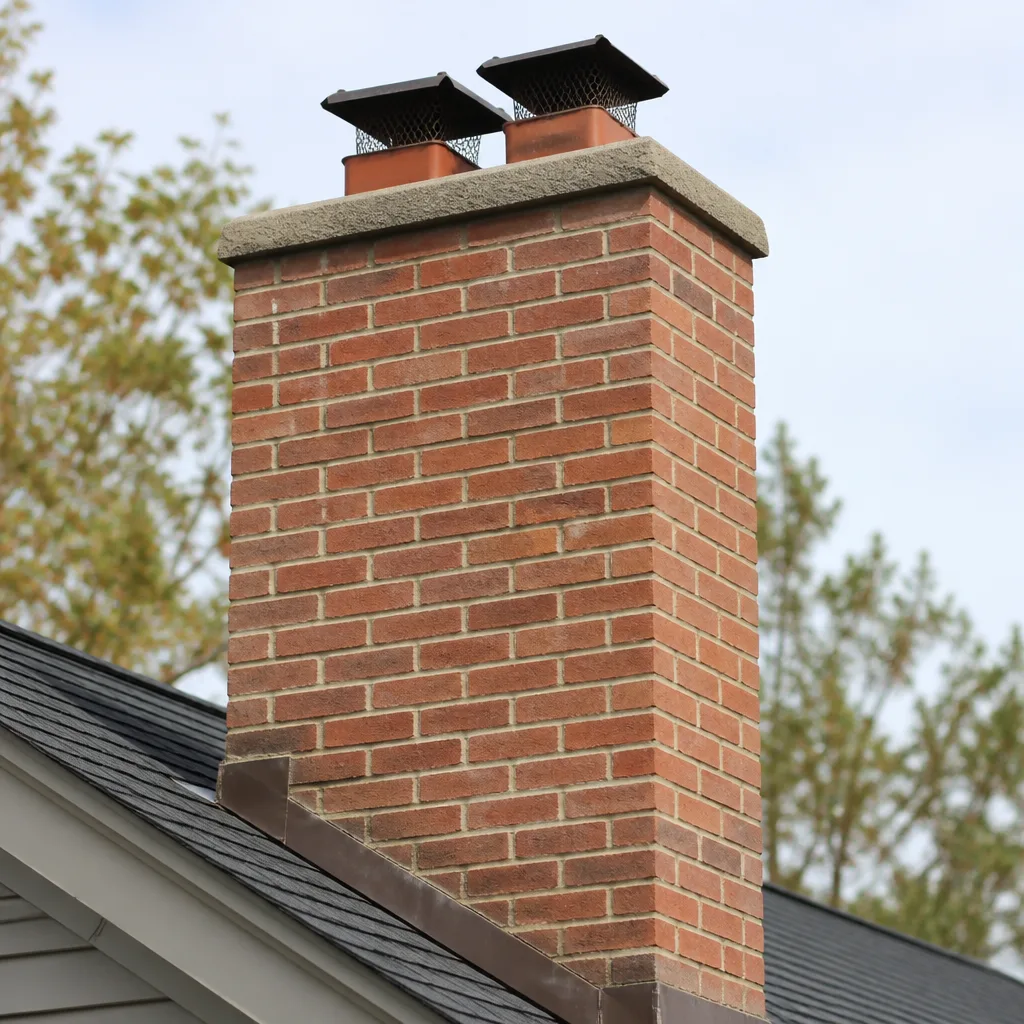
 Before
 After
After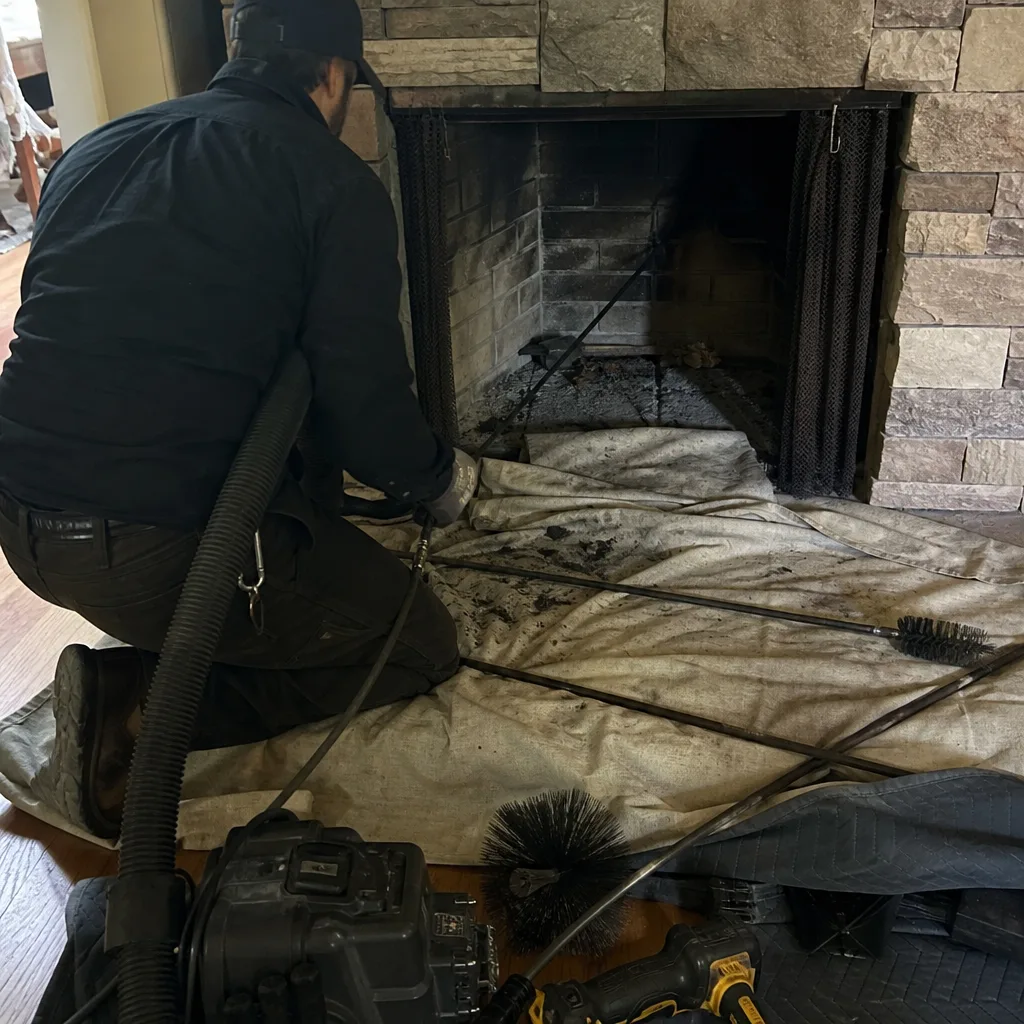 Before
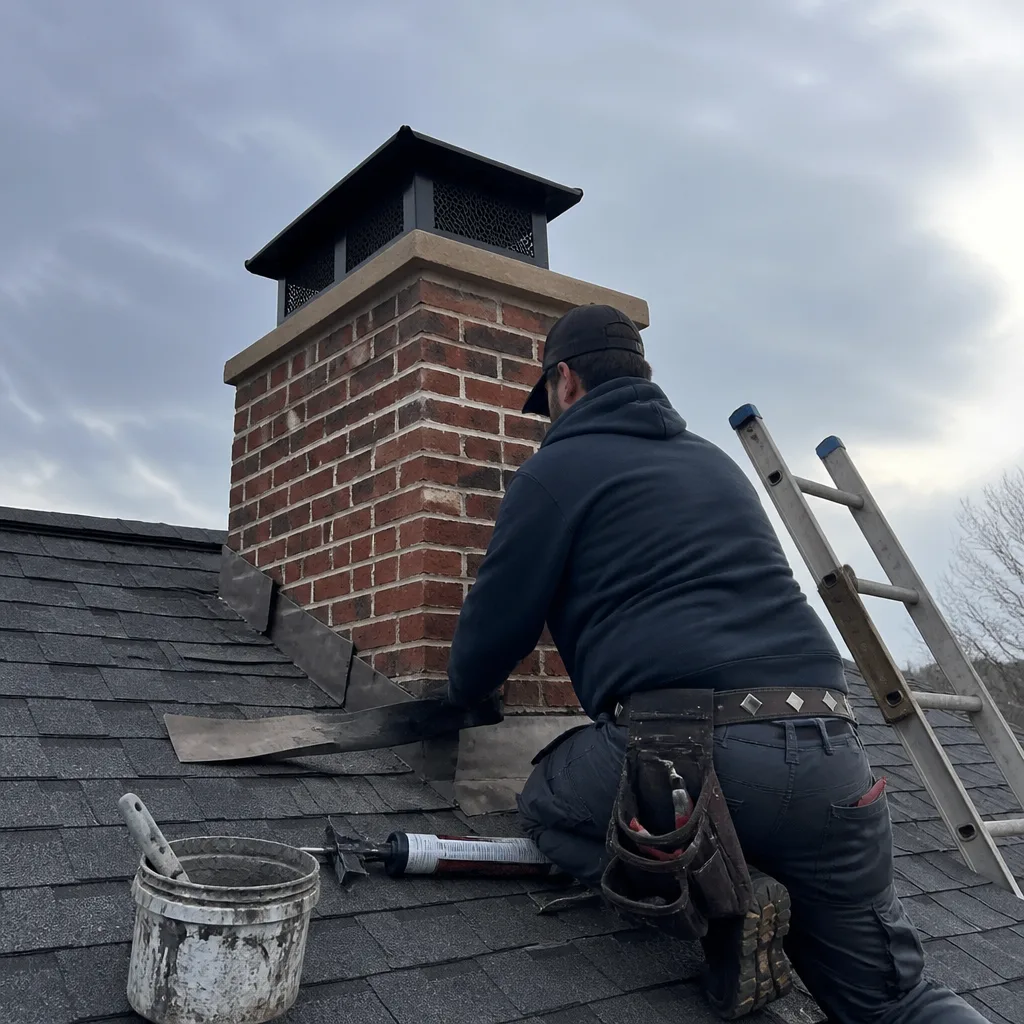 After
After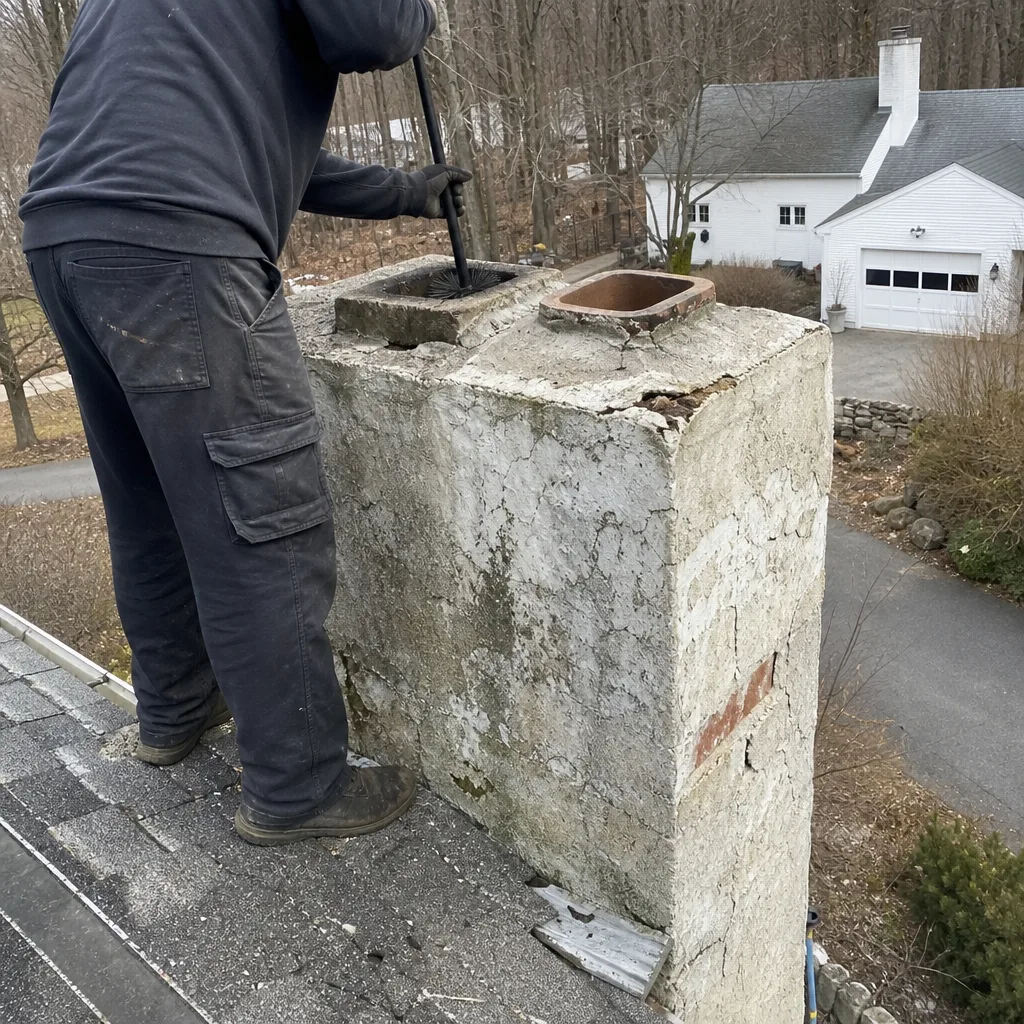 Before
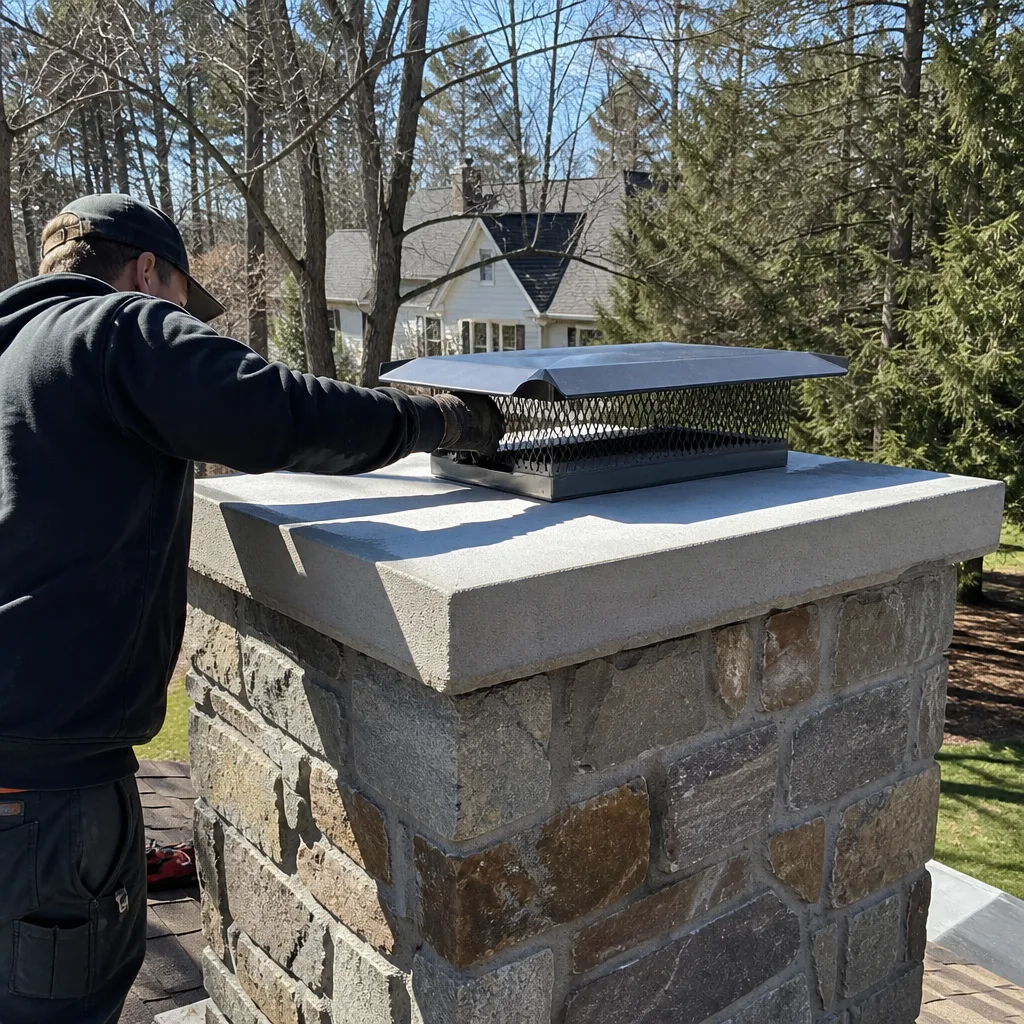 After
AfterDIY vs Professional Chimney Cleaning: The Greenwich Homeowner’s Decision Guide
Here’s a number that surprises most Greenwich homeowners: the tools to clean your own chimney cost about $40 to $90 total, but the camera that shows whether the job actually needs doing costs $3,000 and requires training to read. A homeowner with a stiff nylon brush, a drop cloth, and two free hours can remove loose first-stage creosote from a straight flue. That same homeowner has no way to see an offset crack, a spalled liner tile, or second-stage creosote glaze that requires chemical treatment, and no way to document liner condition for an insurer or a Fairfield County buyer. This guide is a real breakdown of what DIY chimney cleaning can and cannot accomplish in Greenwich, written from the perspective of people who have inspected and cleaned more than 38,000 chimneys since 2009. For more guides & resources, see our blog.
Quick Answer
DIY chimney cleaning makes sense only in one narrow case: a straight masonry flue, camera-verified clean within the last 12 months, seasoned wood only, no insert or stove attached. For every other Greenwich home, professional cleaning with a camera-scan inspection protects your house, your insurance claim, and your resale value in ways a brush from Ace Hardware cannot. The real question is whether you need soot removed or a documented, inspectable chimney system – those are two different jobs.
Table of Contents
- What DIY Chimney Cleaning Can Actually Accomplish
- What DIY Cleaning Cannot Do (and Why It Matters in Greenwich)
- The Real Tools and Costs of DIY Chimney Cleaning
- The Greenwich Homeowner Profile Where DIY Makes Sense
- The Greenwich Profile Where DIY Is the Wrong Call
- What a Professional Sweep Produces That DIY Cannot
- Common Mistakes to Avoid
- When to Call a Professional
- Frequently Asked Questions
BeforeAfterWhat DIY Chimney Cleaning Can Actually Accomplish
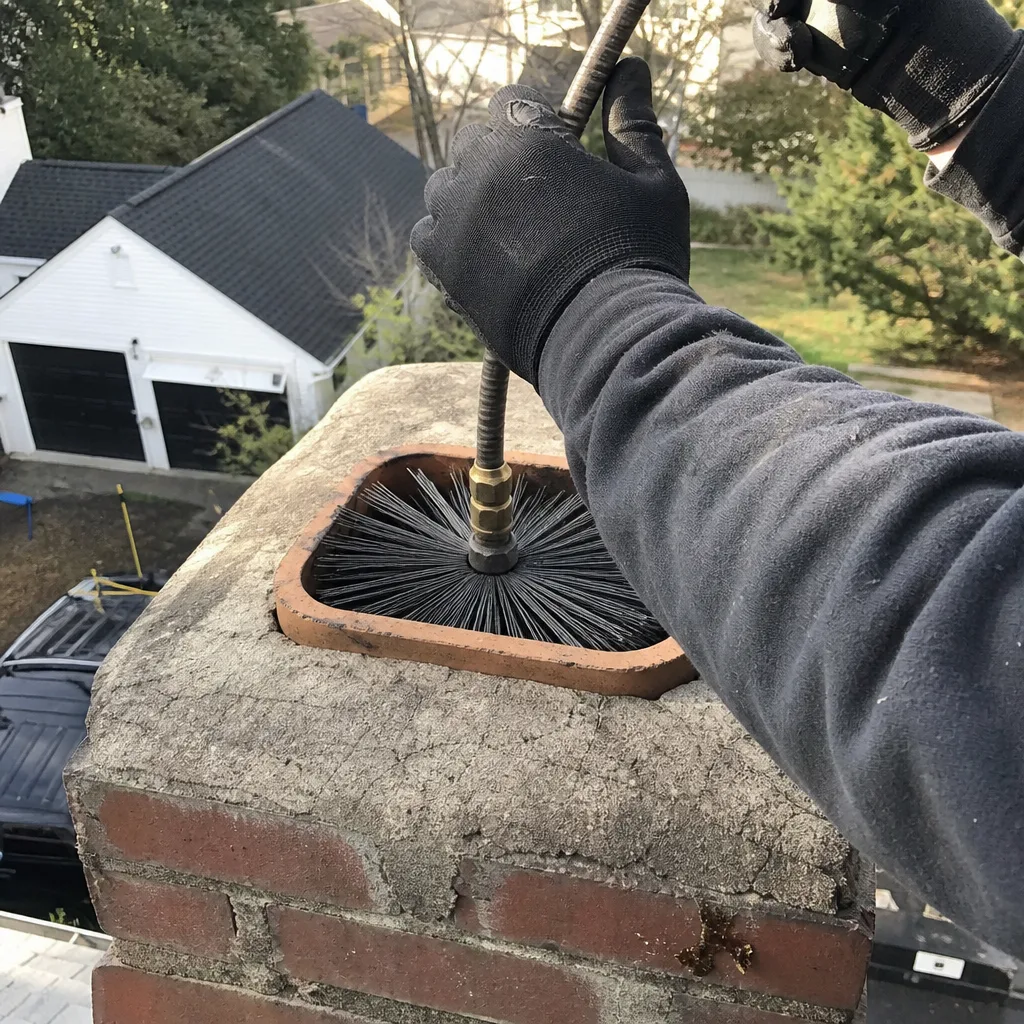
Let’s be precise about what a do-it-yourself sweep does, because the word “cleaning” covers a lot of ground. A homeowner working from the top of the roof with a properly sized poly or wire brush can remove what the trade calls first-stage creosote: the soft, flaky, brownish-black soot that accumulates during normal wood burning. This is the only creosote class that responds to brushing. It sits loose on the flue wall and falls away with moderate friction.
In a straight masonry flue with no offsets, a DIY sweep can genuinely remove this material from the firebox up to the chimney cap. The job takes roughly two hours for a single-story home in Greenwich, longer if you’re working around a steep pitch or a slate roof. The results are visible: you’ll knock down a measurable pile of soot onto your drop cloth, and the flue will look cleaner at arm’s reach from the top.
Here’s what that actually means for safety. Removing first-stage creosote does reduce the fuel load available for a chimney fire. If your burning habits are consistent – seasoned hardwood, well-established fires, no wet pine or unseasoned oak – then first-stage creosote is probably all that has accumulated. In that specific scenario, a careful DIY sweep with a proper brush accomplishes the same basic soot removal as a professional cleaning, minus the documentation. It removes visible soot. Whether that’s enough is a question of what else might be in the flue that a brush cannot detect or dislodge.
One more thing a homeowner can do competently: inspect the firebox and the visible flue opening with a bright flashlight and a mirror. You can see obvious cracks in the firebrick, loose mortar joints near the damper, or a damper that no longer seats. You can see if the cap is missing or if the flue tile at the top is cracked. These are real observations. They just aren’t a flue inspection. About 60 to 70 percent of a typical Greenwich chimney flue is not visible from either end without a camera.
What DIY Cleaning Cannot Do (and Why It Matters in Greenwich)
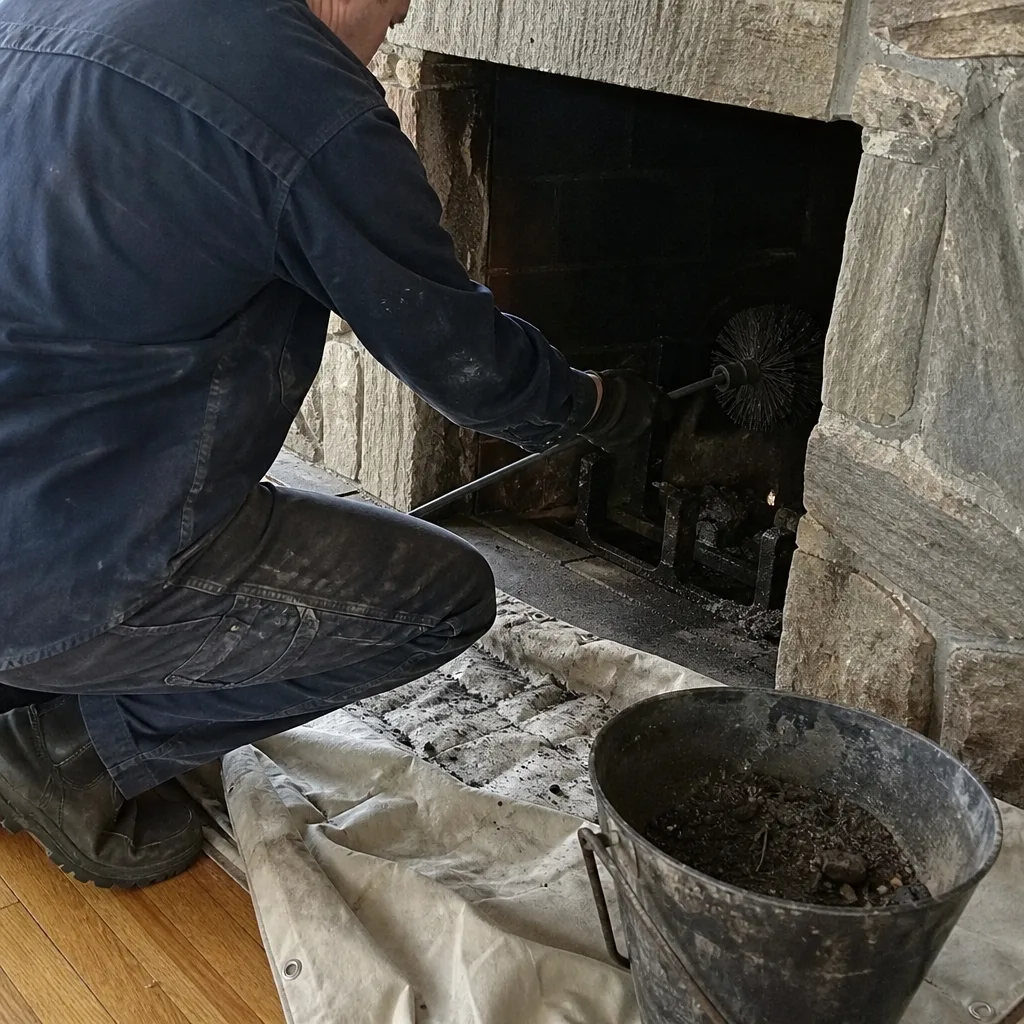
A brush removes loose material. It does not diagnose the flue. That distinction matters because the dangerous conditions in a chimney are rarely visible as soot. They are structural, and they live in the middle 15 to 25 feet of the flue where no brush and no flashlight reaches.
Detecting liner fractures. A cracked flue tile, a deteriorated mortar joint between tiles, or a separated tile at an offset is invisible from both the firebox and the roof. A broken flue liner allows heat and combustion gases to reach the masonry around the chimney, and in older Greenwich homes with wood framing close to the chimney chase, that is how house fires start behind walls. Nothing about a DIY sweep tells you whether the liner is compromised.
Diagnosing offsets. Some Greenwich chimneys, especially those built into the center of older Colonials or routed around roof hips, have offsets: angled sections where the flue changes direction. A straight brush cannot follow an offset, and a homeowner has no way to know one is there. Brushing a flue with an offset often leaves a creosote shelf at the bend, exactly where wind turbulence causes the heaviest deposits, and exactly where a brush never reaches.
Identifying second-stage and third-stage creosote. This is the one that surprises homeowners. When flue temperatures run moderate and the wood is not fully seasoned, creosote condenses as a dark brown tar that hardens into a glaze. That is second-stage creosote, and it does not brush off. It requires chemical treatment, usually a professional-grade creosote modifier, followed by a follow-up sweep. Third-stage creosote is a hardened, shiny, carbonized fuel layer, in some cases actually flammable enough to be dangerous to the sweep. Neither responds to a homeowner-grade wire brush. In our experience, second-stage creosote appears most often in Greenwich homes where the previous owner burned mixed wood or the homeowner is one or two seasons into owning a fireplace and still learning burn habits.
Producing insurer-acceptable documentation. After a chimney fire, an insurance adjuster asks for two things: proof the chimney was inspected and cleaned, and a description of the liner condition. A homeowner’s word that “I swept it myself in October” does not carry weight. A timestamped camera-scan image of the flue wall, a written findings report, and a service record signed by a licensed chimney professional does. This is also what a Greenwich buyer’s home inspector asks for in a real estate transaction. Fairfield County buyers expect maintenance records, and a chimney without documentation reads as a chimney that wasn’t maintained.
Warranting the work. When we complete a cleaning under the Haven Standard, we stand behind it for 365 days. If something we missed shows up, we make it right. Every job since our founding in 2009 has operated this way, and that’s the whole point of Clause 4 of the Haven Standard: a documented photo record on every job, so there’s no question about what was found and what was done. A DIY sweep carries no warranty because there’s no record of what the flue looked like before or after.
The Real Tools and Costs of DIY Chimney Cleaning
The honest cost of a DIY chimney sweep in Greenwich is somewhere between $40 and $90 for the tools, plus an afternoon of your time on a ladder. Here’s the actual breakdown, in 2026 retail prices at local hardware and home centers. For a full Chimney Cleaning Cost Breakdown: The Greenwich Homeowner’s Reference for 2026, see our dedicated guide.
- Chimney brush: $25-$45. A poly brush for a masonry flue runs about $30 for a standard 8″x8″ or 8″x12″ size. Wire brushes cost a few dollars more but scratch glazed tile and should not be used on pre-fab metal chimneys.
- Fiberglass extension rods: $15-$30 for a set of 3-4 rods, enough for a single-story flue. Two-story homes need two sets, and at that point the assembly sags and loses contact with the flue wall.
- Drop cloth, tarp, or plastic sheeting: $5-$10. You need full coverage from the firebox opening out about six feet into the living room, because soot is fine, airborne, and permanent on wool rugs and white trim.
- Dust mask and safety glasses: $5-$10. Creosote dust is an irritant and is not something you want in your lungs.
- Borrowed or existing ladder: $0. A ladder tall enough to reach a second-story roof safely in Greenwich is a genuinely dangerous piece of equipment on a pitched roof, especially in the wet fall months.
The professional rate in Fairfield County for a standard chimney sweep with a Level 1 inspection typically runs $175 to $350. A Level 2 camera inspection, which is what we perform as a default on every visit, adds camera documentation, a written findings report, and the photo record that satisfies insurers and buyers. The cost difference between DIY and professional is real, and we’re not going to pretend it isn’t. But the comparison is not “brush versus brush.” It’s “brush versus camera, report, and warranty.” Those are different products.
The Greenwich Homeowner Profile Where DIY Makes Sense
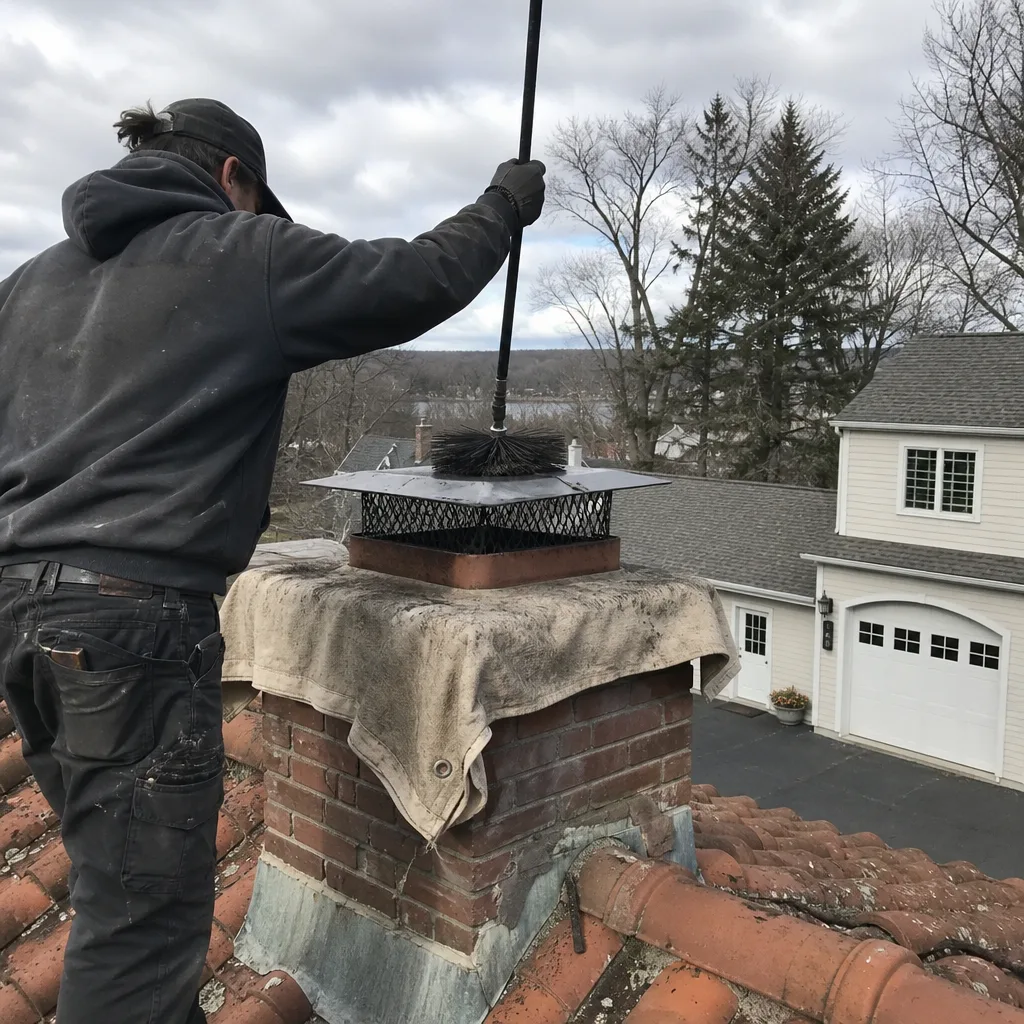
We are not anti-DIY. The honest positions in this guide would be useless if we were. There is a specific Greenwich homeowner for whom DIY chimney cleaning is a reasonable choice, and here’s what that profile looks like in full:
- A straight masonry flue. No offsets, no bends, no factory-built metal chimney, no insert liner. If you don’t know whether your flue has an offset, you don’t yet know enough to DIY, and that’s the first camera-scan you should pay for.
- A camera-verified clean chimney within the last 12 months. This is the non-negotiable. If a professional camera inspection found the liner intact and the creosote at first-stage only, then a homeowner cleaning between annual professional cleanings is removing the same material the pros would remove.
- Seasoned hardwood only, burned hot. If your wood has been split and stacked for at least a year, and you build fires that run hot rather than smoldering at low air, you’re producing first-stage creosote at a manageable rate.
- Light burning. A fireplace used a couple nights a week from November through March. Daily burning, or burning as a primary heat source in an older Greenwich house, accumulates creosote faster than a homeowner schedule catches up with.
- No insert or stove connected. A fireplace insert with a stainless liner is a different system than an open-burning masonry fireplace. Inserts burn cooler and longer, producing second-stage creosote even with seasoned wood. Liners also can’t be brushed with typical masonry brushes.
- Comfort and safety on your roof. Greenwich roofs include steep pitches, slate, cedar shake, and icy northern exposures in winter. A comfortable, safe roof visit is a prerequisite, not a footnote.
If all six of these describe you, a DIY sweep with a $30 brush is a reasonable maintenance step between professional cleanings. That’s the honest answer. It’s just a much rarer profile than YouTube makes it look.
The Greenwich Profile Where DIY Is the Wrong Call
Most Greenwich homes fall outside the DIY profile above, and it’s worth being explicit about which situations should end all DIY consideration. This isn’t caution for its own sake. These are the cases where a brush either can’t reach what matters or can’t prove anything to anyone.
Any real estate transaction pending, buying or selling. When a Greenwich home changes hands, the buyer’s inspector is going to look at the chimney. They’ll note the damper, the firebox, the cap, and whatever they can see at the top of the flue. Then the buyer’s attorney will ask for maintenance records. A chimney with no documented professional inspection and cleaning history is a negotiation point, and it’s always paid by the seller in the final round. If you’re selling, a professional sweep with a camera-scan photo record and a written findings report is the cheapest defensive document you’ll produce in the entire transaction.
Any chimney not camera-inspected in the last year. This one is simple. You cannot know a flue is clean enough to DIY until a camera has looked at it. Guessing is how homeowners brush over a second-stage creosote glaze and mistake “looks darker than it was” for “clean.”
Any fireplace connected to an insert or stove. Inserts and stoves vent through stainless liners, often with different diameters than the original flue, and they produce condensation and creosote patterns that a masonry brush cannot address. The liner is also not visible from the roof the way an open flue tile is, so the “arm’s reach” visual check is useless.
Any flue burning mixed or unseasoned wood. In Greenwich, the easiest way to end up with second-stage creosote glaze is to burn the cord of “seasoned” wood someone sold you in September that was actually split in July. It happens every season. Wet wood burns cool, creosote condenses heavily, and by February the flue walls have a shiny tar layer that a brush just polishes. That’s a chemical treatment job now.
Any chimney in a house built before 1980. Much of Greenwich’s housing stock is pre-war, and pre-1980 masonry chimneys often have unlined flues, single-wythe brick without a clay tile liner, or mortar joints that have been eating decades of flue gas. We routinely find cracked tiles and missing mortar in chimneys that look perfect from the roofline. These are the chimneys that need a camera scan before anyone decides anything.
What a Professional Sweep Produces That DIY Cannot
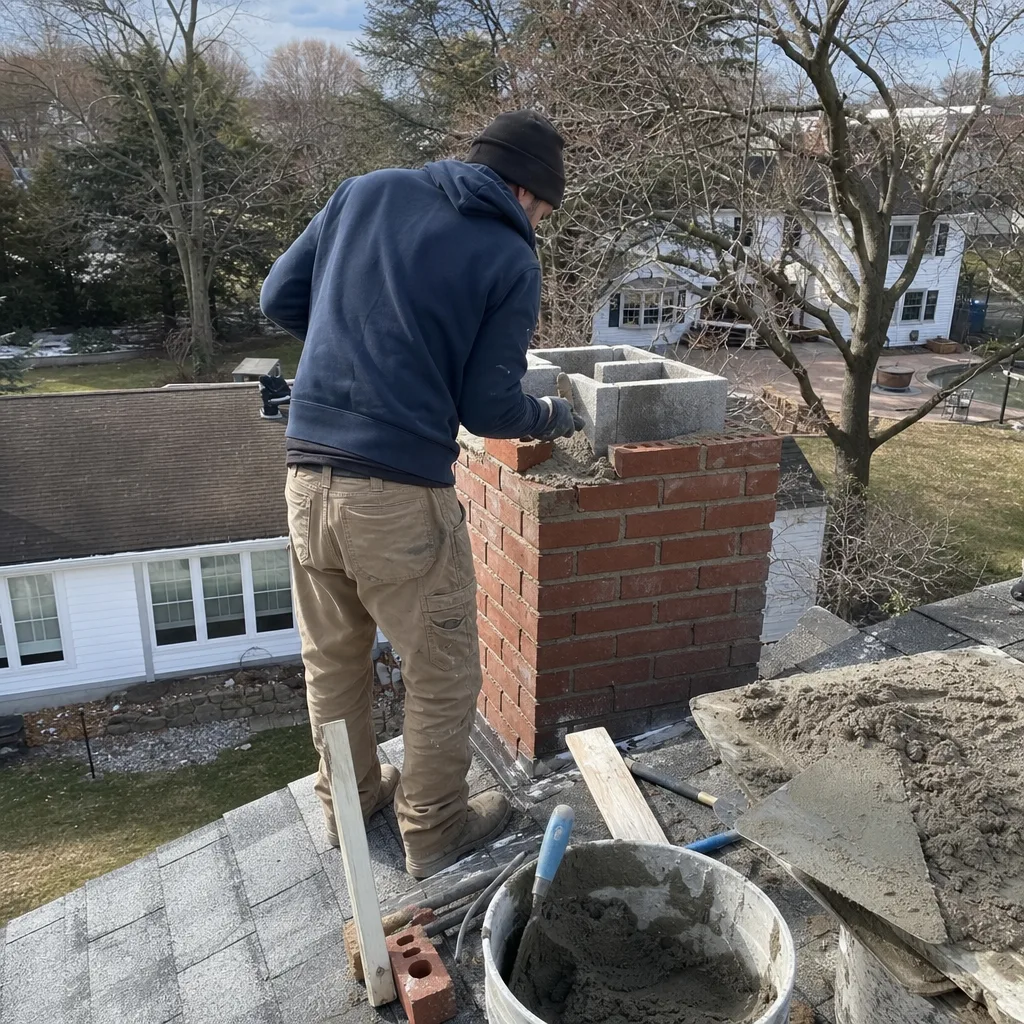
The difference between a brush and a professional sweep shows up in the paperwork, and that’s not a trivial distinction in Greenwich. Here’s what you walk away with after a professional cleaning under the Haven Standard, and what each document does for you.
A documented photo record of the flue liner. Clause 4 of the Haven Standard has required a photo record on every job since 2009, years before insurers or regulators asked for it. We run a camera down the flue before and after cleaning, and you see the images. You see the liner condition. You see what was found, not what we felt about it. For a Greenwich homeowner, these photos are the answer to the only question that matters: “Do I need a new liner, or is this one fine?” And you can answer that question by looking at the screen, not by trusting a stranger’s assessment.
A written findings report. We describe the liner condition, crown integrity, creosote class, damper operation, and cap condition in plain terms, then explain what each finding means in one clause. Class III creosote, for example, is a shiny, hardened fuel layer that requires chemical treatment before mechanical brushing is safe. A written report means you have the same information we have, in language you can show to an insurer or a contractor.
A written price and written scope before work starts. Clause 1 of the Haven Standard is H.A.V.E.N. ‘Have it in writing.’ We write the price, the scope, and the warranty before anyone touches your chimney. If the camera shows a cracked flue tile or a deteriorated crown, the recommendation comes with a written quote, and we bring in materials from suppliers like DuraFlex and HeatShield through Haven’s buying network to keep the price honest. You are never working from a verbal estimate or a “we’ll see when we get in there” number.
A warranty. The 365-Day Done Right Promise is our guarantee on every job. If it’s not done right, we make it right. That promise is stamped on our work. It means the cleaning is certified complete, documented, and backed for a full year. A DIY sweep has no one to call when the chimney smells smoky in March.
A documented service history. In Greenwich, where many homes are 60 to 120 years old, the chimney’s service record is part of the house’s value. A continuous photo archive from 2009 forward means a homeowner can show a buyer ten years of flue conditions and cleanings. That’s leverage in a real estate negotiation, and it’s the kind of record that makes a listing stand out in a market where buyers read inspection reports line by line.
For the full picture of what a professional sweep includes, see our Chimney Cleaning & Sweep in Greenwich service page, where we break down the process step by step.
Common Mistakes to Avoid
- Brushing a flue you’ve never seen. The most common DIY mistake in Greenwich is also the most dangerous: sweeping a chimney that hasn’t been camera-inspected. A brush cannot tell you if the liner is cracked, and brushing a compromised liner can worsen it. Camera first, brush second.
- Using a wire brush on a glazed flue tile. Wire bristles scratch the smooth glazed surface, creating micro-abrasions that collect creosote faster afterward. Poly brushes are the right tool for masonry, and metal chimneys require a brush matched to the chimney material, not whatever is on the shelf.
- Cleaning from the bottom. Some homeowners attempt a bottom-up sweep with rods and a drill attachment from inside the firebox. On a straight flue, this can work, but it kicks soot and creosote dust through the house in a way that’s very hard to contain. Top-down is the safer geometry for containment.
- Ignoring the smoke chamber. The smoke chamber is the angled section above the damper where the flue narrows, and it accumulates creosote like an offset does. A straight flue brush skips it entirely. A camera inspection shows whether the smoke chamber needs attention.
- Sweeping once and assuming a year of safety. A single cleaning is a snapshot, not a status. If your burn habits change mid-season, or you discover the wood you bought is wetter than advertised, the creosote load changes. This is why our recommendation for Greenwich homeowners who burn regularly is an annual sweep with a camera scan, even if a DIY touch-up happens in between.
- Using creosote-cleaning logs as a substitute. Chemical “sweeping logs” change the structure of first-stage creosote, making it easier to brush later, but they do not remove soot, and they do nothing for second-stage or third-stage deposits. In Greenwich, we find homeowners who burned three or four logs over a season and skipped the sweep entirely, believing they’d cleaned the chimney. They had not.
- Doing the job on a wet roof in low light. Greenwich chimney work happens on slate, wood shake, and steep asphalt surfaces, often in fall drizzle. A fall from a second-story roof in poor light is a life-changing injury. If you aren’t comfortable on the roof in the exact conditions of the day, do not get on the roof.
When to Call a Professional
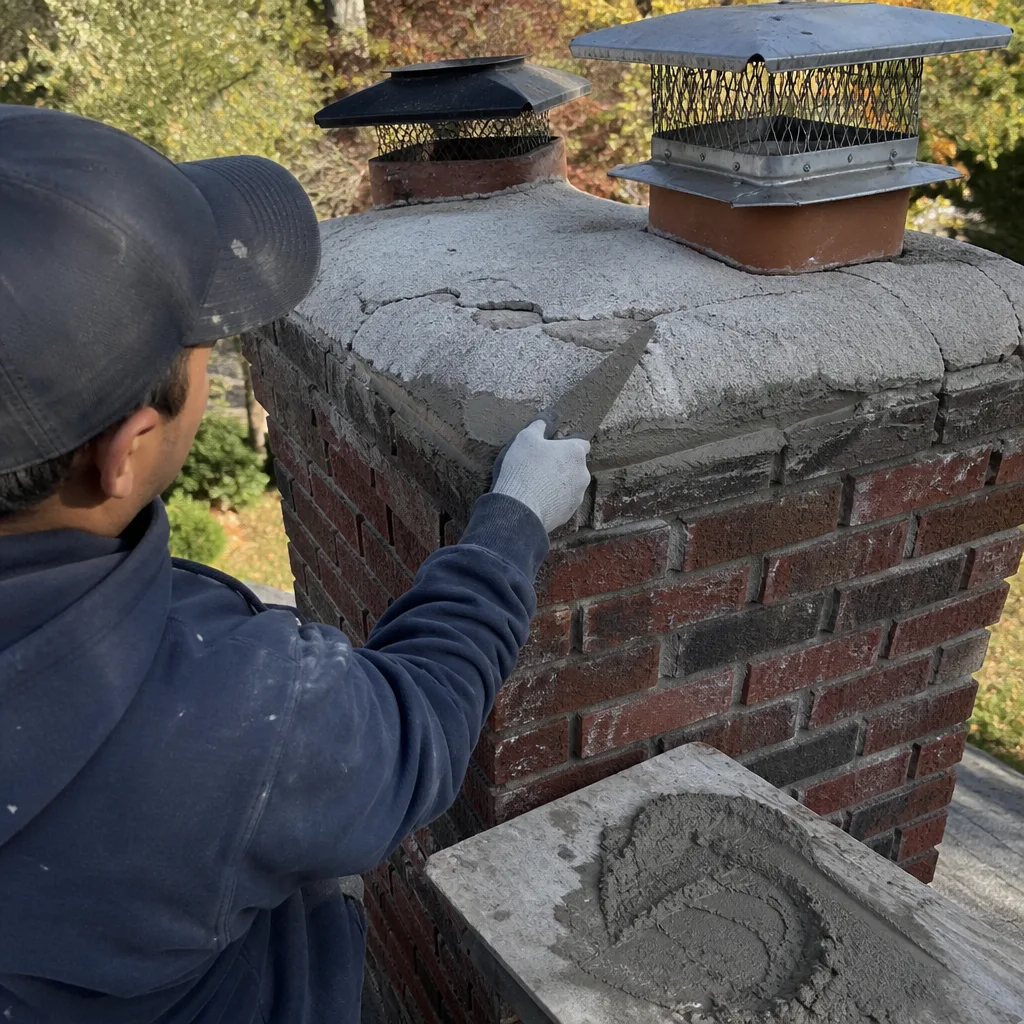
Call a professional chimney sweep when you need to know the condition of the flue, not just the color of it. If you smell smoke in the living room after starting a fire, a damper or draw issue may not be solved by cleaning. If you hear water dripping in the fireplace, the crown or flashing may be failing. If you’re selling your Greenwich home or shopping for one, the only sweep that adds value is one with documentation behind it. If you bought the house and don’t know the last time anyone looked at the chimney with a camera, that’s an inspection, not a cleaning. And if a chimney fire has ever occurred on the property, the flue needs a full Level 2 camera inspection before another fire is built in it. Level Two Chimney Greenwich offers free estimates in Greenwich, and we answer our phones with a live person around the clock. Call (516) 399-5497.
If you’ve got a chimney issue that’s bigger than creosote, like a cracked crown, spalling brick, or a damper that won’t seat, our Chimney Repair in Greenwich page covers the common repairs, their costs, and the signs to watch for.
Frequently Asked Questions
Professional chimney cleaning in Greenwich typically runs $175 to $350, depending on chimney height, creosote condition, and accessibility. That price at Level Two Chimney Greenwich includes the camera-scan inspection, written findings report, and documented photo record, not just the brushing. Call (516) 399-5497 for a written quote on your specific chimney.
The National Fire Protection Association standard is to clean a chimney when 1/8 inch of creosote accumulation is present, which for most Greenwich homeowners means once per heating season. For timing advice throughout the year, see our Seasonal Chimney Cleaning Care for Greenwich: Year-Round Homeowner’s Guide. Homes that burn unseasoned wood or use a fireplace as primary heat may need two cleanings per season. Our inspection at every visit determines whether the flue needs mechanical cleaning now or can wait.
Creosote accumulates on the flue wall, and at around 1/4 inch it becomes a legitimate chimney fire risk. Creosote ignites at about 451°F, and a chimney fire burns fast and hot, cracking flue tiles and spreading to framing in older Greenwich construction. Short of a fire, skipped cleanings mean restricted draft, smoke back into the house, and a flue that eventually needs a chemical treatment or liner replacement instead of a standard sweep.
You need a new liner when the camera shows cracked tiles, separated mortar joints, or a liner that is too deteriorated to contain flue gas. A camera-scan inspection tells you definitively, and we show you the images. We don’t recommend liners based on age alone or scare tactics. Our materials come from DuraFlex, HeatShield, Famco, and Copperfield specifically so that when a liner replacement is warranted, the price is honest and the warranty is real.
Yes, if the inspection was a camera scan, the flue is straight, the creosote was first-stage, and you’re burning seasoned hardwood in an open fireplace. In that case, a DIY touch-up between annual professional cleanings is reasonable maintenance. It doesn’t produce documentation, so don’t use it as a substitute for an insurer-acceptable record or a real estate disclosure.
Most Connecticut homeowners policies cover fire damage, but the claim process usually requires proof of maintenance. Without a professional cleaning record and a photo document of the liner before the fire, an adjuster may reduce or deny the claim on grounds of neglect. This is the single best reason to maintain a documented chimney service history, and it’s a conversation Greenwich homeowners should have with their agent before an emergency.
The Bottom Line
The DIY-versus-professional framing is almost always the wrong question. The right question is whether you’re maintaining a documented, inspectable chimney system or just removing visible soot from a flue you trust without looking at it. A homeowner with a straight flue, a recent camera-clean record, and good burn habits can reasonably brush first-stage creosote between professional cleanings. Everyone else is guessing, and in a housing market like Greenwich, where buyers and insurers expect documentation, guessing costs more than the sweep. If you want to know what’s actually in your chimney, with photos you can keep and a price on paper, call (516) 399-5497 for a free estimate. We’ve been doing this in Greenwich since 2009, and we’ve never written a price after the fact on any of our 38,000-plus jobs.
Written by Corrine Halstead, Owner at Level Two Chimney Greenwich, serving Greenwich since 2009.