
Last updated September 20, 2026
Level 1 sweep and inspection to the NFPA 211 annual standard - flue, crown, cap, and flashing checked and photographed
Chimney sweep logs do not sweep chimneys. They loosen some creosote - which then falls where a brush and vacuum still have to collect it.
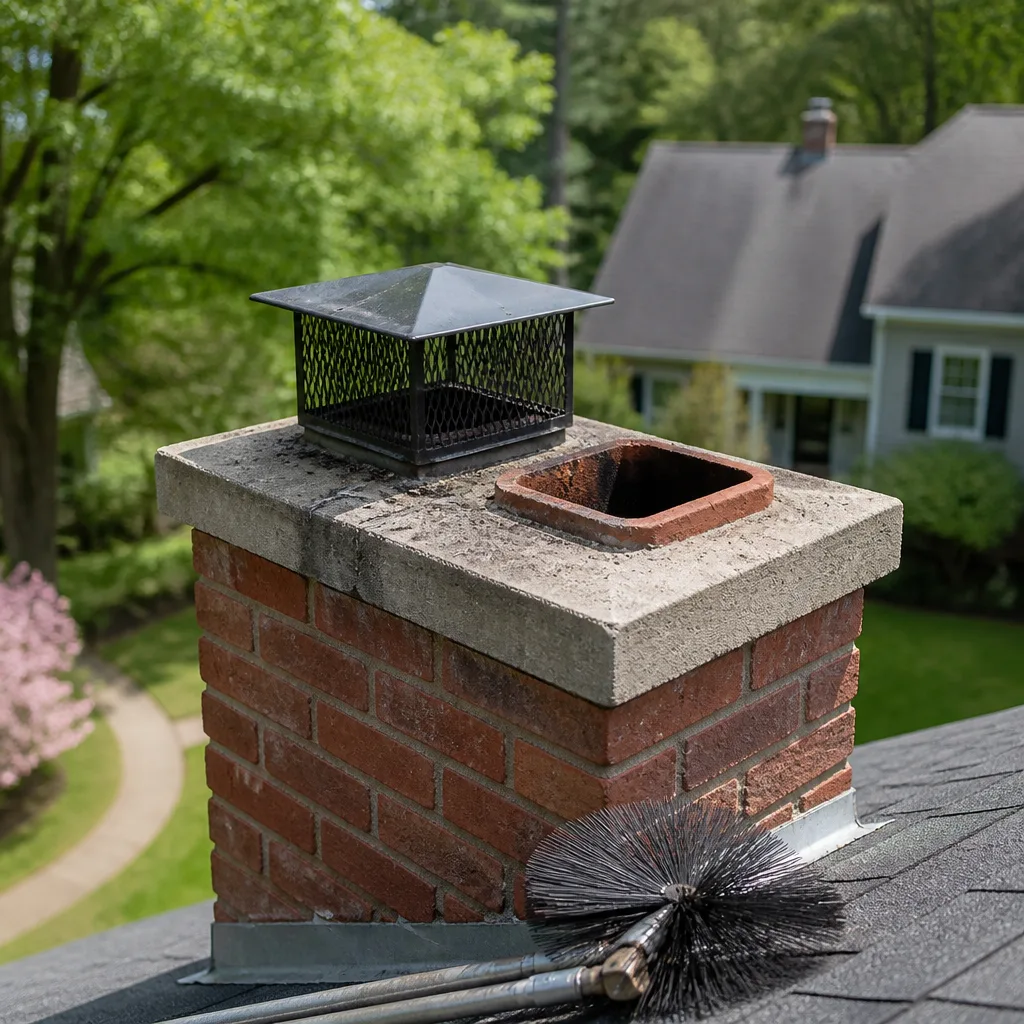
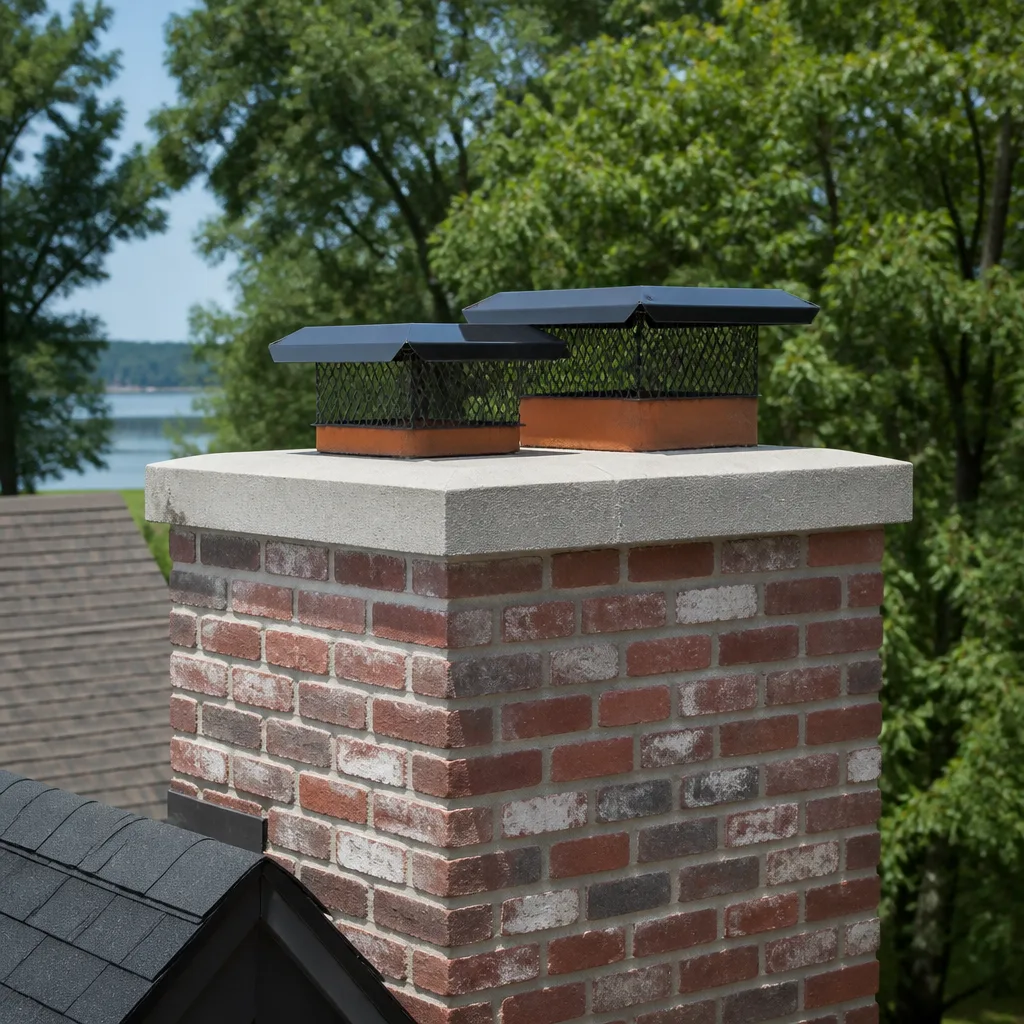
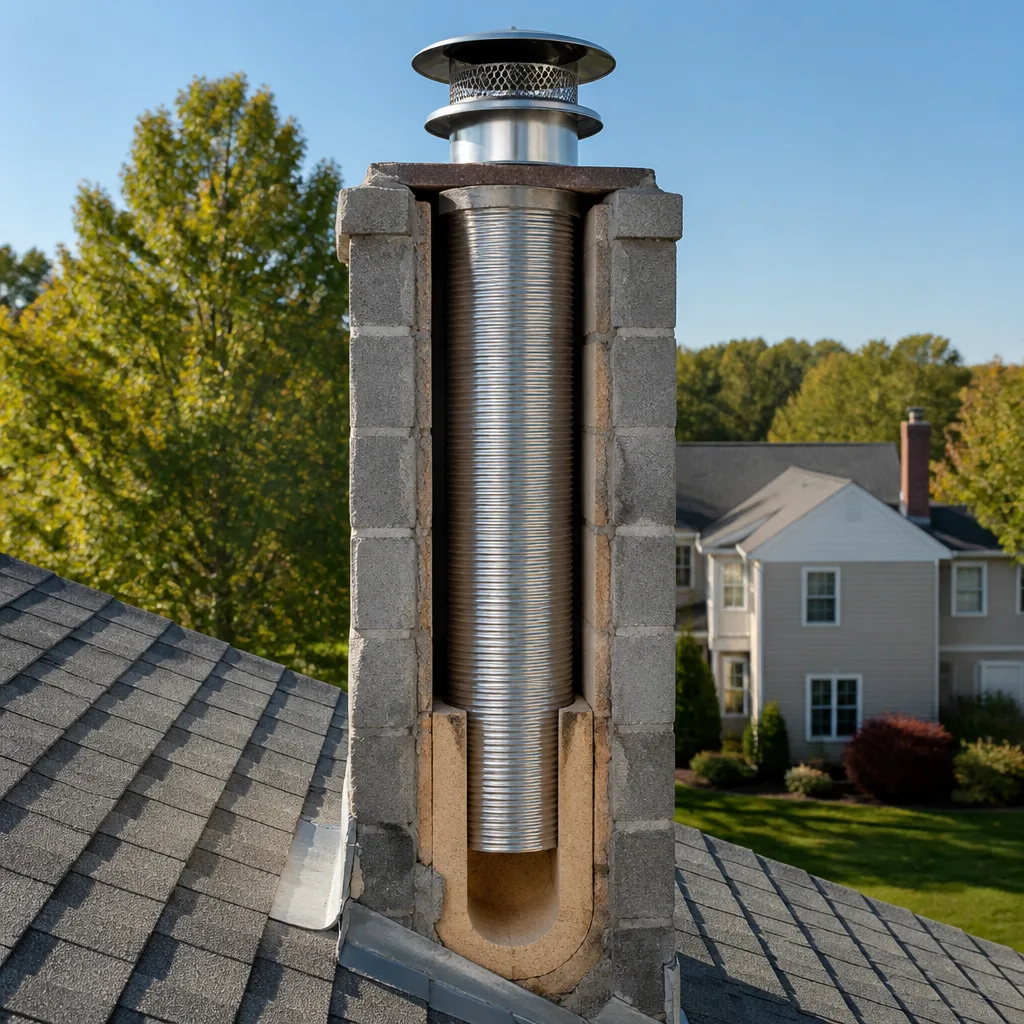
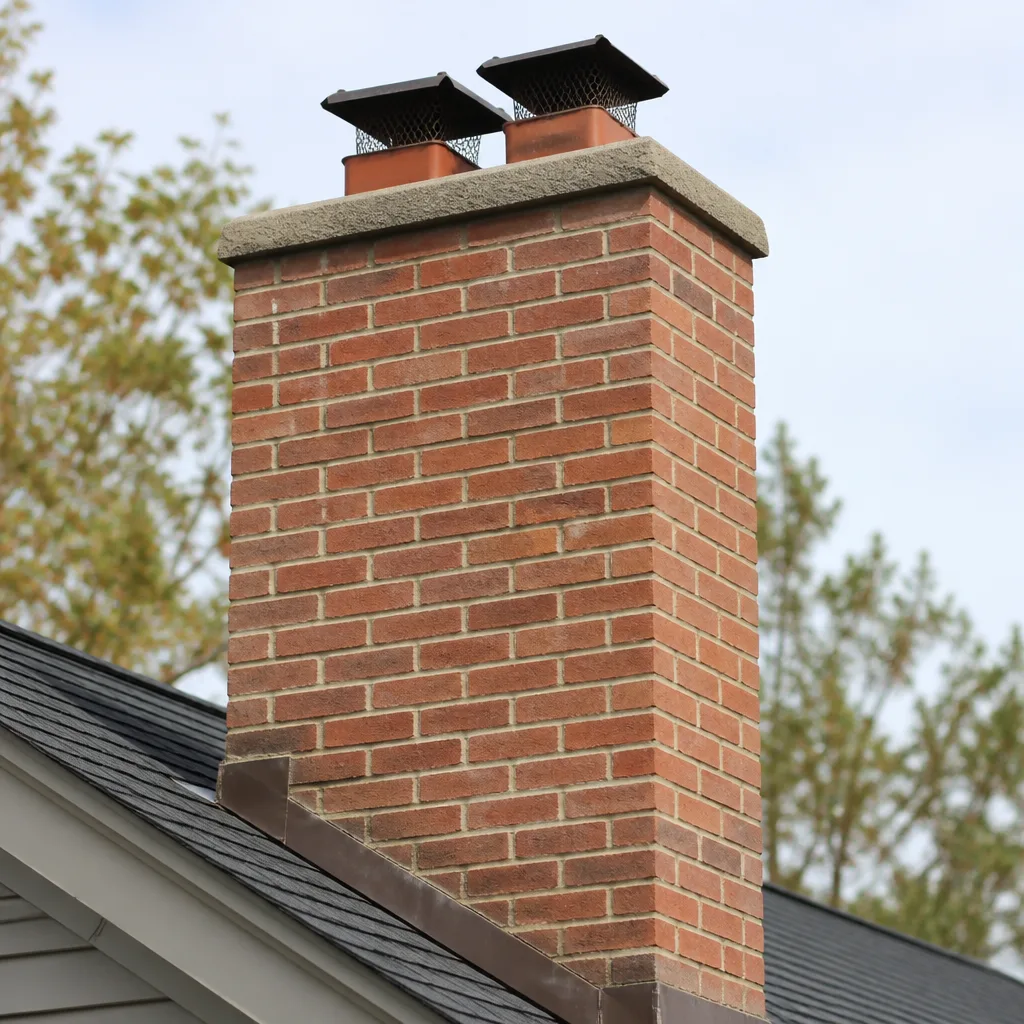
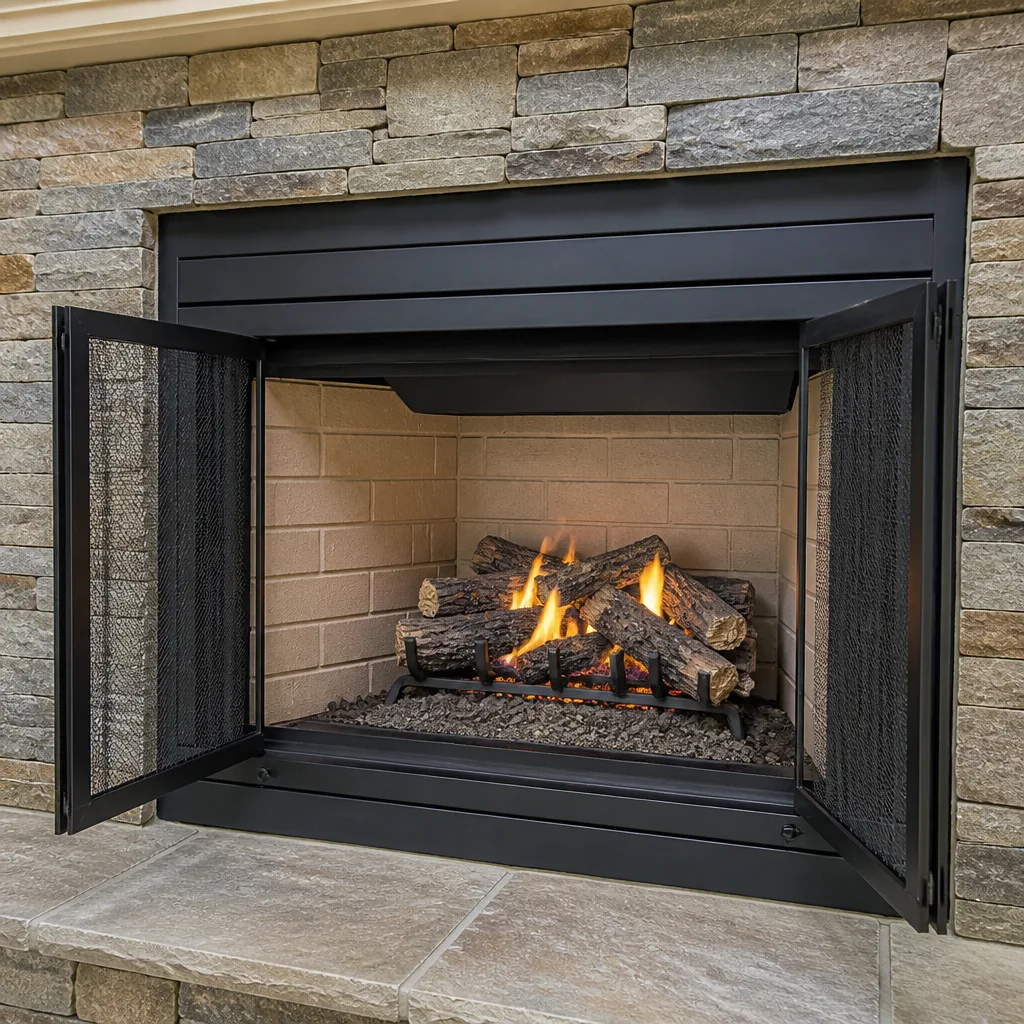
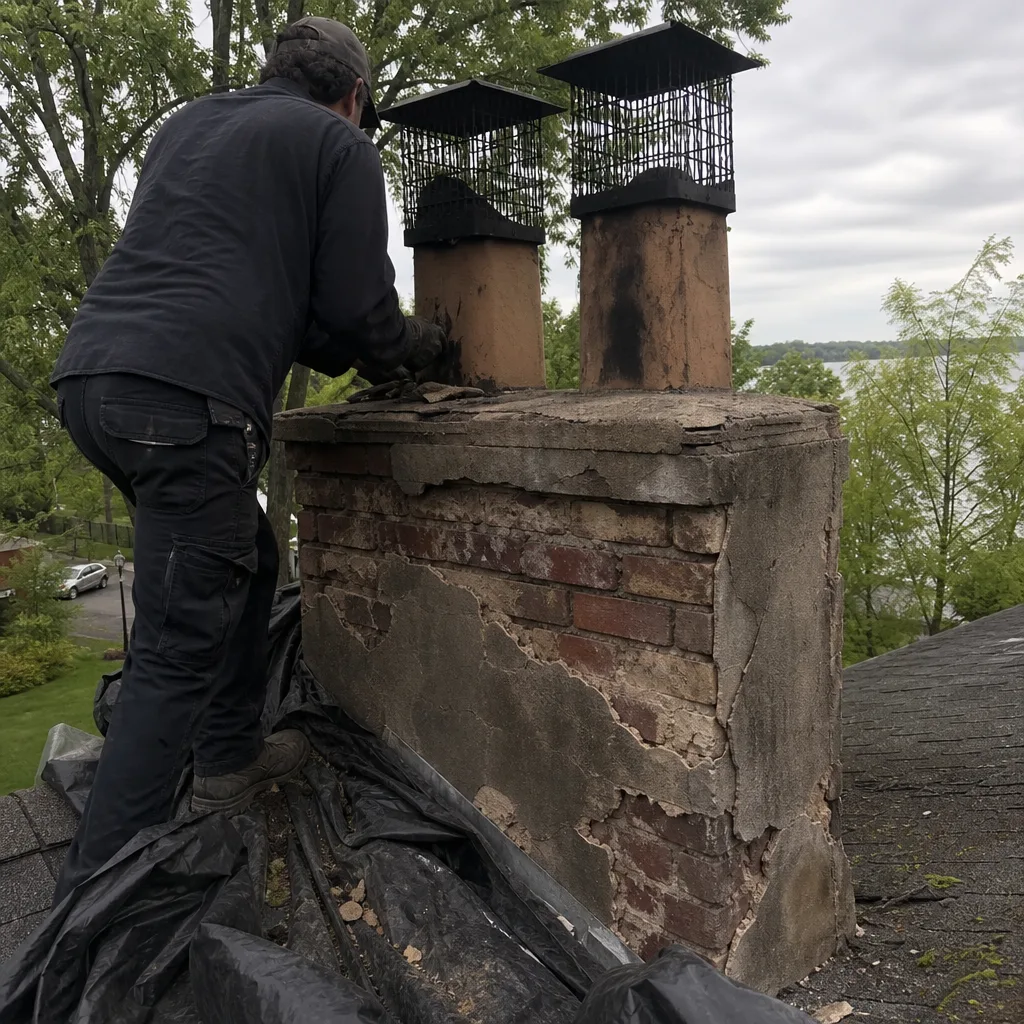 Before
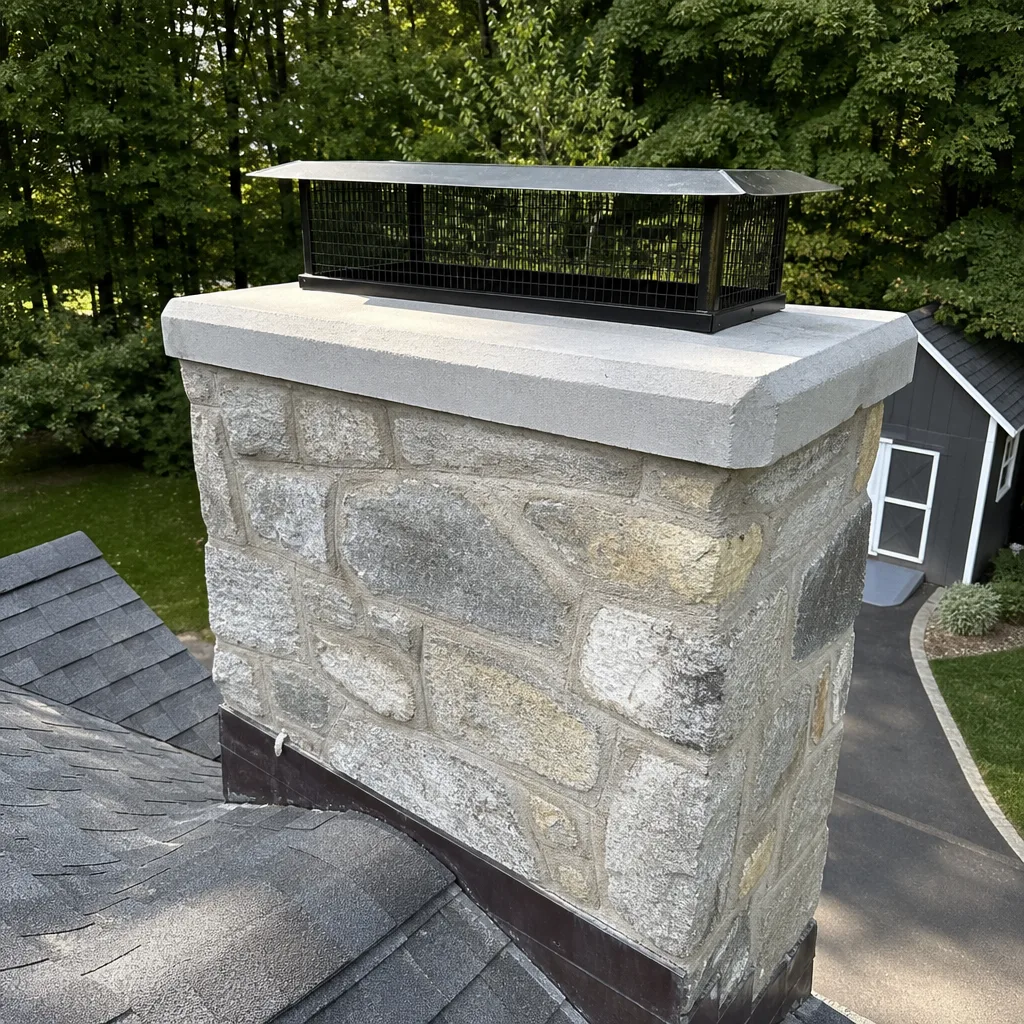 After
After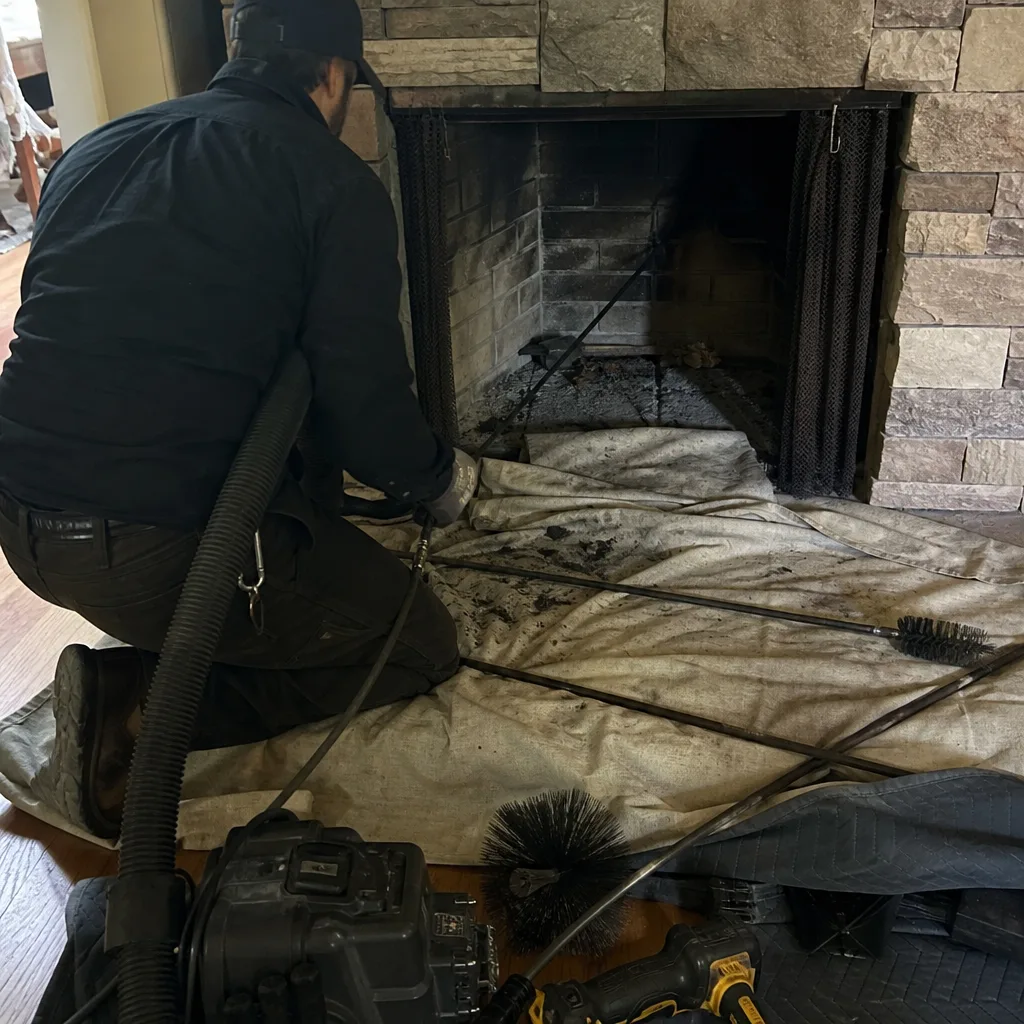 Before
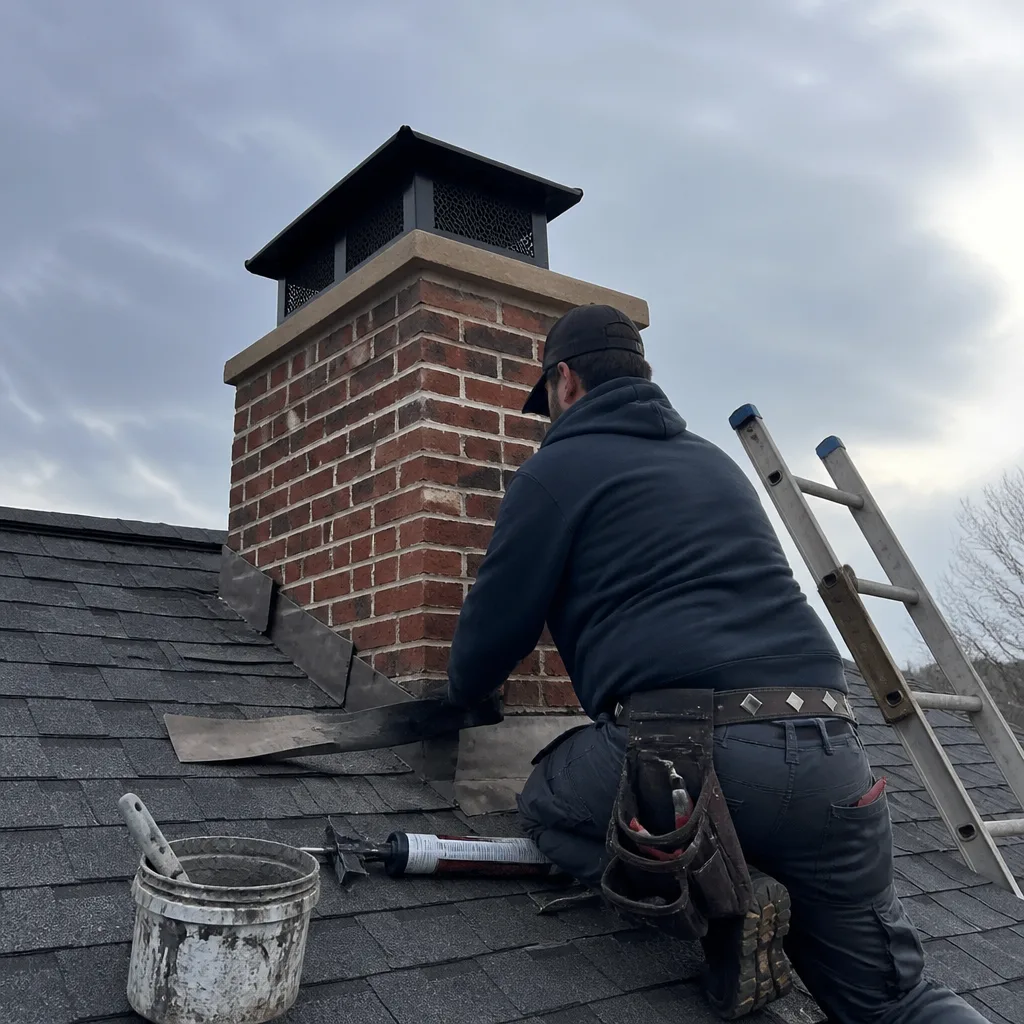 After
After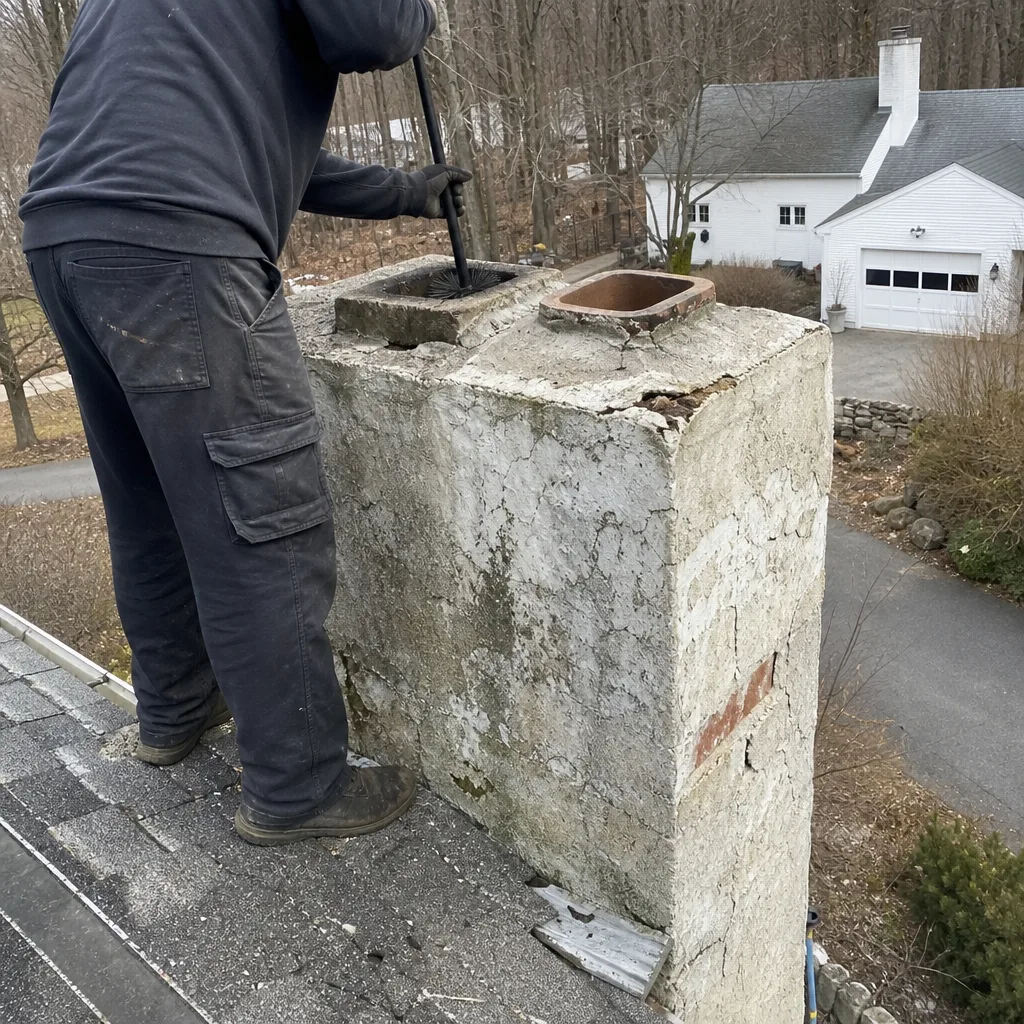 Before
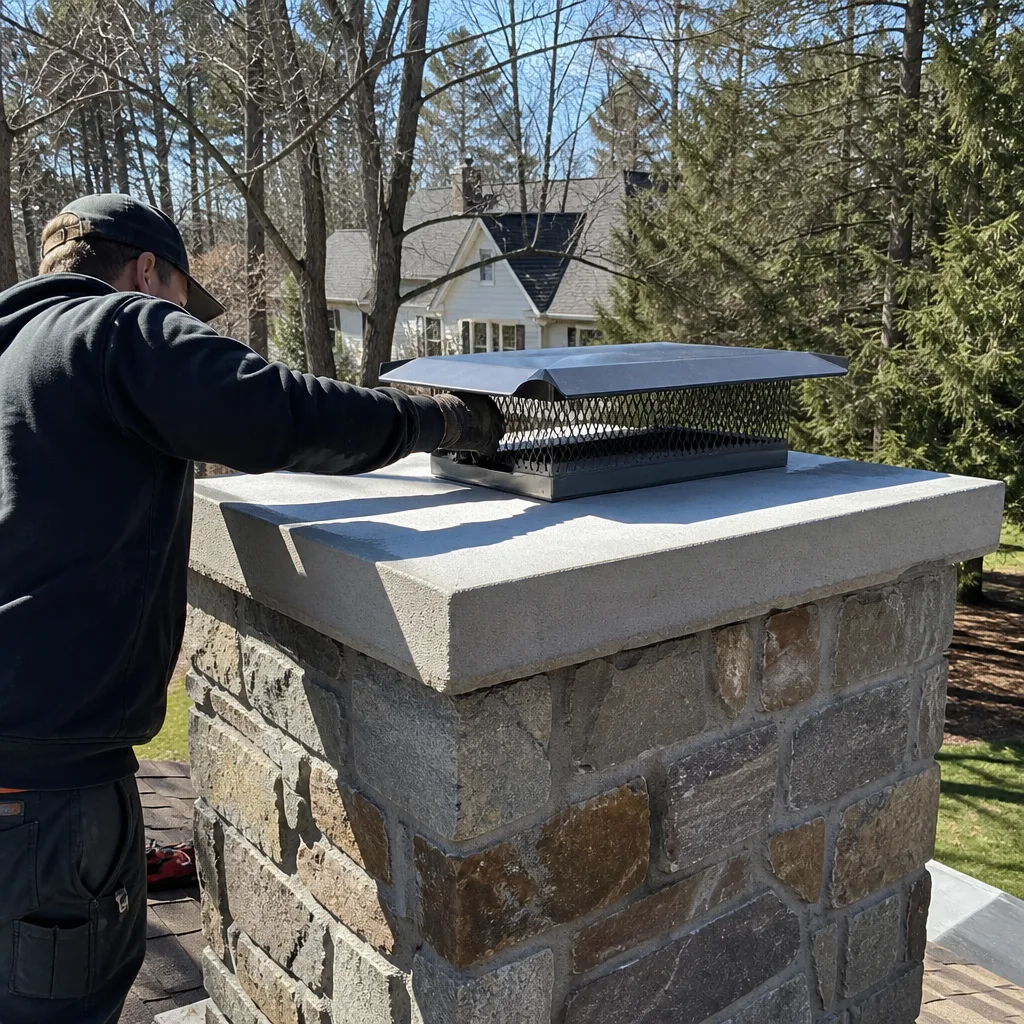 After
AfterChimney Cleaning Cost Breakdown: The Greenwich Homeowner’s Reference for 2026
A chimney cleaning quote in Greenwich in 2026 can run from $149 to $495 for a single fireplace, and both quotes can legally call themselves a “full-service chimney cleaning.” What the lower quote almost never includes is a camera, a written report, or a warranty on the liner condition. That difference matters more than most homeowners realize, because the cleaning itself is the least valuable part of the visit. This guide breaks down every line item in a complete chimney service so you can read a quote from any Greenwich contractor and know exactly what you’re being asked to pay for, what you’re not, and which omissions will cost you five figures later. For related reading, see our Chimney Cleaning Warning Signs: A Greenwich Homeowner’s Reference Guide.
Quick Answer
A chimney cleaning in Greenwich, CT typically costs $180 to $340 for a standard sweep with a basic visual inspection. A complete Level 2 service with camera scan, written condition report, and photo documentation runs $299 to $495 for the first fireplace in the same visit. The price gap reflects scope: a $149 sweep removes soot from the flue and nothing else, while a $395 Level 2 service tells you whether that flue is safe to use at all, and hands you the evidence in writing.
Table of Contents
- The 2026 Line-by-Line Price Sheet for Greenwich
- Why Two “Full Cleanings” Can Be $200 Apart
- How Wood, Burn Volume, and Frequency Drive Your Real Annual Cost
- The Hidden Cost of Skipping the Camera Inspection
- What a Written Price Guarantee Actually Means in Greenwich
- Chimney Records and the Greenwich Resale Timeline
- How to Verify a Quote Covers What Your Chimney Actually Needs
The 2026 Line-by-Line Price Sheet for Greenwich
Here’s what each component of a complete chimney service costs in Fairfield County this year. These are ranges we see across Greenwich, Stamford, and the surrounding towns, and they assume a standard masonry chimney on a single-family home. Prices shift with chimney height, roof pitch, flue size, and access difficulty (a steep slate roof in backcountry Greenwich costs more to work on than a shallow-pitch asphalt roof in Cos Cob).
- Basic sweep (no inspection): $149-$229. This is the number you’ll see in ads. It covers brushing the flue, removing loose soot from the firebox and smoke chamber, and a visual look up the flue with a flashlight. No camera. No report. No liner assessment.
- Standard cleaning with visual inspection: $179-$289. Same sweep, plus a documented visual check of the crown, cap, flashing, and firebox. You get a written summary of what the tech saw, but nothing the tech couldn’t see from the roof or the hearth.
- Level 2 camera inspection (NFPA 211), added to a cleaning: $220-$350 as a standalone line item. This is the inspection standard for any real estate transaction, after a chimney fire, after a lightning strike, or when you’re switching fuel types. It sends a camera down the full length of the flue and records liner condition, mortar joint gaps, and creosote class in video and stills.
- Complete Level 2 service (cleaning + camera + written report + photo record): $299-$495 for the first fireplace. This is what we perform as our baseline. Clause 4 of the Haven Standard requires a documented photo record on every job, so the report you walk away with shows exactly what the camera saw, not a technician’s summary of what it saw.
- Chimney cap installation (standard steel): $240-$390 installed. A missing or rusted cap is the most common entry point for rain, birds, and squirrels in Greenwich, where winter freeze-thaw cycles chew through cheap caps fast.
- Crown repair or reseal: $350-$800. The concrete crown at the top of the chimney cracks over time, and water that gets through those cracks is the leading cause of spalling brick and liner damage in Fairfield County.
- Damper replacement (top-sealing): $380-$720 installed. A worn damper is the reason so many Greenwich homes lose heat up the chimney all winter, even when the fireplace isn’t in use.
- Liner inspection as part of any service: Included in a Level 2, but charged as a $220-$350 add-on by companies that sell it as an “upgrade.” If a company quotes you a sweep and then offers to “check the liner” for an extra fee, they’re charging you separately for what a Level 2 already covers.
One note on geography: Greenwich has three distinct housing styles that change the math. Pre-war stone homes in Riverside and Old Greenwich have thicker masonry but often original clay-tile liners that date to the 1920s and 1930s. Mid-century ranches in Glenville and Byram generally have shorter chimneys and easier roof access, which keeps labor down. The newer builds north of the Merritt Parkway and in backcountry Greenwich frequently have prefabricated metal chimneys, which have their own inspection requirements and a different parts supply chain. Your price bracket is set by which of those three houses you own.
Why Two “Full Cleanings” Can Be $200 Apart
The single biggest misunderstanding in the chimney trade is that “cleaning” and “inspection” are the same service. They are not. A cleaning removes material from the flue. An inspection determines whether the flue is safe to use at all. You can clean a chimney whose liner has cracked and get a fire the following week. You cannot inspect a chimney without seeing inside it, and you cannot see inside a flue with a flashlight from the roof.
Here’s what the price difference actually buys you in Greenwich:
- The camera. A Level 2 inspection uses a purpose-built chimney camera, not a phone on a stick. The camera reaches the full flue length and records what the liner looks like at every joint. A $149 sweep skips this entirely. When we founded Level Two Chimney Greenwich home in 2009, we made camera-scan documentation the default on every visit because we kept finding liner damage in chimneys that looked perfectly clean from the outside. That practice became Clause 4 of the Haven Standard.
- The written report. A sweep-only visit ends with the technician saying “you’re all set” while walking to the truck. A Level 2 ends with a document that names what was found: liner condition, creosote classification, crown integrity, damper function, firebox condition. If the tech tells you the liner needs $6,000 of work, a written report is the only version of that conversation that means anything.
- The warranty. A sweep has no warranty because it promises nothing. A written inspection report carries a warranty on the condition assessment. We back every inspection with the 365-Day Done Right Promise: if it’s not done right, we make it right. That’s a different product than “the flue is no longer full of soot.”
- The time. A proper Level 2 service on a Greenwich chimney takes 60-90 minutes on site. A sweep takes 30-40. Labor is the cost, and it’s the labor you’re paying for, not the distinction between a $12 wire brush and a $14 wire brush.
The honest way to think about it: a $149 sweep is not a cheaper version of a $395 Level 2. It is a different service that stops before the part that protects your house.
If you’re comparing estimates from competing companies, the right question is not “what do you charge for a cleaning.” The right question is “what does your cleaning include, and what does it exclude.” Then ask for the exclusions in writing. Any Chimney Cleaning & Sweep in Greenwich company that hesitates on that answer is about to charge you for the camera later.
How Wood, Burn Volume, and Frequency Drive Your Real Annual Cost
Here’s a fact that changes how you should think about chimney cleaning cost: the number of fireplaces in your house matters less than how often each one is used. A single fireplace burned three nights a week from October through March in Greenwich produces more creosote than two fireplaces used once a month. When we assess a home in Old Greenwich versus a weekend house in backcountry, the cleaning frequency recommendation is driven entirely by burn volume and wood type, not fireplace count.
The cost driver is creosote accumulation. Creosote is the condensed byproduct of wood smoke that coats the flue liner in layers. The speed of accumulation depends on:
- Wood type: Seasoned hardwoods (oak, maple, hickory) burn hot and relatively clean. Unseasoned or soft wood (pine, spruce) burns cooler and wetter, producing creosote two to three times faster. Greenwich firewood suppliers sell both, and the price difference per cord is about $80 to $120. The cheap cord costs more in chimney cleanings.
- Burn temperature: Hot fires produce less creosote. Smoldering fires, the kind people build in December with damp wood and a mostly closed damper, are creosote factories.
- Burn frequency: This is the dominant variable. A Greenwich family that burns 30 nights a year needs a cleaning every 12 months. The same house burning 10 nights a year can go 18-24 months between cleanings. The cost difference works out to roughly $120 to $200 per year, depending on which service level you choose.
The practical budgeting number: a Greenwich homeowner who burns wood regularly should plan on $299 to $495 every 12 to 18 months for a complete Level 2 service. The same house with occasional weekend use in the fall and holidays can stretch that to 18 to 24 months. If you skip cleanings to save money, you are not saving money. You are deferring it, and creosote compounds.
There’s a reason we classify creosote by stage, because the class determines the cleaning method and the risk. Class I creosote is the fluffy, gray, easy-to-remove deposit from regular hot fires. Class II is the darker, flakier buildup that requires mechanical brushing. Class III is the dense, glossy, tar-like layer that resists standard brushing and can require chemical treatment or rotary cleaning heads. A chimney that reaches Class III is no longer a routine cleaning job. It is a fire hazard that needs specialized removal, and it costs more to address. In Greenwich homes where wood stoves run all winter on less-than-seasoned wood, Class III is a regular finding by March.
The Hidden Cost of Skipping the Camera Inspection
Let’s put a dollar figure on the decision to skip the camera. This is the part of the guide that matters most if you’re weighing a $149 sweep against a $395 Level 2 service.
Stage 1 damage: hairline crack in a clay tile liner, caught by camera. Repair cost in Greenwich: $180 to $450 for a targeted repair using HeatShield or a similar cast-in-place liner sealant. That’s the cost of the cleaning you almost skipped, and it’s done in one afternoon. The liner is restored, the chimney is safe, and you have a written report showing the before and after.
Stage 3 damage: multiple cracked tiles, gaps at mortar joints, or liner deterioration from years of acidic condensation. Repair cost: $2,500 to $6,500 for a full stainless steel liner installation in Greenwich, depending on flue size and chimney height. The liner itself comes from manufacturers like DuraFlex and Olympia Chimney, and the labor is a full day on site. This is still repairable, but the budget is now a talking point with your spouse.
After a chimney fire: collapsed liner, compromised masonry, potential structural damage to the flue. Repair cost: $7,000 to $15,000 or more for a full rebuild. A chimney fire burns at 2,000°F, which is hot enough to crack every clay tile in the flue, warp a steel liner, and spall the brick at the top of the chimney. At this point, the conversation is no longer about cleaning cost. It’s about whether the chimney is a teardown.
The spread between $395 and $15,000 is the actual price of the camera decision. A camera inspection finds the hairline crack before it becomes a chimney fire. A flashlight from the roof cannot. This isn’t scare-selling; it’s the field data from 38,000+ chimneys inspected and cleaned since 2009, every one with a written price before work started and a documented record when it was done.
What a Written Price Guarantee Actually Means in Greenwich
Every chimney company in Fairfield County says they “quote before they start.” The phrase is marketing. What a written price guarantee means, in practice, is this: the number on the quote is the number on the invoice, no exceptions, no “we found something while we were up there” pricing, no “the scope changed” conversation after the tech is on your roof.
Here’s what to ask any contractor to verify the quoted scope is real:
- Ask what the written quote excludes. A quote that says “cleaning: $189” with no mention of the liner, cap, crown, damper, or flashing is a quote for a sweep, not a service. The excluded items are where the add-on charges live. A quote that itemizes every component of the job, including what is being inspected and not just cleaned, is a quote that was built by someone who actually looked at the job.
- Ask if the camera inspection is included or quoted as a separate line. If it’s separate, that’s a red flag, but not a disqualifier, because at least they’re being explicit. What disqualifies a company is refusing to tell you the scope of the inspection. Clause 1 of the Haven Standard requires a written price, written scope, and written warranty before anyone starts, delivered before the tech is in your home, not after.
- Ask what documentation you get when the job is done. The answer should be specific: photos, camera footage, written report, written warranty. If the answer is “your receipt,” you have found the $149 sweep, not the service.
- Ask if the warranty covers the inspection findings, not just the cleaning. If a company warranties the sweep but not the condition assessment, the warranty is covering the least important part of the visit. We warranty the assessment under the 365-Day Done Right Promise, because that’s the part that protects you.
- Ask for the technician’s license information before they arrive. This is standard practice in Connecticut, and any company that hesitates to provide it is telling you something. In Greenwich, where homes are high-value and the market is competitive, verifying the person on your roof is licensed, background-checked, and uniformed is not paranoia. It’s due diligence.
We keep it simple. Chimney Repair in Greenwich gets the same treatment as a cleaning: written price before work starts, written scope, written warranty, photo record on completion. That’s the Haven Standard, and it’s been our baseline since 2009, not an upsell added in 2024 when the market demanded it.
Chimney Records and the Greenwich Resale Timeline
Greenwich real estate functions differently from most of Fairfield County, and that difference reaches all the way into your chimney service records. If you bought your home between 2015 and 2025, you are likely already familiar with the buyer’s inspection checklist. A documented chimney service record is now part of that checklist, alongside the roof certification, the sewer scope, and the termite inspection. See Chimney Cleaning Permits, Codes & Inspections in CT: What You Need to Know for details on compliance requirements.
Here’s how it works, based on what we see from Greenwich buyers, sellers, and listing agents:
- Buyers in Greenwich expect a Level 2 certificate, not a sweep receipt. A receipt that says “chimney cleaned, $179” tells a buyer nothing about liner condition. A Level 2 report with camera footage tells them whether they’re buying a house with a safe fireplace or a five-figure liner project. Listing agents in Old Greenwich and Riverside know this, and they now request the documentation before marketing the home.
- The resale timeline compounds the cleaning frequency math. If you’ve been in your home for seven years and had the chimney cleaned twice with no camera inspection, you have no evidence to show a buyer about liner condition. You’ll pay for the camera inspection at listing time anyway, and if it finds damage, you’ll repair it or lose it from the sale price. The camera inspection you skipped in 2021 is now an unavoidable closing cost in 2026.
- Greenwich’s housing stock skews older, and older chimneys need more documentation. The pre-war homes in Greenwich proper and North Mianus have chimneys that have been in service for 80 to 100 years. No buyer or insurance underwriter accepts a flashlight look on a 1925 chimney. They want camera proof that the liner is intact or a documented plan for replacing it.
- Insurance companies in Connecticut are asking the same questions. After several high-profile chimney fires in Fairfield County, insurers are increasingly requesting inspection documentation before binding policies on wood-burning homes. A Level 2 report from a licensed company is a document; a cleaning receipt is a suggestion.
The practical takeaway for Greenwich homeowners: treat every chimney service visit as a piece of your home’s documentation, not a maintenance chore. The photogenic reason is the fireplace on Christmas Eve. The financial reason is the closing table in 2029.
How to Verify a Quote Covers What Your Chimney Actually Needs
Here’s a four-step process for reading any chimney quote in Greenwich and knowing whether it covers your actual chimney, not a generic template.
- Identify your chimney type. Is it a masonry chimney with a clay or steel liner? A prefabricated metal chimney? A wood stove flue? The inspection method and price bracket differ for each. A company that quotes you $189 without asking what kind of chimney you have is treating you like a number, not a job.
- Match the quote to the age of your house. If your home was built before 1940 and the quote doesn’t include a liner inspection, it’s incomplete. If your home was built after 1990 and the quote includes a full masonry assessment, it might be padded. The quote should be tailored to the house, not the market.
- Look for the specific materials named, not just “materials.” A quote that says “cap: $300” without naming the cap type or material is a placeholder. A quote that says “cap: stainless steel, Olympia Chimney or equivalent, $340 installed” tells you what you’re buying. We source materials from manufacturers like HeatShield, Gelco, Olympia Chimney, and Famco, and we name them in the quote so you know exactly what goes on the roof.
- Ask what the technician will do if the camera finds damage. The answer should be: “show you the footage, explain the condition in plain terms, and give you a written repair estimate with the same written-price rules.” If the answer is “we’ll let you know when we’re done,” walk away. The camera is only useful if you see what it sees.
In our experience, the homeowners who get the best outcome are the ones who come to the conversation knowing their chimney type and asking for the camera footage by name. It’s not about being difficult. It’s about making the company prove the price before the truck pulls away.
One more Greenwich-specific note: if you have a Fireplace Services in Greenwich question that goes beyond cleaning, a sweep visit is often the right entry point because the camera tells you whether you need a sweep or a repair. A $395 Level 2 service is cheaper than a $6,000 liner install, and it’s the only way to know which one you’re actually facing.
BeforeAfterCommon Mistakes to Avoid
- Comparing quotes without comparing scope. A $149 sweep and a $395 Level 2 are different services. Compare the line items, not the bottom line. Ask what’s excluded, not just what’s included.
- Skipping the camera inspection to “save” $200. The average liner repair in Greenwich is $4,000 to $6,000 when damage reaches Stage 3. A camera catches it at Stage 1 for less than $500. The math is not close.
- Burning unseasoned wood because it’s cheaper per cord. The $100 you save on a cord of green poplar will cost you $200 to $300 in more frequent cleanings and higher creosote risk. Season the wood or pay for the sweep; you’re paying either way.
- Accepting a verbal report instead of a written one. If the technician tells you the chimney is fine but hands you nothing, you have no evidence of anything. In Greenwich real estate, evidence is the product.
- Ignoring the cap because it’s “just a metal hat.” The cap is the first line of defense against water intrusion, and water is the enemy of every masonry chimney in Fairfield County. A rusted-out cap is a $340 fix; a water-damaged flue is a $5,000 fix.
- Waiting until fall to schedule. September and October are peak chimney season in Greenwich, and every reputable company books out 2 to 3 weeks ahead. Spring and summer service means better scheduling, faster turnaround, and more time to address findings before burning season starts.
- Treating the fireplace as decorative until you sell the house. The chimney you ignore for seven years becomes the document you can’t produce at listing. Clean and inspect it on a schedule, and the resale conversation takes care of itself.
When to Call a Professional
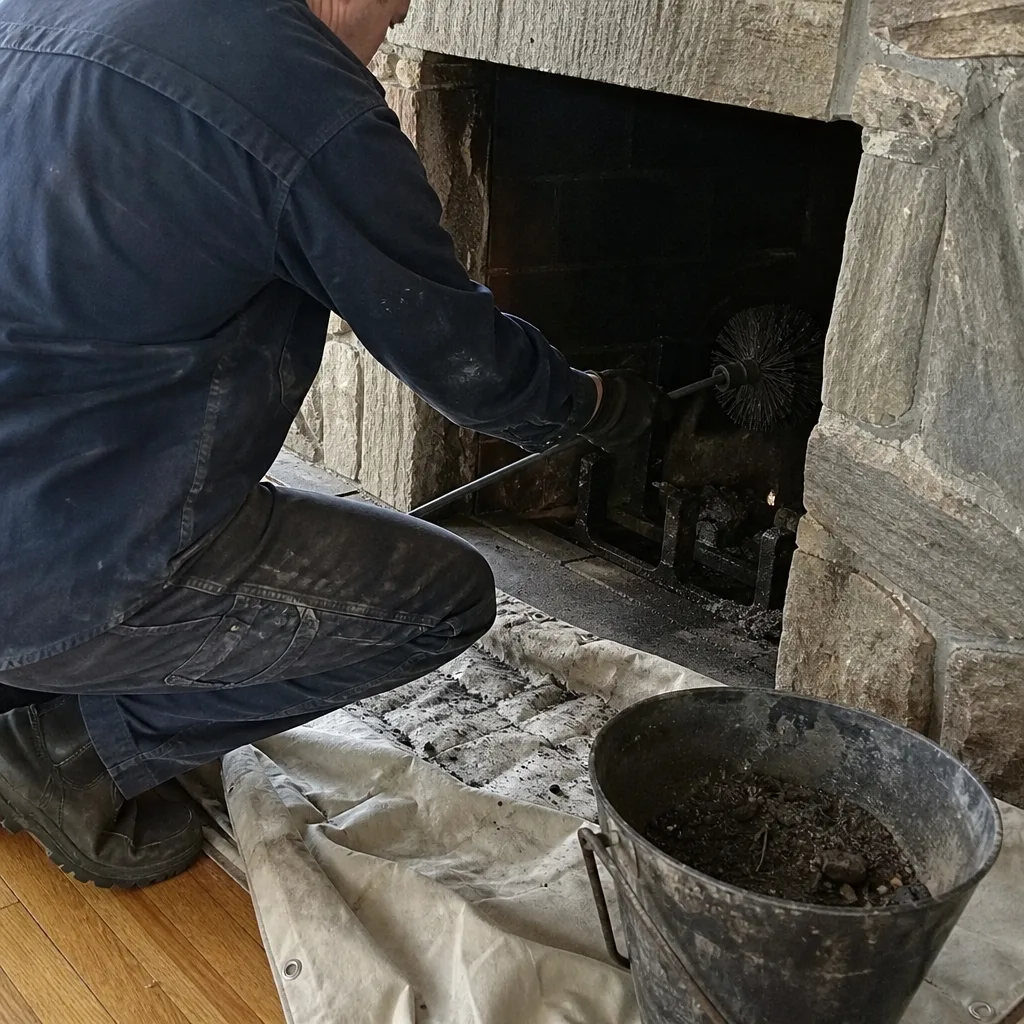
You need a professional chimney service in Greenwich when you see any of these: visible creosote buildup (dark, shiny or flaky deposits on the flue walls), a smoky fireplace that doesn’t draw properly, water stains on the ceiling near the chimney, a rusted or missing cap, spalling brick on the chimney exterior, or any sign of animal activity (birds, squirrels, raccoons). You also need a professional before you sell a Greenwich home, after a chimney fire, after a lightning strike, or if you switch fuel types (wood to gas, or vice versa). Chimney work involves heights, carbon monoxide risk, and fire hazards that are not DIY territory. Level Two Chimney Greenwich offers free estimates in Greenwich, including a Free Second Opinion on any written estimate you bring us. Call (516) 399-5497 and talk to a live person, 24/7, not a voicemail.
Frequently Asked Questions
A standard chimney cleaning in Greenwich costs $180 to $340, while a complete Level 2 service with camera inspection and written report costs $299 to $495 for the first fireplace. The price depends on your chimney type, roof access, and whether the inspection is included or charged separately. Call (516) 399-5497 for an exact written quote; estimates are free and the price is guaranteed before work starts.
A sweep removes soot and creosote from the flue, while a Level 2 inspection uses a camera to assess liner condition, mortar joints, and fire safety. The sweep answers “is it clean”; the Level 2 answers “is it safe.” In Greenwich, where homes average 60+ years old, the camera answer is the one that protects the house.
Most Greenwich homeowners need a cleaning every 12 months if they burn wood regularly, and every 18 to 24 months with occasional use. Wood type and burn volume are the variables: seasoned hardwood burned hot produces less creosote than green softwood smoldering on a winter night. The frequency recommendation should come from what the camera shows, not a calendar.
You can verify this in one step: ask to see the camera footage. A hairline crack at Stage 1 is patchable for a few hundred dollars. A chimney full of cracked tiles is a legitimate liner replacement. If the technician won’t show you the video, treat the recommendation as unproven. Clause 4 of the Haven Standard requires a photo record on every job, so there’s never a “trust me” moment in our work.
Creosote accumulates in layers, and a few skipped cleanings is how a Stage 1 problem becomes a Stage 3 hazard. The cleaning cost doesn’t change much, but the risk does: Class III creosote is a leading cause of chimney fires, which burn at 2,000°F and destroy liners. In Greenwich, the difference between a $395 Level 2 service and a $15,000 rebuild is often just the skipped visit.
A standard sweep includes only the flue cleaning and a visual look at the cap from the roof. A Level 2 service includes a documented assessment of the cap, crown, flashing, and liner condition, all in writing with photos. If you want to know whether your chimney will survive the next Greenwich winter, ask for the Level 2. Call (516) 399-5497 for a free estimate.
The Bottom Line
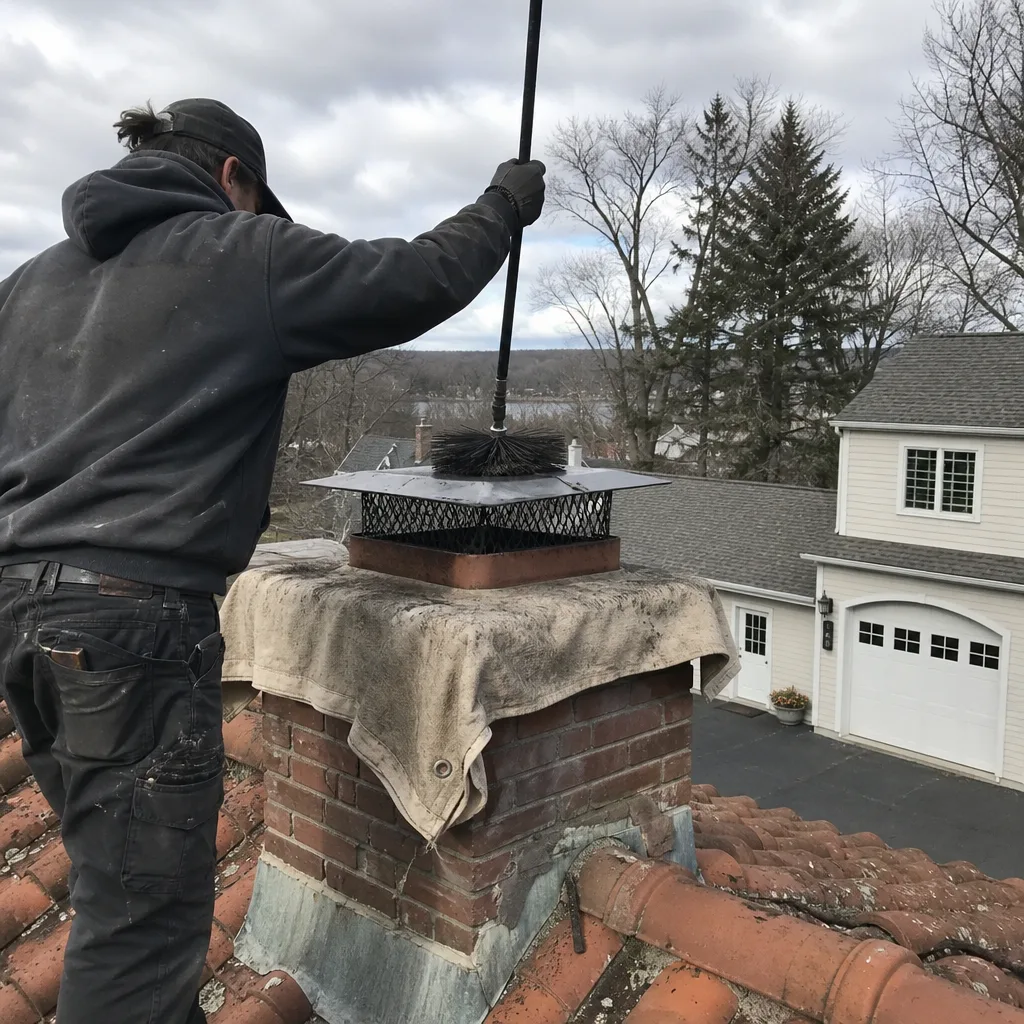
Chimney cleaning in Greenwich is priced by scope, not by margin. The difference between a $149 sweep and a $395 Level 2 service is the camera, the report, and the warranty, and that difference is what protects your home. Choose the service that documents what it found, not the one that just names a low number. Schedule in the off-season, burn seasoned wood, and keep the records. The fireplace you maintain properly is the one that warms the house in January and doesn’t cost you at closing.
Level Two Chimney Greenwich provides written-price Level 2 chimney service throughout Greenwich, Stamford, and Fairfield County. Every job includes a camera-scan inspection, a documented photo record, and a written warranty under the Haven Standard. Call (516) 399-5497 for a free estimate, or bring us a competitor’s written quote for a Free Second Opinion.
Written by Corrine Halstead, Owner at Level Two Chimney Greenwich, serving Greenwich since 2009.